

Outdoor UV Printed PVC Foam Board Sign — Waterproof, Lightweight Signage
Jul 22, 2026
Outdoor UV Printed PVC Foam Board Sign: Light Enough to Hang Anywhere, Tough Enough to Stay There
Read time: 4 minutes | By: YUPSENI Team
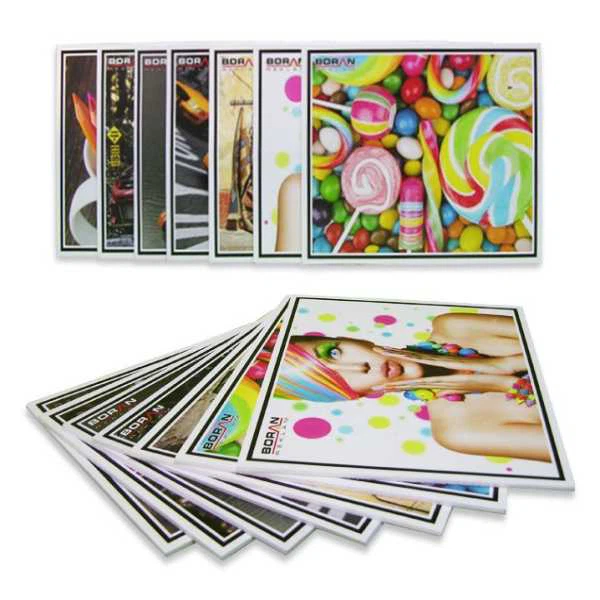
UV-printed graphics on PVC foam board-the print bonds directly to a smooth, rigid surface built for outdoor life.
On This Page
- I. The Sign Material That Does Three Jobs at Once
- II. What UV Printing Brings to the Board
- III. PVC vs Acrylic vs ACM: The Sign Maker's Shortlist
- IV. How It Moves Through a Print Shop
An outdoor sign has to do three things well, and most materials only do two. It has to take a print cleanly, so the graphic is sharp and the colors pop. It has to survive outdoors-rain, sun, wind, the odd knock from a ladder or a shopping cart. And it has to be light enough that one installer can carry it up a ladder, mount it on a wall, and go home without a second pair of hands.
An outdoor UV printed PVC foam board sign hits all three. It is the sign material that print shops reach for when the customer wants acrylic-level print quality on a budget that acrylic cannot touch, in a material that will not warp, swell, or delaminate after a season outside.
I. The Sign Material That Does Three Jobs at Once
PVC foam board occupies a specific niche between paper-based signage that belongs indoors and heavy rigid substrates that need a crew to install. It is a closed-cell foam sheet with smooth, dense outer skins-light enough to be cut with a utility knife at small sizes, rigid enough to stay flat when mounted, and waterproof through its full thickness. It does not absorb moisture from rain or ground contact, so a sign staked into wet soil or mounted under a leaking awning stays flat and readable where corrugated plastic or cardboard composite would warp within days.
The surface is the other half of the story. The board arrives smooth and white, ready for print with no sanding, no priming, no coating step between unpacking and loading the printer. That flatness is not cosmetic-it determines whether fine text and thin lines print crisp or bleed at the edges.
II. What UV Printing Brings to the Board
UV printing is the difference between a sign that looks sharp on day one and one that still looks sharp after a summer of direct sun. Unlike solvent-based inkjet printing-which soaks into the surface and fades as the ink degrades-UV ink cures instantly under ultraviolet light as a hardened layer bonded to the board surface. The result is scratch-resistant, waterproof, and colour-stable for far longer than a solvent print on the same substrate.
The technical advantage that matters most in practice is that UV-printed PVC foam board can go directly from the printer to the installation site. No drying time, no lamination step, no protective overcoat. The ink is cured and hard the moment it exits the print bed, which is why a print shop can turn a job around in hours rather than days.
One board, one print pass, out the door. The PVC foam core carries zero water weight, the UV print carries zero drying time, and the combination turns a three-step sign production process into a single continuous workflow.
III. PVC vs Acrylic vs ACM: The Sign Maker's Shortlist
Sign makers choose between three rigid substrates for outdoor work. Each has a place; what follows is which place belongs to which board.
| Property | PVC Foam Board | Acrylic | ACM (Aluminium Composite) |
|---|---|---|---|
| Weight | Light-one-person install | Heavy, brittle | Medium |
| Print surface | Smooth, ready to print | Excellent, premium look | Requires coating |
| Water resistance | Waterproof, no swelling | Waterproof | Edges can delaminate |
| Cutting & shaping | Easy-knife, saw, CNC, router | Laser only, cracks easily | Shear or CNC only |
| Cost per m² | Low | High | Medium-high |
| Best use | Outdoor signage, displays, light boxes | Premium indoor, backlit | Large-format building signs |
For the sign maker who prints a hundred real-estate boards, fifty café pavement signs, or a row of directional displays for a golf course, PVC foam board hits the intersection of cost and performance where the other two materials overshoot on price or undershoot on workability. Our full substrate comparison breaks down the numbers in more detail.
IV. How It Moves Through a Print Shop
The board's processability is the hidden line item on the sign shop's profit-and-loss statement. A material that takes longer to cut, needs a different blade, or generates waste from breakage during handling costs more in labor than the invoice shows. PVC foam board cuts on a standard saw, router, or CNC table. It can be die-cut, engraved, thermoformed, and glued. It ships flat, stores flat, and a stack of fifty boards weighs less than a single sheet of ACM of equivalent area.
Cut Any Way
Saw, router, CNC, knife, die-cut, or engrave-the board accepts whatever tool the shop already owns.
Print Directly
The smooth white surface needs no primer or coating. Load the board, print, and the job is done-no drying, no laminating.
Shape Freely
Thermoform, bend with heat, glue, or mount-the board adapts to shaped signs, not just flat rectangles.
Orders are produced to the dimensions, thickness, and print specification the job requires-standard blank boards are stocked for immediate dispatch, and printed boards are produced to artwork. Thickness runs from 1 mm lightweight display board up to 19 mm rigid structural panels for freestanding outdoor installations. For sourcing guidance, our advertising board selection guide walks through the density and surface choices that determine print quality.
Frequently Asked Questions
Frequently Asked Questions About UV Printed PVC Foam Board Signs
Common questions from sign makers, print shops, and advertising buyers.
Q1: How long does a UV-printed PVC sign last outdoors?
A: The PVC board itself is waterproof and UV-stabilised-it will not warp, swell, or degrade from rain and sun. The UV-cured print layer is scratch-resistant and colour-stable for significantly longer than solvent-based prints. Exact outdoor life depends on sun exposure, climate, and ink coverage; for the longest service life in full-sun locations, specify a UV-overcoated print.
Q2: What thickness should I choose?
A: 1–3 mm for indoor displays and temporary signage; 5–6 mm for standard outdoor signs, real-estate boards, and wall-mounted displays; 10 mm and above for freestanding A-boards, pavement signs, and installations that need structural rigidity without a frame. Thicker boards resist wind load better and stay flatter when mounted on posts.
Q3: Can the boards be cut to custom shapes?
A: Yes. CNC routing, die-cutting, and saw-cutting all produce clean edges. The board can also be thermoformed into curved shapes with heat, and glued or mechanically fastened to mounts and frames. Custom shapes and sizes are produced to order.
Q4: What is the MOQ for printed signs?
A: Blank boards are stocked and ship immediately. Printed boards are produced to artwork with a negotiable MOQ. Free samples are available for qualified buyers. For a quote on your dimensions, thickness, and print specification, contact our sales team.
Order Blanks or Printed Boards, Cut to Your Spec
UV-printed or blank PVC foam board-1 mm to 19 mm, custom sizes, custom shapes. Lightweight, waterproof, ready to print or printed to your artwork. Free samples for qualified buyers.
View the ProductYUPSENI Team
23 years in PVC building material manufacturing and supply chain. We help sign makers, print shops, and advertising buyers source PVC foam board that prints clean and lasts outdoors. More about YUPSENI
© 2026 YUPSENI. All rights reserved. The information in this article is for general informational purposes only. Outdoor print life varies by climate, UV exposure, and ink specification. Always request current datasheets and print samples before making procurement decisions.


