

Digital Advertising PVC Board: One Substrate, Every Printing & Engraving Process
Jul 24, 2026
The Digital Advertising PVC Board: Why the Substrate Decides the Print Before the Printer Even Starts
Read time: 5 minutes | By: YUPSENI Team
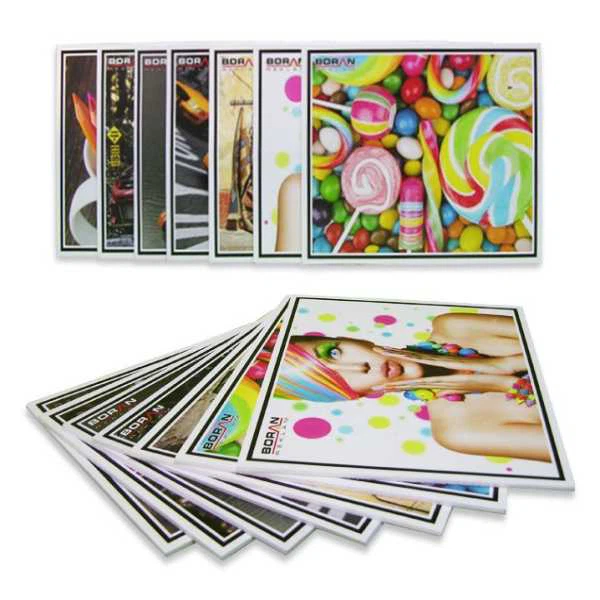
UV-printed graphics on PVC foam board-the print bonds directly to a smooth, rigid surface with no primer, no coating, and no drying time.
On This Page
- I. The Sign That Has to Look Expensive on a Budget That Isn't
- II. What "Digital-Ready" Means at the Board Level
- III. Three Jobs One Board Does Without Changing the Workflow
- IV. The Engraving Bonus Nobody Mentions
A flatbed UV printer is an expensive machine. It costs more than the van that delivers the signs, and the sign shop that owns one has every incentive to run it as close to continuously as the job queue allows. When the printer is the bottleneck, the substrate that feeds it decides the throughput.
That is how a digital advertising PVC board earns its place in a sign shop. It is not the most expensive board on the rack, and it is not the one with the highest spec sheet numbers. It is the one that moves from the pallet to the print bed to the installation site with the fewest steps in between. For a shop printing fifty signs a day, the board that skips a step saves more money than the board that costs less per sheet.
I. The Sign That Has to Look Expensive on a Budget That Isn't
Walk through a shopping centre, a trade show floor, or a real-estate office, and the signs you see have a split personality. From six feet away, they read as premium printed graphics-crisp text, saturated colours, clean edges. Walk up and touch one, and the secret is out: it is not acrylic, not aluminium composite, not a hand-painted wood panel. It is a lightweight PVC foam board that cost a fraction of what it looks like it cost, printed in one pass on a machine that was already running.
This is the niche that digital advertising PVC board occupies in the sign industry. It is the substrate chosen when the graphic is the product, the budget is real, and the sign needs to survive in a retail environment-mounted on a wall, hung from a ceiling grid, standing in a floor frame, or screwed to a post outdoors. It does not need to be bulletproof. It needs to be flat, printable, lightweight, and presentable, in that order.
II. What "Digital-Ready" Means at the Board Level
Not every rigid board is ready for digital printing, and the ones that are not will waste more in wasted prints and rework than they save on the invoice. A digital-ready board has to meet three conditions that are easy to describe and surprisingly easy to get wrong in production.
Surface Flatness
A UV print head rides a fraction of a millimetre above the substrate. A board with thickness variation or surface ripple will produce banding, blur, or head strikes. A quality PVC foam board holds tight thickness tolerance across the sheet, so the first print is the keeper.
Ink Adhesion
The smooth, dense skin layer on a closed-cell PVC board gives UV ink a clean surface to bond to. No primer, no coating-the ink cures directly onto the board and stays there. Solvent and screen inks adhere equally well.
Dimensional Stability
A board that warps after printing is a rejected job. PVC foam board stays flat through temperature and humidity changes that would curl a paper-based or composite substrate within hours of leaving the shop.
The practical upshot for a print shop is that a digital advertising PVC board loads straight from the pallet onto the print bed. No sanding, no priming, no waiting for a coating to dry. Print, cut if the job requires a shaped edge, and the sign is ready to pack.
III. Three Jobs One Board Does Without Changing the Workflow
The reason digital advertising PVC board shows up in so many sign shop orders is that the same sheet, in the same thickness, with the same print settings, covers multiple end uses. The job ticket changes; the substrate does not.
| Application | What the Board Brings | Typical Thickness |
|---|---|---|
| Indoor retail signage | Clean white surface, saturated print, lightweight for hanging | 1–3 mm |
| Exhibition & trade show displays | Rigid yet portable, fits standard display systems | 3–5 mm |
| Outdoor signage & real-estate boards | Weather-resistant, UV-stable, holds print outdoors | 5–10 mm |
| Point-of-sale & shelf displays | Die-cut to shape, stands upright, takes a shelf clip | 1–5 mm |
| Engraved & routed signs | Clean router edge, no grain tear-out, paints if wanted | 3–19 mm |
The board also takes screen printing, spray painting, vinyl lettering, and lamination, so the sign shop that standardizes on it for UV work can use the same stock for jobs that come in through a different production line. One pallet of board, multiple output methods, no substrate switching. For a deeper comparison of how PVC stacks up against acrylic, ACM, and corrugated plastic across all sign types, our sign substrate comparison guide covers the trade-offs.
IV. The Engraving Bonus Nobody Mentions
Digital print shops do not always run a router, but the ones that do discover something about PVC foam board that the spec sheet does not advertise: it engraves with the same behaviour as a medium-density wood, minus the grain. A CNC router running a V-bit or a ball-nose bit produces clean, chip-free channels with a smooth bottom surface. The foamed core cuts without grabbing the tool, and the dense skin layer leaves a crisp edge at the top of the cut rather than a fuzzy or rolled-over lip.
This opens a workflow that combines print and engraving on the same board, in the same job, without changing materials between operations. The flatbed printer lays down the full-colour graphic. The router follows with dimensional lettering, a recessed logo, or a decorative border cut. The result is a sign with the visual depth of a routed wood panel and the full-colour output of a digital print-on a board that cost less than either method would have cost on a premium substrate.
One board, two processes, no material change. Print the graphic, then engrave the dimensional detail. The PVC foam core routs clean and the skin layer holds a sharp edge-something no paper-based or corrugated board can offer, and something that would cost significantly more on acrylic or ACM.
For sign makers and print buyers sourcing board in volume, the decision rarely comes down to a single property. It comes down to how many jobs one board can serve without a process change. The digital advertising PVC board answers that question with a short list: UV print, solvent print, screen print, spray, vinyl, rout, engrave, die-cut, and mount-all from one pallet. Our advertising board selection guide covers thickness, density, and surface choices in detail, and the full PVC advertising board range shows the available formats.
Frequently Asked Questions
Frequently Asked Questions About Digital Advertising PVC Board
Common questions from print shops, sign makers, and advertising buyers.
Q1: What printing methods work on this board?
A: UV flatbed printing is the most common, but the board also accepts solvent inkjet, screen printing, spray painting, and vinyl application. The smooth surface needs no primer or coating before any of these processes.
Q2: What thickness do I need?
A: 1–3 mm for indoor displays, shelf signs, and poster replacements. 3–5 mm for exhibition stands and trade show panels. 5–10 mm for outdoor signage, real-estate boards, and freestanding displays. 10 mm and above for rigid freestanding installations and engraved signs.
Q3: Can it be used outdoors?
A: Yes. PVC foam board is waterproof and UV-stabilised. For long-term outdoor use, UV-printed graphics hold colour significantly longer than solvent prints. For maximum outdoor life in direct sun, a UV-protective overcoat is recommended. The board itself does not warp or swell from rain or humidity.
Q4: Does it rout and engrave cleanly?
A: Yes. The closed-cell foam core cuts without grabbing or chipping, and the dense skin layer leaves a crisp edge at the top of the cut. It behaves similarly to medium-density wood on a CNC router, without the grain tear-out or the dust issues. V-bit, ball-nose, and straight-cut tools all produce clean results.
Stock One Board That Feeds Every Machine in the Shop
Digital advertising PVC board-UV-ready surface, 1–19 mm thicknesses, standard and custom sheet sizes. Prints, routs, engraves, and die-cuts. Free samples for qualified buyers.
View the ProductYUPSENI Team
23 years in PVC building material manufacturing and supply chain. We help sign makers, print shops, and advertising buyers source PVC foam board that prints clean, routs smooth, and lasts outdoors. More about YUPSENI
© 2026 YUPSENI. All rights reserved. The information in this article is for general informational purposes only. Print performance may vary by ink type, printer model, and environmental conditions. Always request current datasheets and test samples before placing production orders.


