

PVC Ceiling Tiles for Basement — Mold-Resistant Panels That Beat Gypsum & Mineral Fiber
Aug 16, 2026
PVC Ceiling Tiles for Basement: The Mold-Resistant Ceiling That Beats Gypsum Below Grade
Read time: 8 minutes | By: YUPSENI Team
On This Page
- I. The Room That Never Fully Dries
- II. Mold Needs Three Things. PVC Removes Two.
- III. What the Wet Ceiling Failure Chain Looks Like
- IV. Dropped Ceilings, PVC Panels, and the Access That Matters
- V. Under the Joists: Clips, Battens, and the Gap
- VI. When the Basement Becomes a Room
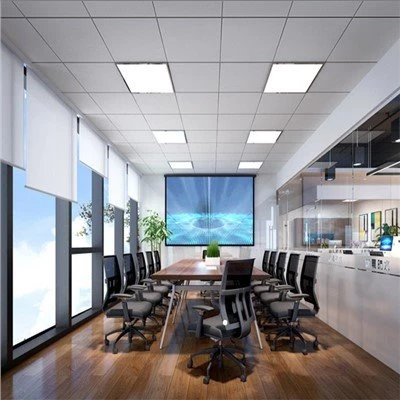
PVC ceiling panels installed in a below-grade room, covering the joist bay while staying fully serviceable.
PVC ceiling tiles for basement applications exist because the basement is the one room in the house where the ceiling fails first. Concrete below grade releases moisture year round, warm air meets cold surfaces and condenses, and the ceiling-the surface nobody looks at-collects the evidence.
This guide explains why PVC ceiling board survives the basement environment that destroys paper-faced gypsum and mineral fiber, how the installation works with a dropped ceiling, and where the material reaches its honest limits.
I. The Room That Never Fully Dries
A basement sits below grade, wrapped in soil and concrete that hold water like a sponge. Moisture migrates through the slab and the walls continuously, even in a dry climate. In a wet season, relative humidity inside an unventilated basement routinely sits between sixty and eighty percent. That is not a damp corner problem. That is the room's steady state.
The ceiling meets the worst of it twice. First, warm humid air rising from the living space above hits the cold underside of the joists and condenses. Second, the joist bay itself collects the air that comes up from the basement walls, which are the coldest surfaces in the house. Every surface that can hold moisture holds it there. Paper-faced gypsum holds it. Mineral fiber holds it. Wood holds it.
The classic basement ceiling is a moisture trap wearing a ceiling tile costume.
A ventilated, dehumidified basement changes the equation, and no material fixes a basement that never dries. But the material choice decides how much damage the residual moisture can do. A ceiling that cannot absorb water cannot feed mold, cannot sag under its own wet weight, and cannot stain. That is the entire argument for PVC below grade.
II. Mold Needs Three Things. PVC Removes Two.
Mold is not mysterious. It needs moisture, a food source, and a temperature range that a finished basement always provides. Remove one element and the colony never establishes. The trick is knowing which element you can remove.
Temperature is not negotiable; a basement is comfortable precisely because it sits in the mold-friendly range. Moisture is only partially controllable; dehumidifiers and ventilation help, but the concrete keeps feeding humidity. That leaves the food source. Mold eats cellulose: paper, wood fibre, dust. A paper-faced gypsum ceiling is a buffet. A mineral fiber tile is a sponge with a food supply. A PVC panel is neither.
Why mold cannot colonize a PVC surface
No cellulose. The polymer contains no paper, wood, or fibre for mold to digest.
No porosity. The smooth, dense surface gives spores nothing to grip and no reservoir to wick from.
No absorption. The closed-cell core cannot hold water, so the surface stays dry where gypsum stays damp.
Wipe-clean. Even accumulated dust washes off with a damp cloth, removing the only food spores could find.
The result is a ceiling surface that does not participate in the basement's moisture cycle. It is not that PVC repels mold with a chemical coating that wears off. It is that mold has nothing to eat and nowhere to anchor, which is a structural property, not a treatment. The difference matters because coatings fail in year three while the material itself never stops being what it is.
III. What the Wet Ceiling Failure Chain Looks Like
Every conventional basement ceiling follows the same downhill sequence once moisture finds it. Understanding the chain explains why the repair is always a replacement.
Step one: condensation forms on the cold underside of a paper-faced gypsum ceiling, usually in the corners and along the joists where the airflow is worst. Step two: the paper face stays damp long enough for spores to germinate, typically within a day or two of continuous moisture. Step three: the colony spreads across the paper, darkens, and releases spores that change the room's air quality. Step four: the gypsum core softens where the water has worked through, the tile sags, and the stain shows through paint no matter how many coats are applied. Step five: the ceiling is cut out and replaced, and the new ceiling repeats the chain because the room did not change, only the board did.
Mineral fiber runs a parallel chain with its own twist: the tile absorbs moisture into its body, swells at the edges, and sags between the grid tees. The sag is a giveaway to any inspector that the ceiling has been wet, and a wet mineral fiber tile carries the same mold food problem as paper, plus a permanent musty odour that no cleaning removes. The mineral fiber versus PVC comparison covers the material-level difference in detail.

The same PVC ceiling system in a high-humidity room, where the failure chain of gypsum and mineral fiber is most visible.
PVC breaks the chain at step one. Condensation forms on the panel surface, beads, and runs off or evaporates, because the closed-cell material does not absorb it. Nothing stays damp. Nothing feeds spores. Nothing sags. The ceiling keeps its geometry and its colour, and the only maintenance is the same wipe a kitchen counter gets. The full comparison of ceiling materials, including where gypsum still has a place, is in the ceiling material comparison guide.
IV. Dropped Ceilings, PVC Panels, and the Access That Matters
A basement ceiling is rarely just a ceiling. It is a lid over plumbing, wiring, ductwork, and the occasional leak that must be found and fixed. The material choice interacts with that reality in a way most buyers discover only after the first pipe repair.
A dropped ceiling built on a light metal grid gives the room a serviceable void. The question is what fills the grid. Gypsum tiles are heavy, brittle at the edges, and crack when lifted out for access. Mineral fiber tiles are light but fragile, and a tile removed for a repair rarely goes back without a dent. PVC panels in a grid system lift out cleanly and go back the same way, which sounds minor until a plumber has been in and out of the ceiling three times in one week.
The access point matters in another way specific to basements. When a leak happens above a paper-faced ceiling, the water travels along the paper and stains a wide area far from the actual pipe. The drywall patch becomes a bigger project than the plumbing fix. A PVC ceiling shows the leak as a dripline at the seam, the panel comes down, the pipe is repaired, and the panel goes back without a patch, a skim coat, or a paint match. The ceiling is a reusable component rather than a consumable one.
V. Under the Joists: Clips, Battens, and the Gap
Two installation routes cover most basements: direct fixing to timber battens, or a suspended grid. Both work with PVC panels, and both have rules that matter below grade.
Direct fixing starts with battens or furring strips fixed to the joists, levelled with shims where the floor above dips. Panels then clip or screw to the battens with a small expansion gap at the walls. The gap is not optional. A PVC panel expands and contracts with temperature, and a panel locked tight against the walls will buckle where a gapped panel simply moves. The installation guide walks through clip spacing and the expansion calculation in full.
Below grade, one extra consideration applies: the panels should never seal the joist bay completely against the walls. The basement needs whatever airflow it can get, and a ceiling that traps humid air against the joists converts a ventilated room into a humid pocket. Battens that stand the panels off the joists by a finger's width keep the air moving behind the ceiling. A suspended grid achieves the same by nature of its construction.
Recessed lighting, vent registers, and sprinkler heads all cut cleanly into the panels with a hole saw or a utility knife, and the cut edge stays finished because the material is white through its thickness. A recessed light that must be moved later leaves a hole that is patched with a spare panel offcut, not a drywall repair.
For a finished look in a finished basement, the surface options cover the design range: plain white for the classic utility ceiling, embossed panels that imitate pressed metal, and wood-grain finishes for a warmer room. The wood-look ceiling panel guide shows the decorative range, and the embossed panel guide covers the pressed-metal effect.

PVC ceiling planks ready for clipping to battens, with cuttable edges for lights and vents.
VI. When the Basement Becomes a Room
A finished basement is a living space: a home theater, a gym, a workshop, a guest room, or the kids' play area. The ceiling above that room carries a responsibility no other ceiling carries. If the ceiling above a living room grows mold, the drywall hides it until the damage is obvious. If the ceiling above a basement bedroom grows mold, the spores drop into the air that the family breathes every night.
The indoor air argument is the one most homeowners never hear at the point of decision. Building codes and good practice push vapor barriers and dehumidifiers into basements, yet the ceiling material is still chosen by habit. A material that cannot host mold is the only ceiling finish that contributes nothing to the room's airborne spore load. That is a quiet benefit. It is also the most valuable one the material has.
The honest limits belong in the same paragraph. PVC panels are not insulation; a basement ceiling in a cold climate still needs the insulation decision made separately, above the panels. PVC is not fire-rated like gypsum in commercial applications; a basement used as a rental unit or a business space should have the local fire code checked before specifying any ceiling. And PVC will not fix a basement that floods; if water stands on the slab, the ceiling is the least of the problem. Within those limits, the material does exactly what a basement ceiling needs: it stays dry, stays clean, and stays out of the failure chain entirely.
For panel sizes, surface finishes, and the quotation for a below-grade ceiling project, the PVC ceiling board range covers the options. For project-specific advice on moisture control and installation, contact our sales team.
Frequently Asked Questions
Frequently Asked Questions About PVC Ceiling Tiles for Basements
Common questions from homeowners and contractors finishing basements with moisture-resistant PVC ceilings.
Q1: Will PVC ceiling tiles really stop mold in a damp basement?
The panel itself will not grow mold, because the surface contains no cellulose for spores to digest and no porosity for them to anchor in. That is a material property, not a coating that wears off. What the panel cannot do is dry out the room: if the basement stays at high humidity, the mold will find other surfaces-walls, stored boxes, wood framing. PVC ceiling tiles remove the ceiling from the mold equation. A dehumidifier and ventilation remove the rest of the equation.
Q2: Can PVC panels go over an existing drywall ceiling?
Yes, provided the existing ceiling is sound and level enough to fix battens to. The PVC panels are fixed over the drywall, which becomes the substrate. If the existing drywall is already stained or shows mold, it should be removed first, because covering a contaminated surface hides the problem rather than solving it. A clean, dry substrate under the panels gives the new ceiling the same clean start the room deserves.
Q3: How much access do I need to keep above a PVC basement ceiling?
Keep access at every plumbing joint, shutoff valve, and electrical junction. A PVC panel lifts out of a clip system without tools and goes back without damage, so a serviceable void is easy to maintain. Mark the panel positions on the joists or grid so a future repair finds the right panel on the first try. The panel above the main waste pipe, in particular, should be one you can reach in under a minute, because that is the pipe that will eventually demand it.
Q4: What about fire safety for a basement ceiling?
PVC ceiling panels are combustible and are not a substitute for fire-rated gypsum where local code requires a rated assembly. A finished basement used purely as a residence falls under different rules than a basement rented as a unit or used for a business. Check the local code for the occupancy class before specifying the ceiling. For residential basements where the code allows it, PVC panels are widely used; where a rating is required, gypsum stays the structural answer and PVC panels can still serve as a decorative, replaceable face where the assembly permits.
Q5: Do PVC ceiling panels insulate a basement ceiling?
No. The panels are a surface finish, not insulation. A basement ceiling in a cold climate needs the insulation decision made above the panels, in the joist bay, with a vapor barrier placed on the warm side of the insulation. Installing PVC panels first and discovering the room stays cold means taking the ceiling down to add insulation. Plan the thermal layer before the finish layer, and the panels simply become the clean, serviceable face over a properly insulated assembly.
Finish the Basement Ceiling That Never Joins the Moisture Cycle
Plain white, embossed, or wood-look panels for below-grade rooms, with expansion-aware clip systems and clean-cuttable edges for lights and vents.
Request a Ceiling QuotationYUPSENI Team
23 years in PVC building material manufacturing and supply chain. We help homeowners and contractors finish below-grade rooms with ceilings that stay dry, clean, and mold-free by design. More about YUPSENI
© 2026 YUPSENI. All rights reserved. The information in this article is for general informational purposes only and does not constitute professional advice. Building codes, fire ratings, and moisture control requirements vary by jurisdiction and project. Always verify local code requirements and request current datasheets before making procurement decisions.


