UL-94 Ratings for PVC Sheet: What V-0 Actually Certifies
Oct 01, 2026
UL-94 Ratings for PVC Sheet - What V-0 Actually Certifies
12 min read
By YUPSENI Team
A V-0 rating describes the behaviour of a small specimen in a laboratory flame test. It does not describe the behaviour of a building.
On This Page
A buyer asks whether a sheet is fire rated. The reply comes back with a rating on it. Both parties consider the question answered, and in a substantial number of cases they have just agreed on something neither of them intended.
The difficulty is not that fire ratings are unreliable. It is that several different systems use similar-looking letters and numbers for completely different measurements, and a specification written against one of them will not be satisfied by a certificate issued under another.
This article deals with one of those systems, the one most often quoted for plastic materials and the one most often misunderstood. The components that determine how a sheet performs under it are the same ones covered in our guide to what is actually in a PVC sheet.
I. Three Standards That Share One Word
Before the detail, it is worth separating the three systems that most often get confused with one another.
| System | What it measures | Typical output |
|---|---|---|
| UL-94 | Small-scale burning behaviour of a material specimen in a controlled laboratory test | HB, V-2, V-1, V-0, 5VB, 5VA, and foam equivalents |
| Surface burning classification used in North America | Flame spread and smoke over a large specimen in a tunnel furnace, for building surface materials | Class A, B or C, with a smoke developed index |
| European reaction to fire classification | Overall contribution to fire in a defined end-use application, combining several test methods | A1 through F, with separate smoke and droplet sub-classes |
A UL-94 result does not imply a building classification
These systems are not convertible. A material that achieves a strong UL-94 rating may or may not meet a given surface burning class, and there is no accepted arithmetic for getting from one to the other. They differ in specimen size, energy input and what they actually observe. Each answers a different question, and the answer to one does not describe the other.
The building classifications, and what the letters mean for a construction project, are covered in our piece on fire ratings in PVC building materials. Where the material is polystyrene rather than PVC, the regulatory consequences are set out in our article on polystyrene wall panels and commercial building fire rules.
The same base polymer produces different ratings depending on what else is in the formulation and how thick the specimen is.
The practical consequence is that the first question to ask about any fire rating is which system issued it. The second is whether the specification being satisfied refers to the same system.
II. Inside the UL-94 Test
The test itself is small and specific, and knowing what it does explains most of what the ratings can and cannot mean.
A specimen of defined dimensions is held in a clamp. A laboratory flame of specified energy is applied to one end for a set period. The flame is removed. The technician then observes a small number of things: how long the specimen continues to burn, how long it glows after the flame has gone, whether material drips off it, and whether those drips are themselves alight and capable of igniting a piece of cotton placed below.
There are two orientations. In the horizontal version the specimen lies flat and the flame advances along it. In the vertical version the specimen hangs downwards, and the flame runs upward against gravity, which is a more demanding configuration because heat rises into the unburned material.
Horizontal
The specimen burns along a horizontal axis and the technician measures how fast the flame front travels. A material either meets a burning rate limit or self-extinguishes before reaching a marked distance. The result is the weakest of the ratings and means the material will burn, just slowly.
Vertical
The specimen hangs down and the flame is applied, removed, then applied again. The result depends on afterflame time, whether burning reaches the clamp, and the behaviour of any dripping material. The three vertical ratings differ mainly in how much dripping and afterflame is tolerated.
There is also a more severe version for applications where the exposure is expected to be longer, using a larger flame applied several times, with different acceptance criteria again. And there is a separate protocol for foamed materials, with its own ratings, because a cellular structure burns differently from a solid section of the same polymer.
The foam protocol produces ratings that are not comparable with the solid ones
Where a material falls below a specified density it is tested as a foam, and the resulting ratings come from a different procedure. A foam rating and a solid rating sitting side by side in a comparison table were not produced by the same test, even though both are described as UL-94 results. Whether a given PVC foam board is tested under one protocol or the other depends on its density.
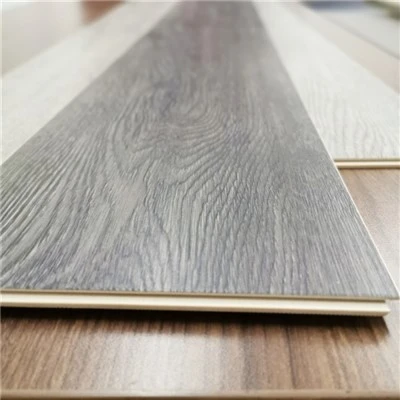
Specimen dimensions, orientation and thickness are part of the test, not incidental to it. A rating belongs to the specimen that produced it.
III. Reading a Rating, Including the Part Usually Left Off
A UL-94 rating quoted on its own is incomplete. A correct statement includes a thickness, and that qualifier is the part most often dropped when a rating is passed from a datasheet into a specification.
| Rating | What it means in practice |
|---|---|
| HB | The material burns along a horizontal specimen at a rate below a defined limit. It is a rating of slow burning, not of non-burning. |
| V-2 | Vertical specimen self-extinguishes within a generous time limit, but flaming drips are permitted even if they ignite material below. |
| V-1 | As V-2 but flaming drips must not ignite material below. Dripping itself is still allowed. |
| V-0 | The specimen self-extinguishes quickly, no burning reaches the holding clamp, and flaming drips capable of igniting material below are not permitted. |
| 5VB and 5VA | Tested with a larger flame applied repeatedly. 5VA is the more severe of the two, distinguished by whether the specimen survives without a hole burned through it. |
A rating without a thickness is not a rating
Burning behaviour changes with section thickness. A thin specimen has less material to sustain combustion but may drip more readily; a thick one holds heat differently and can burn longer once established. Ratings are therefore reported against the thickness tested, and a result obtained at one thickness does not transfer to another. A datasheet reading simply V-0 without a thickness has omitted the part that makes the figure usable.
The second omission is the formulation. The rating belongs to the specific compound tested, including its filler, its stabiliser, its impact modifier and its pigment. Change any of those and the rating is no longer demonstrated, in the same way that a colour change invalidates a food contact declaration. The reasoning behind that parallel case is set out in our piece on PVC building material certifications.
So a complete statement reads along the lines of a rating, at a thickness, for a named compound. Anything shorter is a summary that has removed the conditions under which the summary was true.
IV. The Limits of a Small-Scale Test
UL-94 is deliberately small. That makes it fast, repeatable and cheap, and it also defines exactly what it cannot tell you.
It does not measure heat release. A material can self-extinguish and still contribute a great deal of energy to a fire while it is burning. The rate at which energy is released is the property that drives fire growth, and this test does not observe it.
It does not measure smoke. Smoke production is not part of the acceptance criteria at all, which matters considerably for PVC and is discussed below.
It does not measure flame spread over a large surface. A specimen a few centimetres wide does not reproduce the behaviour of a wall, where the geometry allows heat to accumulate and the flame front can accelerate.
It does not test the assembly. Panels are installed with adhesives, sealants, fixings, substrates and cavities behind them. None of those are present on a test specimen, and several of them can change the outcome.
It does not assess toxicity of combustion products. This is a separate subject with its own test methods, and it is not implied by any UL-94 rating.
A screening test used as an approval
The appropriate role for a small-scale test is to sort materials before committing to the expensive large-scale work. It is efficient at that. The problem arises when a screening result is quoted in a specification as though it described the performance of the finished installation, which compresses a whole series of questions into a two-character answer.

The specimen is not the installation. Substrates, adhesives and cavities behind a panel are absent from the test and present in the building.
None of this makes the rating useless. It makes it specific. The rating tells you that a particular specimen of a particular compound at a particular thickness behaved in a particular way under one defined laboratory exposure, and that is a genuinely useful piece of information provided nobody asks it to be more than that.
V. How PVC Behaves Under It
PVC occupies an unusual position among commodity polymers in fire testing, and the reason is the same one that governs its chemical behaviour.
The chlorine content - a substantial fraction of the polymer by weight - gives PVC inherent resistance to combustion. When the material is heated, the chlorine participates in reactions that promote char formation and interfere with the radical chain reactions that sustain a flame. The practical effect is that rigid PVC tends to self-extinguish rather than continue burning, without needing the flame retardant additives that other polymers require to reach comparable ratings.
This is a real advantage, and it is unusual
Most polymers reach a vertical rating only by having additives added specifically for that purpose, and those additives often cost performance elsewhere. PVC achieves comparable results from its own chemistry, which is part of why it holds a position in applications where fire requirements apply.
The formulation still matters, and in predictable directions. Plasticiser increases flammability, so a flexible grade will rate worse than a rigid one of the same base resin. Fillers dilute the combustible content and can improve the rating, though they change mechanical properties at the same time. Impact modifiers sit somewhere in between, depending on the chemistry used. The relationship between formulation and mechanical performance, including how filler and modifier choices trade against each other, is covered in our piece on why density is not strength.
The extrusion process also has a bearing. A foamed board has a cellular structure, which changes how heat moves through the section and how the material behaves once ignited, and the formulation for a foam is different from that of a solid sheet in ways that affect the result. The variables involved in producing a consistent foam structure are set out in our article on PVC foam board production variables.
Rigid unplasticised PVC rates better than a flexible grade of the same base resin, because plasticiser adds fuel and chlorine does not.
There is a qualification that belongs in this section rather than in the next, and it is the one that matters most in a real fire. The same chlorine that suppresses combustion is released as hydrogen chloride when the material does decompose. Chlorine gives PVC its flame performance and its chemical resistance, and it also determines what the material produces when those defences are eventually overcome.
VI. The Property Nobody Measures
Smoke is not part of a UL-94 rating. It is also, in most building fires, the property that determines whether people get out.
Deaths in fires are overwhelmingly attributable to inhalation of smoke and combustion gases rather than to direct contact with flame, and smoke obscuration is what prevents occupants from finding exits. A material that resists ignition and produces impenetrable smoke in the process has solved one problem and created a different one.
PVC generates dense smoke and hydrogen chloride
When PVC does burn it produces a heavy, obscuring smoke and releases hydrogen chloride, which is both an irritant and corrosive. Neither of those appears in a UL-94 result because the test does not observe them. Where an application has smoke or toxicity requirements, those requirements live in a different standard, and a favourable UL-94 rating is not evidence about them.
The building classifications handle this differently. The North American surface burning system reports a separate smoke developed index alongside the flame spread class, and the European system attaches smoke and droplet sub-classifications to the main class. Both arrangements exist precisely because flame spread alone does not describe a fire, and both are absent from UL-94.
The routes that do address smoke and flame behaviour together are covered in our pieces on Class A, B and C classifications and on flame retardant flooring and its fire class and smoke performance. The second of those deals with the same chlorine-derived trade-off in a related material system, which is worth reading alongside this one.
VII. What to Put in the Specification
Fire requirements are usually written by the project's fire engineer or the authority having jurisdiction, and the material specification has to demonstrate compliance with whichever system those documents reference.
Identify which system the project actually requires. A specification citing a building surface class is not satisfied by a UL-94 rating, and the reverse is also true.
Ask for the rating with its thickness qualifier, and compare it against the thickness being supplied rather than against the thinnest one available.
Confirm that the rating belongs to the compound and colour being ordered, not to a related grade from the same family.
Establish whether the material was tested as a foam or as a solid, since the two sets of ratings come from different procedures.
If smoke or toxicity performance is required, state it separately and confirm it is covered by an appropriate test rather than assumed from the flammability rating.
Where the installation is regulated as an assembly, ask for evidence at the assembly level, because component ratings do not add up to an assembly classification.
Most of those items cost nothing to establish and prevent the specific situation where a project receives a certificate that is genuine, relevant to a similar product, and not applicable to the one being installed.
The wider point runs through this entire series. Test results describe tests. The gap between what a result measures and what an installation needs is where almost all confusion in material specification originates, and closing it requires asking what was tested rather than how well it scored.
The short version
UL-94 is a small-scale laboratory flammability test producing ratings from HB up to 5VA, used mainly for screening materials. It is not interchangeable with building surface classifications or European reaction to fire classes, and a result from one system does not imply a result in another. Ratings belong to a thickness and a formulation, so a rating quoted without either is incomplete. Foamed materials may be tested under a separate protocol with ratings that are not comparable to the solid ones. PVC has an unusual inherent advantage because its chlorine content promotes self-extinguishing behaviour without additives, but the same chlorine produces dense smoke and hydrogen chloride when the material does decompose, and neither is measured by this test.
Frequently Asked Questions
Flammability Rating Questions
Common questions from specifiers, importers and project buyers.
Does a V-0 rating mean the material will not burn?
No. It means a specimen of a particular thickness self-extinguished within a short time in a defined laboratory test, without burning to the clamp and without dripping material that ignited cotton below. The material still burns while the flame is applied. The rating describes behaviour after the ignition source is removed, which is a much narrower statement than fireproof.
Is a UL-94 rating the same as a Class A building classification?
No, and they are not convertible. The building surface classification comes from a large-scale tunnel test measuring flame spread and smoke across a substantial specimen. UL-94 uses a small specimen and a defined laboratory flame. Different specimen size, different energy, different observations. A material may perform well in one and not meet the other, and there is no accepted way to derive one from the other.
Why does the thickness matter so much?
Because burning behaviour changes with section thickness. A thin specimen has less material to sustain combustion but may drip more readily, while a thicker one holds heat differently and can burn longer once established. Ratings are therefore reported against the thickness tested, and a result at one thickness does not automatically apply at another. A rating quoted without a thickness has left out the condition that makes it meaningful.
Is a foam board tested the same way as solid sheet?
Not necessarily. There is a separate protocol for foamed materials, producing its own set of ratings, because a cellular structure behaves differently from a solid section. Which protocol applies depends on the material's density. This matters when comparing products, because a foam rating and a solid rating shown side by side in a table were not produced by the same procedure and are not directly comparable.
Does changing the colour affect the rating?
It can, and in principle it does, because a colour change introduces a different additive package into the compound. A rating demonstrated for one formulation does not automatically cover another, in the same way that a colour change invalidates a food contact declaration. Where a project requires a specific rating, the colourant should be included in what was tested.
Why is PVC easier to rate well than other plastics?
Because of its chlorine content. Chlorine participates in reactions that promote char formation and interfere with the chain reactions that sustain a flame, so rigid PVC tends to self-extinguish without needing dedicated flame retardant additives. Most polymers need those additives to reach comparable vertical ratings measured. Plasticiser reduces this advantage, so a flexible grade rates worse than a rigid one of the same base resin.
Does a good rating say anything about smoke?
Nothing at all. Smoke production is not part of the acceptance criteria in this test. For PVC this is significant, because when the material does decompose it produces dense smoke and releases hydrogen chloride. Where smoke or toxicity matters, that requirement lives in a different standard, and a flammability rating should not be presented as evidence about it.
Tell Us the Requirement, Not the Rating
Send us the standard your project references, the thickness and colour you need, and we will confirm which ratings apply to that specific compound.
Request a Quotation View the RangeYUPSENI Team
23 years in PVC building material manufacturing and supply chain. We help importers, distributors, and project buyers source foam board, sheet, wall panels, flooring and fencing that pass compliance the first time. More about YUPSENI
© 2026 YUPSENI. All rights reserved. The information in this article is for general informational purposes only and does not constitute professional advice. Flammability requirements, test methods and building classifications vary by jurisdiction, application and governing standard. Ratings apply only to the specific material, thickness and formulation tested. Confirm requirements with the relevant fire safety and code compliance functions before specifying materials.