

Lab and Hospital Furniture: Why Disinfectants Break the Joints First
Sep 29, 2026
Laboratory and Hospital Furniture - The Disinfectant Compatibility Problem
13 min read
By YUPSENI Team
A piece of casework is not one material. It is an assembly of several, and performance is set by the weakest one.
On This Page
When a laboratory bench or a hospital cabinet unit starts to fail, the investigation usually opens with the panel. In most cases the panel is the last component that went wrong.
The face is still intact, still cleanable, still functional. What has actually happened is that an edge band has lifted, a sealant has hardened and opened a gap, an adhesive line has softened, or a hinge has seized because the disinfectant being used every day is a chloride solution.
The reason this is so consistently misdiagnosed is that furniture is specified as a product rather than as an assembly. The panel gets a datasheet, a chemical resistance table and a compliance certificate. The seals, adhesives and hardware get a line in the bill of materials. Only one of those documents is ever compared against the cleaning regime. The chemistry that decides whether a foam board suits this application at all is in our guide to what is actually in a PVC sheet.
I. The Panel Is Rarely the Component That Fails
Consider what a typical base unit actually contains.
There is a panel material, and if the panel happens to be PVC foam board then the face is genuinely resistant to most of what a hospital or laboratory will use on it. There is an edge, which may carry a band, a machined profile or a weld. There is an adhesive holding that band on. There is a sealant where the unit meets a wall or a sink. There are hinges, drawer runners, shelf pins, screws and possibly threaded inserts. There may be a decorative laminate, in which case there is a substrate under it and another adhesive between the two.
Each of those components is a different material with a different chemical resistance. They are in contact with one another. And each of them is exposed to the same disinfectant on the same schedule as the panel face that was tested.
Performance is set by the weakest component, not the specified one
A chemical resistance certificate covers the panel. It says nothing about the adhesive, the sealant or the hinges, because those are supplied by someone else and were never part of the material qualification. The assembly fails at whichever of those is least suited to the cleaning regime, and the panel is usually the most resistant thing in the unit rather than the least.
This matters commercially because the failure gets attributed to the material. A buyer whose cabinet edges have swollen after two years concludes that foam board was a poor choice, when the actual problem was that the edge was banded with an adhesive that the daily wipe dissolved. The same panel, welded instead of banded, would have been fine. The specification was wrong, not the material.
II. What the Disinfectant Regime Is Designed For
A hospital cleaning protocol is written to kill organisms within a contact time. That is the primary criterion, and it is not negotiable.
Efficacy comes first. Spectrum of activity, contact time and staff safety follow. Material compatibility, where it appears at all, is usually a secondary note added after the agent has been selected. This is the correct order of priorities for infection control, and it means the furniture has to accommodate the disinfectant rather than the other way round.
| Agent family | Why it is used | What it attacks |
|---|---|---|
| Alcohols at working strength | Fast, broad, evaporates cleanly, kind to most surfaces | Extractive over many cycles. Removes surface additives and dulls finishes gradually. |
| Chlorine-releasing solutions | Broad spectrum, inexpensive, effective against resistant organisms | Corrosive to many metals. The chloride is a pitting agent for stainless steel and attacks aluminium directly. |
| Quaternary ammonium compounds | Residual activity, mild on surfaces, low odour | Mostly a residue question. Can leave films that affect sealant adhesion and accumulate in joints. |
| Hydrogen peroxide and accelerated peroxide systems | Broad spectrum, breaks down to water and oxygen, increasingly favoured | Oxidising. Produces slow discolouration and surface embrittlement across repeated cycles. |
| Peracetic acid | High-level disinfection where required | The most aggressive of the common set. Attacks sealants and adhesives as readily as it attacks the panel. |
The agent list changes, and the furniture does not
Infection control practice has moved toward chlorine and peroxide-based systems over the past decade because of their performance against resistant organisms. Both are oxidisers, and both behave differently from the alcohol-based wipes that were the mainstay before them. Furniture specified against an older agent list and cleaned against a newer one is a common source of otherwise inexplicable surface and hardware failure.
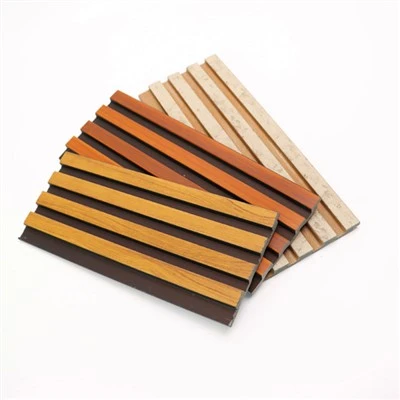
Disinfectant does not stay on the face. It runs into joints, sits in recesses and is drawn by capillary action into every gap the assembly has.
The practical point is that the cleaning regime should be established before the furniture is specified, not after. It is far easier to choose a compatible sealant and hardware grade at the design stage than to change a hospital infection control protocol because the hinges are corroding.
III. Four Interfaces Where Assemblies Break Down
Every failure in this class of furniture occurs at a boundary between two materials. There are four of them, and each has a predictable failure mode.
| Interface | What sits there | How it fails |
|---|---|---|
| Panel to edge | An edge band with adhesive, or a machined edge, or a weld | Adhesive softens, band lifts, moisture reaches the core. On a foam board the exposed core then degrades and traps contamination. |
| Panel to panel | Adhesive, sealant or a welded joint | Sealant hardens or is chemically attacked, a gap opens, liquid enters by capillary action and cannot get out again. |
| Panel to hardware | Screws, threaded inserts, bolts, runner brackets | Corrosion at the fixing reduces grip, the joint works loose, and movement opens the interfaces above. |
| Surface to substrate | A decorative laminate and its adhesive, over a core | Where water enters at an unsealed edge, the core behind the laminate swells and the face delaminates. The visible failure is on the surface, the cause is at the edge. |
There is a pattern running through all four. In each case the panel is the most chemically resistant component present, and the thing that fails is something sitting between panels or between a panel and a fitting. Those intermediate materials are rarely tested against the cleaning regime, because they belong to a different section of the specification.
The cause and the symptom are in different places
A swollen edge or a lifted laminate presents at the surface, which is why the panel gets blamed. The chemistry that caused it happened at the joint, over hundreds of cleaning cycles, in a material that nobody qualified. Diagnosing that after the fact is difficult because the evidence is a discoloured adhesive line that most inspectors do not think to examine.
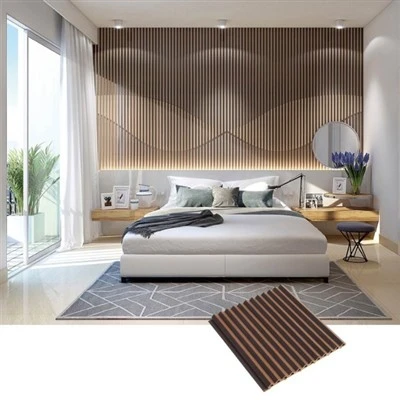
The quality of the detail decides the service life. A well-detailed assembly in a modest material outperforms a premium panel with careless joints.
The exposed core is the specific concern with a foamed panel, and it is worth stating plainly. Machining a foam board opens its cellular interior, which is a different material from the dense surface that was qualified. The structural reason is covered in our guide to skin and core in PVC foam board. Any edge treatment that leaves that core exposed in a wet, regularly disinfected environment has left the weakest part of the panel unprotected at the most vulnerable point in the assembly.
IV. The Hardware Nobody Specifies
This is the section that explains most premature failures in hospital casework, and it is almost never discussed at the specification stage.
Chlorine-based disinfectants are chloride solutions. Chloride is one of the most effective accelerators of localised corrosion in stainless steel, and the failure mode it produces is pitting rather than uniform rusting. A pitted hinge does not look obviously corroded from a distance. It looks fine until it seizes, or until the pitting reaches the point where the load path fails.
Stainless grades are not equivalent
The common general-purpose grade has no molybdenum in it and is significantly more vulnerable to chloride pitting than the molybdenum-bearing grade. In a facility using hypochlorite daily, that difference is the whole outcome. It is also a hard cost difference, which is why it gets traded away.
Aluminium is worse
Aluminium components corrode readily in the presence of chlorides and alkaline solutions, and aluminium appears throughout furniture hardware in the form of drawer runners and profile sections. It is inexpensive and it does not survive this environment indefinitely.
Chemical compatibility was never asked to cover this
In most specifications, the panel is a materials line item and the hardware is a hardware line item, often in different sections of the same document and sometimes supplied by different companies. The chemical compatibility evidence attached to the panel was never intended to cover hinges, and the hinges were never asked for any. The specification is complete on paper and has a gap running through the middle of it.
The commercial consequence is straightforward. A cabinet with an expensive, correctly specified panel and general-purpose hardware will fail in the hardware, usually within two to four years in a high-frequency cleaning area. The panel will still be in good condition, which makes the failure harder to explain rather than easier.
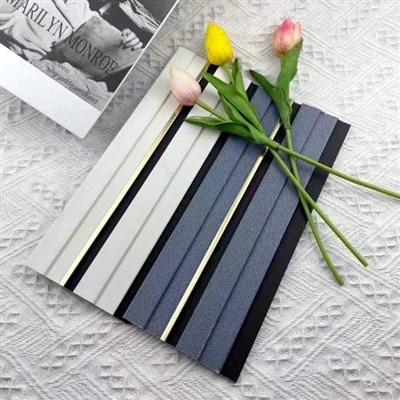
Hardware is the cheapest line in the assembly and the one most likely to end its service life. Specifying it against the cleaning regime costs very little.
The fix is simple and costs a small amount. Where chlorine-releasing agents are used, specify the molybdenum-bearing stainless grade for all exposed hardware, and avoid aluminium components in cleaning-exposed positions. That single decision has more effect on the realistic service life of a cabinet run than upgrading the panel does.
V. Why Welded Beats Bonded
Of all the decisions available in furniture construction, the joining method has the largest effect on how long the unit lasts in a disinfected environment.
A bonded joint contains three materials: the two panels and the adhesive between them. The adhesive is a different polymer from the panel. It has its own chemical resistance, which may be better or worse, and it is typically the thinnest layer in the assembly and the most exposed at the joint line. Even where the adhesive is nominally resistant, it is the component whose durability is least known.
A welded joint contains one material. PVC can be joined by hot air welding, and the joint that results is PVC on both sides of the weld line with no third polymer in between. There is no adhesive to be attacked, no adhesive line to fail, and no differential between the two sides of the joint.
Solvent welding uses the solvents that attack PVC, which is the point
Solvent cementing works because the solvent softens the surfaces being joined, allowing the polymer chains to intermingle before the solvent evaporates. The solvent families involved are the same ones discussed in our piece on PVC adhesives and solvent cements, and their aggressiveness is exactly what makes the joint work. Hot air welding avoids the solvent entirely and is generally the cleaner method where the equipment is available.
The comparison with conventional casework is worth making explicit. A particle board carcass with an edge band contains four materials: the board, the adhesive, the band, and the finish on the band. The board itself swells on contact with water and does not recover. Every one of those interfaces is a potential failure point, and the process of failure begins at the edge where the band meets the board.
Joining method matters more than panel grade
An ordinary PVC foam carcass, welded and detailed properly, will outlast a premium panel carcass assembled with bands and adhesives in a daily-disinfected environment. The reason is that the second one has three or four materials where the first has one, and the additional ones are the weaker links.
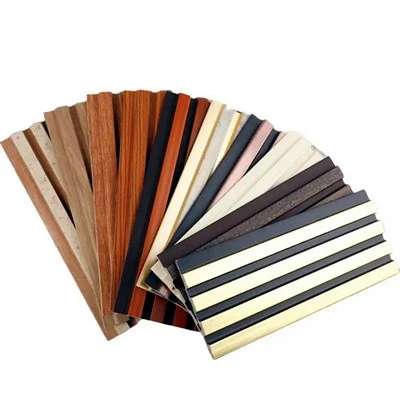
A monolithic joint removes an entire category of failure from the assembly. It is the single most effective measure available.
The caveat is that welding requires equipment and trained operators, and not every fabricator has both. A welded PVC carcass is a different manufacturing process from a banded panel carcass, and the cost reflects that. Whether it is worth it depends entirely on how aggressive the cleaning regime will be, which brings the discussion back to where it started.
VI. Writing the Specification
The purpose of the specification here is not to select a panel. It is to make sure that every material in the assembly has been considered against the same set of chemicals.
List the actual disinfectants with their working concentrations and contact times, and state the cleaning frequency. A generic reference to hospital-grade disinfection is not enough to select against.
Specify the edge treatment and the joining method, not only the panel material. Welded, banded and sealed are three different products with three different service lives.
Name the sealant and require it to be compatible with the listed agents. Sealants vary considerably, and the one already on the shelf is rarely the one that was evaluated.
Specify the stainless grade for all exposed hardware, and prohibit aluminium in cleaning-exposed positions where chlorine-releasing agents are used.
Require the adhesive and edge band to be included in the compatibility evidence, on the same basis as the panel.
Ask for a cycling test on a complete assembly rather than on a panel sample. A cabinet corner, a hinge fixing and a sealed joint are the things that have to survive, and none of them exist on a flat test coupon.
The cycling test deserves emphasis because it is the one item on that list that changes the outcome. A panel coupon immersed in disinfectant tells you about the panel, which was already known to be the strongest component. A sample assembly wiped several hundred times with the actual agents, then inspected at the joints and the hardware, identifies the failure before it is delivered.
Test the assembly, not the material
This principle applies to every furniture application in this range, and it is the single largest gap between what gets tested and what gets used. Material certificates are necessary and insufficient. The object that fails is an assembly, so the object that should be tested is an assembly.
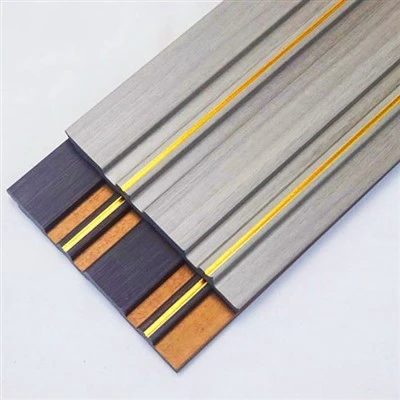
The finished assembly is the unit that has to survive the cleaning regime. Panels, sealants and hardware are components within it.
Where the surface itself carries a hygiene claim rather than only a chemical compatibility one, the basis for that claim is a separate question. Our piece on vinyl antibacterial board for medical environments covers what those claims actually rest on, which is a different subject from whether the surface survives being cleaned.
VII. The Limits of Foam Board in This Application
Having argued that foam board is usually blamed unfairly for failures caused by joints and hardware, it is worth being equally clear about where it genuinely does not belong.
Laboratory work surfaces carrying heavy chemical exposure are the clearest case. Contact with concentrated reagents, solvent spills and hot apparatus is a different requirement from routine disinfection, and the materials traditionally used for those surfaces were selected for it over a long period. A foam board is not a substitute for a purpose-made chemical-resistant worktop.
| Application | Assessment |
|---|---|
| Cabinet bodies, drawer boxes, shelving, trolley frames | Well suited. Moisture resistance, machinability and weldability all count in its favour, and the chemical load is routine disinfection rather than reagent contact. |
| Wet areas, sink surrounds, decontamination room fittings | Well suited provided every edge is sealed or welded. The failure risk is entirely in the detailing. |
| General laboratory work surfaces | Requires judgement. Routine use is comfortably within range. Sustained solvent or concentrated acid contact is not. |
| Fume hood liners and high-exposure extraction surfaces | Not the right material. These have specific chemical and fire requirements that were never part of what a foam board was designed to deliver. |
| Heavily loaded structural bench underframes | Depends on the stiffness required. Foam board is not a structural material and point loads concentrate in ways that a solid section handles better. |
Where the material does fit, the wider application guidance for casework is covered in our pieces on cabinet making with PVC foam board and on waterproof cabinet panels for wet areas. Density selection for furniture work is governed by the same logic as anywhere else, which is set out in our piece on why density is not strength.
The material is genuinely well suited to a large part of hospital and laboratory casework. The failures that get attributed to it are, in the great majority of cases, failures of assembly design: an adhesive that was never evaluated, a sealant chosen from stock, a hinge specified on price. Fixing those costs very little and changes everything.
The short version
Furniture is an assembly, and it fails at the interfaces rather than at the panel. Disinfectant regimes are designed around pathogen kill, so the materials have to accommodate them. Chlorine-releasing agents pit stainless steel and corrode aluminium, which is why hardware specifies out first. Welded joints contain one material where bonded joints contain three, and that difference outweighs panel grade. Specify the whole assembly against the actual agent list, and test a complete unit rather than a flat coupon.
Frequently Asked Questions
Furniture and Disinfectant Questions
Common questions from hospital estates teams, laboratory fit-out contractors and specifiers.
Why do my PVC cabinets fail at the edges rather than the face?
Because the edge is where a different material is present. If the edge carries a band, the adhesive holding it is a separate polymer with its own chemical resistance, and it sits at the joint line where disinfectant collects. Once it softens, the band lifts, moisture reaches the core, and the damage spreads from there. The face was never the problem.
Why are my hinges and drawer runners corroding?
Chlorine-releasing disinfectants are chloride solutions, and chloride is a strong accelerator of localised corrosion in stainless steel. The general-purpose stainless grade contains no molybdenum and is significantly more vulnerable than the molybdenum-bearing grade. Aluminium components corrode even more readily. Hardware is usually specified on price rather than against the cleaning regime, which is why it fails first.
Is a welded carcass worth the extra cost?
In a daily-disinfected environment, usually yes. A welded joint contains one material, while a bonded or banded joint contains three or four, and every additional material is a potential point of failure. An ordinary foam board carcass built with welded joints will generally outlast a better panel assembled with adhesives and edge bands, because the difference is in the number of interfaces rather than in the panel itself.
Which disinfectants are hardest on furniture?
Peracetic acid is the most aggressive toward sealants and adhesives. Chlorine-releasing solutions cause the most damage overall because of their effect on metal hardware. Hydrogen peroxide systems produce slow oxidation effects on surfaces. Alcohols are relatively benign but extractive over many cycles. The most damaging combination in practice is a chlorine-based agent used daily on general-purpose hardware.
What should be included in the chemical compatibility evidence?
Every material in the assembly that will contact the disinfectant, which means the panel, the edge treatment, the adhesive, the sealant and the hardware finish. Material certificates typically cover only the panel, leaving the components most likely to fail entirely unqualified. Ask for the adhesive and edge band to be covered on the same basis as the panel.
Can I test a panel coupon instead of a whole unit?
You can, but it will confirm the thing you were already confident about. Coupons have no joints, no seals, no hardware and no edge detail, which are precisely the components that fail in service. A sample corner assembly wiped repeatedly with the actual agents and then inspected at the joints gives a far more useful answer for a modest additional effort.
When is foam board the wrong material for lab furniture?
Work surfaces carrying sustained contact with concentrated reagents or solvents, fume hood liners, and any position with specific fire performance requirements. Those applications have materials that were developed for them over a long period. For cabinet bodies, drawer boxes, shelving, trolleys and wet-area fittings, foam board performs well provided the edges are sealed and the hardware is specified correctly.
Send Us the Cleaning Regime
Tell us the disinfectants, their concentrations and the cleaning frequency, and we will confirm the panel grade, the edge treatment, the joining method and the hardware specification that suit the assembly.
Request a Quotation View Cabinet BoardYUPSENI Team
23 years in PVC building material manufacturing and supply chain. We help importers, distributors, and project buyers source foam board, sheet, wall panels, flooring and fencing that pass compliance the first time. More about YUPSENI
© 2026 YUPSENI. All rights reserved. The information in this article is for general informational purposes only and does not constitute professional advice. Disinfection protocols, material requirements and fire performance standards vary by facility type, jurisdiction and regulating authority. Confirm requirements with the relevant infection control and estates functions before specifying furniture materials.


