Cold Room Panels: Why the Fixing Fails Before the Panel Does
Sep 30, 2026
Cold Room Panels - Where the Fixing Fails Before the Panel Does
13 min read
By YUPSENI Team
In a cold room, the panel is rarely the component that fails. The fixing holding it is.
On This Page
Start with a clarification that saves a lot of confusion, because the term cold room panel is used loosely.
The insulated structural panel that forms the envelope of a cold room is a sandwich of rigid foam between metal skins. A PVC foam board is not that product and does not replace it. What PVC foam board actually does in a cold room is the internal lining, the door body, the corner profiles, the coving, the thresholds and the trim. It is a detail and finish material working on someone else's structure.
That role is precisely why the fixings matter so much. A lining has to be attached to a substrate, the substrate and the lining move by different amounts, and the connection between them is a row of small rigid points. Everything in this article follows from that geometry. The composition of the board itself is covered in our guide to what is actually in a PVC sheet.
I. The Fixing Is a Restraint Nobody Meant to Build
A mechanical fixing in ordinary construction has one job, which is to hold something in place.
In a cold room, the same fixing acquires a second job that nobody specified. It becomes the point at which the lining's dimensional movement is resisted. Because the lining moves further than the substrate it is fastened to, every fixing in the field has to absorb part of that difference, and a screw in a round hole with no clearance cannot absorb anything. It can only resist.
A fixing that resists movement will fail in one of two ways
Either the fixing itself gives way, or the material around it does. Which one happens depends on the relative strength, and in a cold room at temperature both outcomes are available. The important point is that failure is built into the detail rather than caused by a defective component. A correctly manufactured screw in a correctly prepared hole is still the wrong connection if the assembly needs to move.
The distinction between a restraint and a guide is the whole subject of this article. A fixing that holds a component firmly at one point and allows it to slide elsewhere is a guide. The same fixing repeated across a field with no clearance at any of them is a restraint. Cold room linings are usually detailed as the second, because that is how linings are detailed in ordinary rooms where the differential is small enough not to matter.
The reason the ordinary approach stops working here is arithmetic rather than anything exotic, and it is worth doing the calculation for a typical case.
II. The Differential Nobody Calculates
Different materials change dimension by different amounts for the same temperature change. The property governing this is the coefficient of linear thermal expansion.
| Material | Expansion coefficient, per degree | Relative to steel |
|---|---|---|
| Rigid PVC | Roughly 50 to 80 millionths | Around five times |
| Steel | Around 12 millionths | Reference |
| Aluminium | Around 23 millionths | Around twice |
| Rigid insulation foam | Broadly comparable to PVC, varying by formulation | Around three to four times |
Now apply that to a realistic installation. A lining panel four metres long, installed in a room at ambient temperature around twenty degrees, operating at minus twenty-five. That is a forty-five degree swing.
The PVC panel wants to shorten by a little over ten millimetres. A steel substrate of the same length wants to shorten by about two. The two are fastened together, so they have to shorten by the same amount, and the difference - close to nine millimetres across the panel - has to be accommodated somewhere.
Nine millimetres is not a tolerance problem
That figure is larger than the diameter of the fixings holding the panel on. There is no arrangement of screws and holes that absorbs it silently. If the fasteners do not allow it, the movement becomes stress distributed across the panel and concentrated at every fixing, and it reverses every time the room cycles back up to ambient for cleaning or defrost.

The lining and the structure behind it move by different amounts. The difference has to go somewhere, and where it goes is decided by the fixing detail.
This is the same mechanism that produces the cracking, sagging and gapping described in our piece on PVC thermal expansion in trim, fencing and ceilings, and the underlying behaviour of the material under restraint is covered in our guide to why PVC sheet warps. Cold rooms differ only in the size of the temperature swing, which is larger than in almost any other building application.
A useful way to hold the figures is that a cold store imposes roughly twice the dimensional range of an exterior application, on materials that are already the most dimensionally active in the assembly.
III. Cold Makes Two Problems, Not One
The differential above would be manageable on its own. It is not on its own, because the same temperature that drives it also removes the material's ability to cope with it.
Impact-modified PVC works because the modifier introduces a second phase that absorbs energy when the material is struck. Those modifier particles have their own low-temperature transition, and below it they stop absorbing energy. The material does not gradually become less tough. It reaches a point and drops off, and past it the board behaves like unmodified material, which is brittle.
The threshold is set by the modifier system, not by the polymer
Two boards of the same base resin and the same density can have completely different low-temperature behaviour because they use different modifier systems. This is the reason datasheets quote an impact figure at a stated temperature rather than a single number, and the reason that figure should be checked against the room's operating temperature rather than assumed to hold. The mechanism is set out in our piece on cold-weather brittleness in PVC sheet.
So at operating temperature, a cold room lining is both at its most dimensionally active relative to its substrate and at its least able to absorb localised stress. Those are two consequences of one cause, and they arrive in the same place.
Add the operational reality
A cold room lining gets struck. Trolleys, pallets, stacked crates, boots and door edges all make contact with the walls, and a freezer at minus twenty-five is not a gentle environment despite being full of stationary goods. A material that has lost its impact modification is being asked to tolerate repeated minor impacts in the condition where it is least able to.

Cold affects two separate properties at once. The material moves more and absorbs less, and the second effect is the one that turns movement into damage.
There is a third consideration that belongs here rather than in a section of its own. A panel that has been machined has a cut core, and a foamed core is a different material from the face. In a cold room those cut edges are also the places where vapour condenses. The structural reason is covered in our guide to skin and core in PVC foam board, and in this application the edge detail is both a mechanical and a moisture control decision.
IV. Why the Failure Always Appears at the Fixing
A fixing hole is the worst possible place in a panel to ask anything difficult of the material, and it is where every difficult thing happens at once.
It is a stress concentration
A hole interrupts the material and forces any load flowing past it to divert around the opening. The stress at the edge of the hole is higher than the stress in the undisturbed region, and the concentration factor rises as the hole gets relatively larger.
It is a restraint
The fixing is the point where the lining's movement is resisted by the substrate. Every millimetre of differential across the panel arrives at the fixings as force, and the fixings at the ends of a run carry the accumulated total.
It is an interrupted skin
A foam board carries its density and toughness at the surface. Drilling removes that skin locally and exposes the core, which is weaker and more brittle. The remaining section around the fixing is the least capable material in the panel at the point of highest stress.
Placing a brittle material inside a stress concentration and then loading it cyclically is a well understood recipe for crack initiation, and that is what a cold room fixing detail frequently amounts to.
The first fixing failure is rarely the last
When one fixing releases, the load it was carrying redistributes to its neighbours. They were already working at the same stress, and now they are working harder. Failure therefore progresses along a panel rather than stopping, which is why a maintenance team that replaces a single torn fixing usually finds three more within a season.
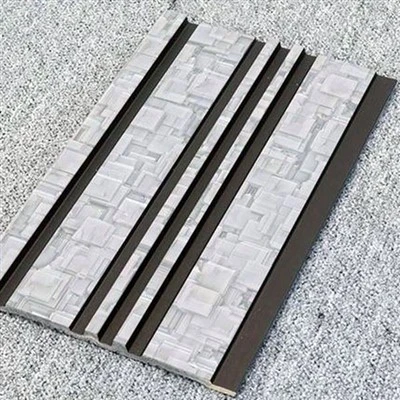
The fixings are where the assembly's geometry, load and material limitations all meet. That is why the panel is usually still intact when the connection is not.
One further characteristic of this failure deserves attention because it misleads inspectors. A fixing that has torn through the panel leaves the surrounding face in perfect condition. The board is not discoloured, not warped and not delaminated. It looks exactly as it did on the day it was installed, apart from a hole that has become a slot with a crack running from it. Panels are replaced on the assumption that the material was at fault when the detail was.
V. Ice in the Void
There is a second mechanism operating in freezers that turns small gaps into large ones, and it does not exist in a chiller at all.
Water expands when it freezes, by roughly nine percent of its volume. That expansion generates significant pressure, and it operates in whatever shape the water happens to occupy. Any void in a cold room assembly that can collect moisture will therefore be wedged apart the first time it freezes, and it will be wedged again every time the room is defrosted and refrozen.
Ice is a wedge, not a one-off event
A single freeze might move a joint by a fraction of a millimetre. What matters is that it does not push back. The gap that opens is slightly wider than it was, and the next freeze acts on a slightly larger cavity. This ratcheting continues quietly until the joint, the seal or the fixing has visibly failed.
The places where this happens are predictable. Between the lining and the substrate wherever the two are not in contact. Around fixings, where the hole and the fastener are never perfectly matched. At the floor and wall junction, which is the lowest point and collects everything. Inside a machined edge that was left unsealed, where the cellular core provides an enormous number of small cavities.
That last one is the reason unsealed edges are a different class of defect in a freezer than in an ordinary room. A cut core in a dry interior is a mechanical weakness. The same cut core in a freezer is a set of containers for water, each of which will expand against the surrounding material on every cycle.
The sealant has to do two contradictory things
It has to keep moisture out, which argues for something solid and durable. It also has to accommodate the movement described earlier, which argues for something flexible. A rigid sealant will crack at a fraction of the movement a four metre panel generates, and once it cracks the void it was protecting fills with water. This is the same tension that appears in furniture specification, where the sealant also has to survive the cleaning agents, covered in our piece on disinfectant compatibility in hospital and laboratory furniture.
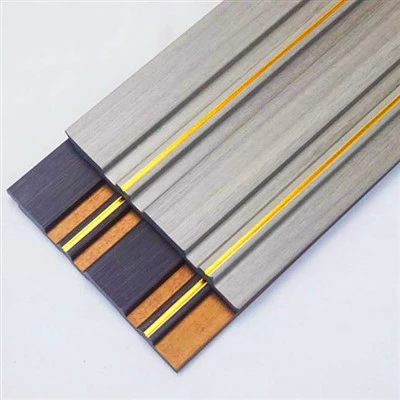
Every gap is a potential reservoir. In a freezer, a reservoir that freezes is a force applied to the joint from the inside.
The practical conclusion is that sealing in a freezer is not a finishing operation. It is part of the structural detailing, and it has to be specified with the movement of the assembly in mind rather than selected from whatever the contractor has on the van.
VI. Detailing for Movement
Everything in this section adds cost. That is the honest position, and the reason to state it plainly is that the alternative is a lining that has to be replaced in five years.
Slot the holes, do not drill them round. A slotted hole with a washer under the head lets the panel slide as it contracts while the washer still holds it against the substrate. This single change converts every fixing from a restraint into a guide and removes most of the stress the assembly would otherwise carry.
Derive fixing centres from the movement, not from habit. The standard spacing used at room temperature is not appropriate across a fifty-degree operating range. Where the differential per fixing exceeds what the slot can absorb, the fixing count or the slot length has to change.
Put movement joints inside the run, not only at the perimeter. A long uninterrupted lining accumulates its movement towards its ends. Dividing it into shorter fields with designed joints limits how much any one fixing has to absorb.
Use a flexible sealant and state the movement class. The sealant has to tolerate the cyclic movement of the joint it protects, which is calculable from the panel dimensions and the temperature range rather than being a matter of opinion.
Seal every cut edge, then seal it again. In a freezer an exposed core is both a mechanical weakness and a water reservoir, and the two effects compound.
Specify the impact grade against the operating temperature. The figure that matters is the low-temperature impact value for the grade supplied, checked against the temperature the room actually runs at rather than the temperature on a general datasheet.
Where the extra cost actually sits
Almost all of it is in the fixings, the joints and the labour to form them. The panel material is largely unchanged. A cold room lining costs more to detail than an identical lining at room temperature, and the entire difference is in the connection rather than the board.

Detailing for movement is the whole difference between a lining that lasts the life of the room and one that needs replacing within a few years.
The comparison with flooring is instructive and worth a note, because the same differential appears there in a different form. The expansion gaps required in a cold-store floor, and the reasoning behind their size, are covered in our guide to expansion gaps in flooring. The principle is the same in both cases: the movement is not optional, so the only decision available is where it is allowed to happen.
VII. Where PVC Belongs, and Where It Does Not
Temperature band decides most of this, and the honest answer is that PVC foam board has a comfortable range and an uncomfortable one.
| Operating band | Assessment for PVC foam board |
|---|---|
| Chiller, around zero to five degrees | Comfortable. The temperature swing from ambient is modest, impact modifiers remain effective, and standard room-temperature detailing is usually adequate. |
| Cold store, around minus eighteen to minus twenty-five | Workable, with the detailing described above. Low-temperature impact grade becomes a real specification item rather than a formality, and the movement allowance is not optional. |
| Blast freezer, around minus thirty-five to minus forty | Marginal. The lining needs protection from impact in the areas where trolleys and pallets operate, and the impact grade has to be selected for the actual temperature. Where service is intermittent rather than continuous, the picture improves. |
| Ultra-low or cryogenic | Not a PVC application. The material is operating far outside anything a modifier system is designed to address. |
Density selection for a cold room follows the same logic as anywhere else, covered in our piece on why density is not strength, with the addition that a denser board also carries a higher expansion coefficient in absolute terms and therefore generates more movement for the fixings to accommodate.
The flooring in these rooms is a separate subject that overlaps at the expansion gap and nowhere else. Where the floor rather than the wall is under consideration, the core behaviour, seam performance and installation consequences for cold-store conditions are covered in our piece on SPC flooring for cold storage and freezers.
The pattern across the whole of this range is worth restating once, because it applies to cold rooms more sharply than to anything else in it. Panels are selected on material properties and fail on connection details. In a room operating through a fifty-degree cycle, the connection detail is not a secondary consideration that follows the material choice. It is the design decision that determines whether the material choice works.
The short version
PVC expands and contracts around five times as much as steel, which over a four metre panel and a forty-five degree swing is a differential approaching nine millimetres. At the same time the impact modification that makes the board tough stops working below a temperature set by the modifier system. The fixing hole combines a stress concentration, a restraint and an interrupted skin, so that is where failure appears while the surrounding panel stays visibly perfect. Ice in any void ratchets gaps wider on every freeze cycle. Slot the holes, derive the spacing from the movement, use a flexible sealant, seal every edge, and specify the impact grade against the actual operating temperature rather than a room-temperature datasheet.
Frequently Asked Questions
Cold Room Panel Questions
Common questions from cold store contractors, facility engineers and refrigeration specifiers.
Why do my cold room panels tear around the fixings?
Because the lining moves further than the substrate it is fastened to, and a round fixing hole with no clearance cannot allow that movement. Over a four metre panel and a forty-five degree swing the differential approaches nine millimetres, which is more than the fixing diameter. The stress concentrates at the hole edge, which is also where the material has been cut and its skin interrupted. The panel is failing at its weakest point under a load the detail created.
Does PVC get brittle in a freezer?
It depends on the impact modifier system rather than on the polymer itself. Modified PVC absorbs impact through modifier particles that have their own low-temperature transition, and below that temperature they stop working. The board does not become gradually less tough; it reaches a threshold and drops off. Two boards of the same density can differ substantially in this behaviour, so the low-temperature impact figure for the grade actually supplied is the number that matters.
What does slotting the fixing holes actually change?
It converts the fixing from a restraint into a guide. A slotted hole with a washer under the head allows the panel to slide as it contracts while still holding it against the substrate. The differential movement then passes through the slot instead of becoming stress at the hole edge. It is the single most effective measure available and it costs almost nothing beyond the time to form the slots.
Why does sealing matter more in a freezer than in a chiller?
Because water expands by around nine percent when it freezes, and that expansion acts as a wedge. Any void that collects moisture is pushed apart on the first freeze and pushed again on every cycle, with no return movement in between. Gaps therefore ratchet wider over time. In a chiller above freezing this mechanism does not exist, which is why the same joint detail can perform acceptably in one and fail in the other.
Can a rigid sealant be used if it is more durable?
Not on a joint that moves. A four metre panel across a fifty-degree range generates several millimetres of movement, and a rigid sealant will crack well before that. Once it cracks, the void it was protecting fills with water and the freeze-thaw ratchet begins. The sealant has to be selected for its movement capability first and its durability second, which reverses the usual order of selection.
What temperature needs to enter the specification?
The actual operating temperature of the room, not an ambient figure. A material qualified at twenty degrees has not been qualified for minus twenty-five, and the two most relevant properties, dimensional movement and impact toughness, both change in the wrong direction. Where a room cycles for cleaning or defrost, the range between the extremes is what the fixing detail has to accommodate.
Is PVC foam board suitable for blast freezers?
It is marginal, and the decision depends on service pattern and impact exposure. In zones where trolleys and pallets operate, a lining at that temperature has lost most of its impact modification and needs either a different material or physical protection. Where the room operates intermittently and the lining is not exposed to traffic, performance is considerably better. This is a case for evaluating the specific installation rather than applying a general rule.
Send Us the Operating Temperature
Tell us the room temperature range, the panel dimensions and the impact exposure, and we will confirm the grade, the fixing detail and the movement allowance the installation needs.
Request a Quotation View Panel RangeYUPSENI Team
23 years in PVC building material manufacturing and supply chain. We help importers, distributors, and project buyers source foam board, sheet, wall panels, flooring and fencing that pass compliance the first time. More about YUPSENI
© 2026 YUPSENI. All rights reserved. The information in this article is for general informational purposes only and does not constitute professional advice. Coefficient of thermal expansion varies by formulation, and impact performance varies by grade and modifier system. Cold room construction is governed by refrigeration, hygiene and structural requirements specific to each project. Confirm requirements with the relevant engineering functions before specifying materials.