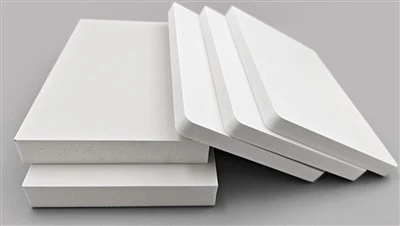
Waterproof SPC Flooring: Why Bathroom Floors Still Fail | YUPSENI
Nov 12, 2026
SPC Flooring Is Waterproof, But Your Floor Is Not: What Happens at the Seams
The board is waterproof. The floor - hundreds of boards and their seams - is another matter.
On This Page
The board was waterproof - the spec sheet said so, and it was true. Drop a plank in water and it would come out unchanged. Yet six months after the bathroom was finished, the floor had swollen at the edges and the wall behind it was dark with damp. The board had never failed. The floor had.
A floor is not one board. It is hundreds of boards clicked together, and between them run seams the water can always find.
I. The Bathroom Floor That Swelled
The sign is almost never on the surface. The planks themselves still look fine - flat, dry, undamaged. What catches the eye is elsewhere: a line of darkness creeping up the wall behind the skirting, a faint sour smell in the corner, a plank that rocks slightly when you step on it because the ground beneath it has softened. The waterproof floor is not wet. It is wet underneath.
This is the confusion that the word "waterproof" creates. The buyer hears it and pictures a seamless, sealed surface that no water can ever cross - a floor that can be flooded and mopped and left wet without consequence. But a floor made of SPC planks is not a single surface. It is an assembly, built piece by piece, and between the pieces are joints. Waterproof describes each piece. It does not describe the assembly.
The board had never failed. The floor had.
And the difference between the two is where every bathroom failure begins.
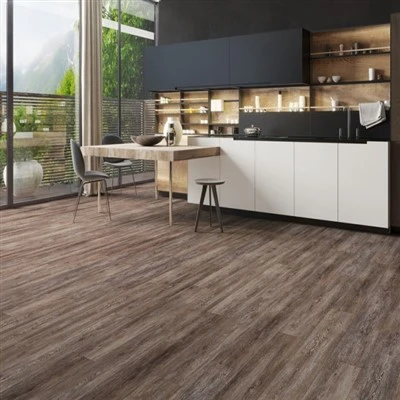
The planks stay dry while the ground beneath them turns damp. The water is under the floor, not on it.
II. Waterproof Is a Property of the Board
To understand why the word misleads, it helps to be precise about what is actually waterproof. The core of an SPC plank is a dense stone-plastic composite - limestone powder bound in PVC - and it genuinely does not absorb water. Leave a plank soaking for a week and it will come out dimensionally unchanged, which is exactly what the marketing says. In that narrow, correct sense, the board is waterproof.
But a floor is not made of one board. It is made of hundreds of them, cut to size and clicked edge to edge, and every place where one plank meets the next is a boundary the water can cross. The boards repel water individually; the seams between them are only as tight as the locking mechanism and the installation made them. A single board dropped in a bucket is waterproof. A thousand boards joined in a bathroom is a surface full of hairline joints, and water is very good at finding hairline joints.
The distinction is the whole point. Waterproof is a property of the material. Watertight is a property of the assembly. One is given by the factory; the other has to be built, seam by seam, on site - and it is the second one that keeps a bathroom dry.
A board that repels water and a floor that holds water out are two different things, and the gap between them is where the damp lives.
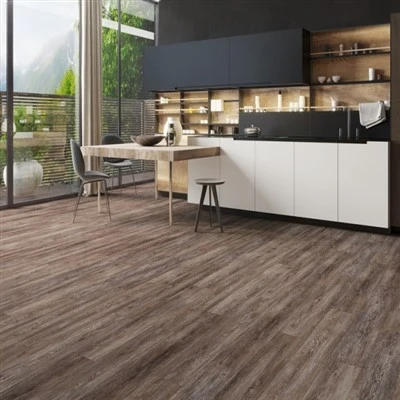
Each plank repels water. The joints between them are only as tight as the lock and the installation made them.
III. Why Water Finds the Seams
Water does not need a crack. It needs a path, and in a bathroom there are three paths, all of them present in almost every installation and all of them ignored in almost every one.
| Water path | Why it happens | What it does |
|---|---|---|
| The locking seams | Joints not fully engaged or loosened by wear | Water seeps down to the base |
| The wall edge | Expansion gap left unsealed | Water runs down behind the skirting |
| The doorway | Junction between rooms left open | Water travels under the threshold |
The locking seams are the first and most obvious path. A floating floor needs its expansion gap around the entire perimeter, and that gap - essential to stop the boards buckling as they move - is precisely the channel where water from a spill or a shower runs down the wall and underneath. In a living room that gap does no harm. In a bathroom it is an open invitation, a permanent slot leading straight to the subfloor.
The doorway is the second path, and the most surprising one. Water spilled in the bathroom does not always stay in the bathroom; it runs along the floor, finds the threshold, and slips underneath into the next room, where it spreads unseen. A floor that is sealed against the wall but open at the door is a bucket with a hole in the side.
The board keeps the water on top. The seams, the wall edge, and the doorway decide whether it stays there or finds its way down.
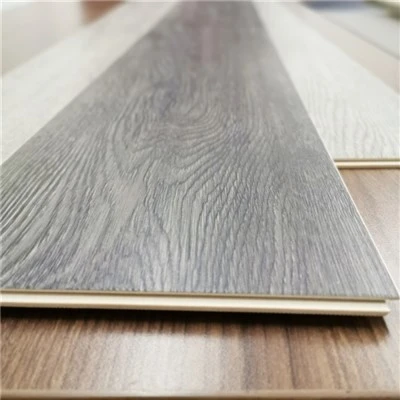
The locks join the planks, but they do not make the floor watertight. Water finds the line between boards.
IV. The Water That Never Left
The cruel part of the waterproof floor is what happens after the water gets underneath. Because the boards themselves do not absorb moisture, they give no sign of what is happening below them. The top surface stays dry and flat while, beneath it, the trapped water soaks into the subfloor and stays there - and a subfloor that has been wet once does not dry out on its own.
This is the hidden cost of a waterproof surface. A wooden floor absorbs water and shows it - the boards cup, the stain appears, and the problem announces itself. An SPC floor hides it. The damp sits under the planks, feeding mould and slowly lifting the subfloor, while the room above looks perfectly sound. By the time the smell or the rocking plank gives it away, the damage underneath has had months to grow in the dark.
The boards, meanwhile, are still fine. Pull them up after the damage is done and most of them can be cleaned and reused - because the water never harmed the planks. It harmed everything beneath them, the part of the floor that was not waterproof and could not be seen.
The water never left. It only moved out of sight, and the bathroom floor that looks dry is the one most worth distrusting.

The planks hide the damage they are standing on. The water beneath them is still there, out of sight.
V. Seal the Floor, Not Just the Board
None of this means SPC flooring is the wrong choice for a bathroom. It is, in fact, one of the better choices - a floor that will not cup or rot the way wood and laminate do. What it means is that the waterproof board does the easy half of the job, and the hard half - keeping the water out of the seams - has to be finished by hand, on site, with the same care as the boards themselves.
Seal the wall edge. The expansion gap must stay - the floor needs to move - but in a bathroom it must be closed with a flexible seal so water cannot run down into it. Leave the gap, but take away the path.
Seal the threshold. The doorway is where water escapes the room and slips underneath. A proper transition and a line of sealant close the route between rooms.
Use a good lock, installed fully. A tight, well-made locking system leaves less of a seam for water to enter in the first place. The installation is not decoration; it is the waterproofing.
And if the floor is ever flooded, lift it and let the subfloor dry. The boards will survive the water; the subfloor will not, and it cannot dry while the waterproof surface is still sitting on top of it.
A waterproof board stops the water at the surface. A watertight floor seals the seams, the wall edge, and the doorway - the three places water actually gets through.
The Word Was Never a Promise
"Waterproof" is one of those words that does more work than it should. It promises a seamless, impervious surface, and it delivers a board that repels water - which is real, and useful, and not at all the same thing. The word never promised that the seams would hold, that the wall edge would be closed, or that a flood would not find its way underneath. Those promises were never made, and the buyer who assumed they were is the one who finds the damp behind the skirting.
The board does its job. It repels the water, keeps its shape, and survives the soak. What it cannot do is reach out and seal the gaps between itself and its neighbours. That is the floor's job - the installer's job, the household's job - and it is done with a bead of sealant at the wall and the door, not with a spec sheet.
The bathroom floor that stays dry is not the one with the most waterproof board. It is the one where somebody remembered that a floor is not a board, and sealed the seams between them.
SPC flooring for wet rooms
Waterproof-core planks, tight-locking systems, and the sealing guidance that keeps water out of the seams.
Request a Quotation Browse SPC FlooringFrequently Asked Questions About Waterproof SPC Flooring
Answers to the questions that come up when a waterproof floor still lets the bathroom get damp.
Q1: Is SPC flooring really waterproof?
A: The board is. Its stone-plastic core does not absorb water. But an installed floor is an assembly of boards, and the seams between them are not waterproof unless they are sealed.
Q2: Why did my waterproof SPC floor swell in the bathroom?
A: The planks almost certainly stayed dry. Water seeped through the seams or the wall edge and soaked the subfloor underneath, which then swelled and lifted the floor.
Q3: Can water get through SPC floor seams?
A: Yes. The joints between planks are only as tight as the locking system and the installation. Water finds the hairline line between boards and runs down to the subfloor.
Q4: How do I seal SPC flooring in a bathroom?
A: Close the wall-edge expansion gap with a flexible seal, seal the doorway threshold, and make sure the locks are fully engaged. The sealant does what the board cannot.
Q5: What should I do if my SPC floor has been flooded?
A: Lift the planks and let the subfloor dry. The boards will survive the water, but the subfloor will not, and it cannot dry while the waterproof surface is still covering it.
YUPSENI Team
23 years in PVC building material manufacturing and supply chain. We help importers, distributors, and project buyers source SPC flooring, PVC foam boards, wall panels, and fencing that pass compliance the first time. More about YUPSENI
© 2026 YUPSENI. All rights reserved. The information in this article is for general informational purposes only and does not constitute professional advice. Product specifications may vary by region and production batch. Always request current datasheets before making procurement decisions.