


4.5mm SPC Flooring
4.5mm SPC flooring in 1220x183mm planks with Unilin click and 0.1-0.5mm wear layer. Thin rigid core for renovation overlays, rentals and commercial refits.
- Fast Delievery
- Quality Assurance
- 24/7 Customer Service
Product Introduction
4.5mm SPC Flooring - Stone Plastic Composite Plank for Renovation and Rental Projects
A 4.5mm SPC plank is the thinnest rigid-core floor that is still worth installing in a real building. The core is a dense mix of limestone powder and virgin PVC resin, so it does not swell when water reaches it and it does not need glue to go down. What makes this gauge different from thicker SPC is not the material. It is the height it adds to a floor, the freight it costs to move, and the kind of project where those two numbers decide the specification.
Renovations, rental turnovers, and commercial refits are where 4.5mm earns its place. New-build residential has less reason to go this thin, because the extra two millimetres of a 6.5mm board cost very little on a project that is already empty. Knowing which side of that line a project falls on is the whole specification decision.

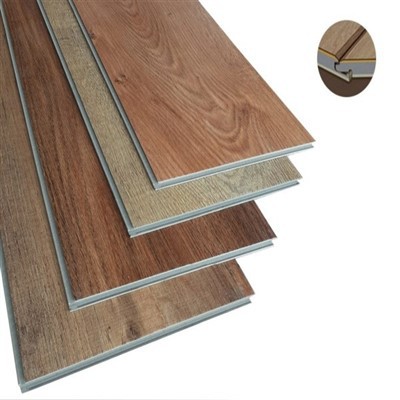
A 1220 x 183mm plank in 4.5mm. The rigid core carries the click profile on all four edges, so the joint holds without adhesive.
Thickness
4.5 mm
Plank Size
1220 x 183 mm
Wear Layer
0.1 – 0.5 mm
Click System
Unilin
Product Specification
| Parameter | Specification |
|---|---|
| Product Name | 4.5mm SPC Flooring / Stone Plastic Composite Plank |
| Core Thickness | 4.5 mm |
| Wear Layer | 0.1 mm to 0.5 mm, specified against the traffic level |
| Plank Size | 1220 x 183 mm standard; other formats cut to order |
| Core Material | Limestone powder and virgin PVC resin, no recycled filler |
| Click System | Unilin click profile on all four edges |
| Surface Treatment | Deep embossed, EIR, crystal, wood grain, flat, stone |
| Special Treatment | Painted V-groove, pre-attached IXPE acoustic backing |
| Colour | Wood grain, stone and solid colour; custom matching available |
| Minimum Order Quantity | 1 x 40HQ |
| Packing | PE bag or pallets, consolidated with other product categories |
What 4.5mm Buys You, and What It Does Not
Thickness in SPC is often sold as if more is simply better. It is not. Added thickness buys three specific things and costs money on three other lines, and a project that does not need any of the three gains nothing from paying for them.
What you gain going thin
Height added to the floor stays under 5mm, so existing door clearances, skirting and thresholds usually survive the install untouched.
Freight per square metre drops, because container weight is the binding limit on an SPC load far more often than container volume.
Thermal resistance is lower, which is an advantage over underfloor heating rather than a compromise.
What a thin core asks in return
Subfloor flatness matters more, not less. A thin rigid core follows the substrate, so hollows telegraph through into the surface.
Acoustic performance is lower than a thick board with an integrated backing, which matters in multi-unit residential.
Bridging a small dip or a minor substrate defect is harder, so preparation time goes up even as material cost goes down.
None of that makes 4.5mm a compromise product. It makes it a product with a defined envelope. The projects that suit it are the ones where floor height is tight, the substrate is already flat, and the space is either refitted often or lightly trafficked. Put it in a warehouse loading area and it will disappoint. Put it in a 12-year-old apartment where the doors already scrape and it will look better than anything else at the price.
Choosing Between 4.5mm, 5.5mm, 6.5mm and 8mm
The four gauges sold most often differ in what they tolerate on site. Reading across the table is usually faster than working through a spec sheet.
| 4.5mm | 5.5mm | 6.5mm | 8mm | |
|---|---|---|---|---|
| Typical project | Renovation overlay, rental turnover, light commercial refit | Standard residential, apartments | Mid-range residential, offices, retail | High traffic commercial, hospitality, education |
| Subfloor tolerance | Lowest, needs flat and level | Moderate | Good | Best, bridges minor variation |
| Floor height added | Under 5mm | Around 6mm | Around 7mm | Over 8mm |
| Underfloor heating | Best response, lowest thermal mass | Good | Good | Slower to respond |
| Acoustic performance | Relies on the backing | Moderate | Good | Best |
| Freight per square metre | Lowest | Low | Mid | Highest |
| Best fit when | Height is capped and the space turns over | Nothing is constrained and cost per m² leads | A commercial fit-out needs a firmer feel | Trolleys, luggage and footfall are constant |
For a mixed order, the usual arrangement is one container carrying 4.5mm for the renovation and rental portion of a project and a heavier gauge for the public areas. The full spread from 4mm to 9mm is set out in the SPC flooring collection overview, and the per-millimetre trade-offs are broken down further in the thickness guide.
The Wear Layer Matters More Than the Core Thickness
Buyers spend a great deal of time on the 4.5mm figure and almost none on the number that actually determines how long the floor looks new. The core carries the load. The wear layer is the transparent film that the feet, the furniture and the grit actually touch.
0.1 mm
Light residential. Bedrooms and low-traffic rooms in rental stock where the floor is likely to be replaced before it wears through.
0.3 mm
General residential and light commercial. The usual specification for living areas, hallways and small offices.
0.5 mm
Commercial and high traffic. Retail floors, hospitality back-of-house, and anywhere grit gets tracked in from outside.
A 4.5mm board with a 0.5mm wear layer will outlast a 6.5mm board with a 0.1mm layer in every practical sense, and it costs less to ship. When a quotation leads with thickness and stays silent on wear layer, that silence is the answer to the question being asked. The same logic runs through the 2026 SPC sourcing guide, which covers what to verify before a container is booked.
Surface Treatments and Colour Range
Six surface treatments are produced as standard, and the choice changes how the floor reads under light as much as the printed pattern does.

Deep Embossed and EIR
The texture follows the printed grain rather than sitting on top of it. EIR is the closest a printed floor gets to a real timber surface under raking light.
Crystal and Flat
High clarity, low texture. Suits modern interiors and commercial spaces where a defined grain pattern would look busy across a large area.

Stone
Slate, concrete and travertine looks for bathrooms, kitchens and commercial floors where a timber pattern would be out of place.
Painted V-groove is a separate option applied along the plank edge. It simulates the bevel between real timber boards and reads well at close range, although it does create a line that catches dirt more readily than a flush edge. Pre-attached IXPE backing is the other common addition, and on a 4.5mm board it does more acoustic work than the core itself, since the thin core has less mass to absorb impact noise.
Installing a Thin Rigid Core
The click profile goes together the same way as any other SPC board. What changes is how much attention the substrate needs before the first plank goes down.
Check the substrate with a straight edge before anything else. A 4.5mm core has less ability to bridge a dip than a thicker board, so the preparation stage is where the job is won or lost. Fill hollows and grind high spots rather than hoping the backing absorbs them.
Acclimatise the planks in the room for at least a day at the temperature the floor will live at. Rigid core moves less than laminate, but a cold plank laid into a warm room will still close up joints as it settles.
Lay the first row against a spacer, not hard against the wall. The perimeter expansion gap applies to a thin board exactly as it does to a thick one, and skipping it is the most common cause of a mid-floor ridge appearing a year later.
Seal the perimeter against water, not against movement. The core is waterproof but the joint between floor and wall is not, so a bead of sealant in bathrooms and kitchens is what stops water reaching the substrate underneath.
Underfloor heating is worth a note of its own here. Because the 4.5mm core has less thermal mass than a thicker board, the floor reaches temperature faster and responds more quickly to a thermostat change. That is an advantage in a room that is heated intermittently, and less of one in a building running continuous heat. The guidance on SPC over underfloor heating covers the ramp-up sequence, which matters more than the board thickness once the system is running.
Where 4.5mm SPC Fits Best
Apartment Refurbishment
Existing doors, skirting and thresholds usually survive a 4.5mm overlay without being altered, which removes a whole trade from the programme.
Rental and Build-to-Rent
Planks lift individually and can be replaced between tenancies. A damaged section comes out without disturbing the surrounding floor.
Commercial Refit
Retail and office spaces where the floor has to go down over a weekend with no adhesive and no curing time before the space reopens.
Underfloor Heating Retrofit
Low thermal mass means the floor warms quickly, which suits systems that are switched on and off rather than run continuously.
Frequently Asked Questions
4.5mm SPC Flooring Questions
Thickness, wear layer, installation and ordering questions from importers and contractors.
What does 4.5mm mean in an SPC floor?
It is the total thickness of the rigid core, the plank body that carries the click profile and the printed surface. It does not include any pre-attached acoustic backing, which is measured separately and typically adds 1 to 1.5mm to the installed height.
Is 4.5mm thick enough for a home?
Yes, provided the substrate is flat and the wear layer matches the traffic. Thickness gives a floor its ability to tolerate an uneven subfloor, not its resistance to wear. For a bedroom or a low-traffic living area on a level floor, 4.5mm performs the same as a thicker board.
Can it be laid over existing tile or vinyl?
Yes, this is one of the main reasons buyers choose this gauge. The existing hard floor stays in place, the 4.5mm plank goes on top, and the height added usually stays within the existing door clearance. Grout lines need filling to create a flat surface first, and loose or hollow tiles need to come up.
Does 4.5mm work with underfloor heating?
Yes, and it performs slightly better than thicker boards in one respect. The thinner core has less thermal mass, so the surface reaches temperature faster. Follow the manufacturer's ramp-up schedule for the heating system, which is the step that actually protects the floor.
What wear layer should I specify?
0.1mm for low-traffic residential in rental stock, 0.3mm for general residential and small offices, and 0.5mm for commercial and high-traffic floors. The wear layer determines how long the surface pattern survives. Core thickness does not.
Why is a thinner floor cheaper to ship?
An SPC container usually hits its weight limit before it runs out of space, so reducing the mass per square metre raises the number of square metres that fit in one 40HQ. On a thin gauge the same container carries more floor, which lowers the landed cost per square metre even when the unit price is identical.
What are the minimum order and payment terms?
Minimum order is one 40HQ container, and SPC can be consolidated with PVC wall panels, ceiling boards and profiles in the same load. Payment is 30% in advance with the balance against a copy of the bill of lading at sight, by T/T or L/C. Delivery runs 10 to 25 days after the advance clears.
Related Reading
- The SPC Flooring Collection: 4mm to 9mm - Every Thickness, Every Surface
- SPC Flooring Thickness Guide: What Each Millimetre Buys You
- SPC Flooring Click-Lock Quality: Why Joints Gap, Pop, or Lift
- SPC Flooring Density: The Secret Between 0.72 and 0.78 g/cm³
- SPC Flooring Underlayment: When Do You Actually Need It?
- Browse the Full SPC Flooring Range
Hot Tags: 4.5mm SPC Flooring, China, manufacturers, factory, customized, wholesale, free sample, stone plastic composite, spc flooring wholesale, spc flooring waterproof, stone polymer composite flooring, spc flooring bathroom, stone plastic composite vinyl flooring


