1. What Is Vinyl Wall Panel? From Chemical Term to Finished Wall
Vinyl wall panels - called PVC wall panels or PVC wall cladding in many markets - have polyvinyl chloride (PVC) as their core raw material. PVC is a thermoplastic polymer produced by the polymerization of vinyl chloride monomer.
In its raw form, PVC is a white powder resin. To become a wall-hung finished board, it must be compounded with stabilizers, lubricants, impact modifiers, fillers, and pigments, then plasticized under high-temperature mixing, and processed through extrusion, calendering, film lamination, and precision cutting. Every variation in formulation and process parameters directly determines the physical properties and surface aesthetics of the final panel.
The vinyl wall panel market now encompasses four major product forms, each engineered for distinct application scenarios:
| Panel Type | Thickness | Weight | Best For |
|---|---|---|---|
| Solid PVC Panels | 5–10 mm | 3–6 kg/m² | Commercial spaces, high-traffic zones; dense and impact-resistant with a solid, wood-like knock |
| Hollow-Core PVC Panels | 8–12 mm (with internal rib structure) | 2–3 kg/m² | Residential interiors; the honeycomb grid provides strength at minimal weight with natural thermal and acoustic insulation from the trapped air layer |
| Composite PVC Wall Panels | 6–10 mm | 3–5 kg/m² | Premium residential and hospitality; PVC face layer bonded to WPC (wood-plastic composite) or foamed core - waterproof surface with enhanced rigidity and dimensional stability |
| Self-Adhesive PVC Wall Tiles | 2–3 mm | 1–2 kg/m² | Rental quick-refresh, accent walls, lightweight renovations; peel-and-stick pressure-sensitive adhesive backing |
Across all four formats, the shared DNA is unmistakable: waterproof, corrosion-resistant, lightweight, and extraordinarily shapeable. Through film-lamination and digital-printing technology, the surface can mimic natural materials to a degree that defies casual detection - not "looks like stone from a distance" but rather, at arm's length, the texture's relief, the gloss level, and even the tactile feedback all register as convincingly authentic. This is not superficial decoration; it is a full sensory simulation. For a broader view of PVC materials that share this aesthetic-versatility DNA, see our YUPSENI PVC building materials range →
2. The Performance Matrix: Core Advantages of Vinyl Wall Panels
Plot vinyl wall panels on a material-performance radar chart, and their most striking characteristic emerges: no significant weak spots. That may sound like a lukewarm compliment, but in building materials, balanced performance across every dimension is itself a rare and valuable quality.
2.1 Absolute Waterproofing - The Endgame Answer for Wet Spaces
PVC wall panel waterproofing is not "coating-dependent waterproofing." The material, through its entire cross-section, absorbs zero water. Droplets bead on the surface and roll off without penetrating the board interior. This means the shower enclosure wall, the kitchen sink backsplash, the basement, the semi-exposed balcony - every chronically humid surface can permanently say goodbye to peeling, blistering, and mold colonization, the stubborn diseases of traditional wall finishes.
2.2 Wipe-and-Done Cleanability - Maintenance Costs Approaching Zero
A dense, smooth surface offers no crevice for dust, grease, or biofilm to lodge. Hot cooking-oil splatter on the kitchen wall? A warm damp cloth pressed for thirty seconds, one wipe - gone. Crayon artwork across the kids' bedroom wall? A wet cloth restores the surface as if nothing ever happened. Fingerprints and scuff marks along a hotel corridor? A routine pass with an electrostatic duster keeps them at bay. The healthcare sector values precisely this attribute: the ability to undergo daily wipe-down disinfection without surface degradation.
2.3 Installation Speed - Compressing the Timeline to "One Room, One Day"
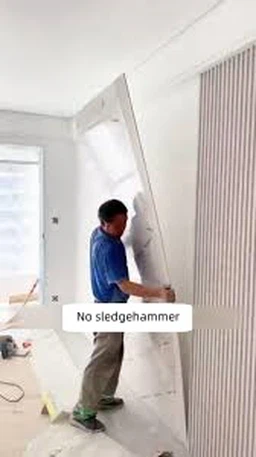
Traditional ceramic tile demands cement-mortar leveling, tile soaking, cutting, wet installation, drying wait time, and grouting - a single bathroom's walls can consume 3–5 days, with an additional 24-hour curing period before the space is usable. Paint requires putty application, sanding, primer, and at least two finish coats, with drying intervals between each step. PVC wall panels operate on an entirely different logic: dry assembly. The substrate wall does not need to be perfectly flat. Panels can be applied directly over existing tile or old paint, secured with construction adhesive or clipped into a batten grid. Two installers can complete all four walls of a large room within a single day. Zero dust. Zero noise. Zero odor. The room is usable immediately.
2.4 Thin Profile - Reclaiming Precious Square Footage in Compact Spaces
Total installed thickness - including the adhesive layer - is typically around 10 mm. Ceramic tile with wet mortar commonly consumes 30–50 mm of valuable space per wall surface. In a narrow hallway or compact bathroom, those saved centimeters can mean the difference between a door swinging freely and colliding with the vanity, or between a washing machine slotting in precisely and simply not fitting.
2.5 Total Cost of Ownership Below the Sticker Price
If you look only at material unit cost, PVC wall panels sit above latex paint and below some tile options. But when auxiliary materials, labor, construction duration, post-installation maintenance, and eventual renovation rework are all factored into a single lifetime-cost equation, the long-term advantage shifts decisively. Especially in humid environments, where paint and wallpaper demand refreshment every 3–5 years and tile requires an ongoing war against grout-line mold, PVC panels largely eliminate that entire "renovation re-spend."
2.6 Design Freedom That Dissolves Material Boundaries
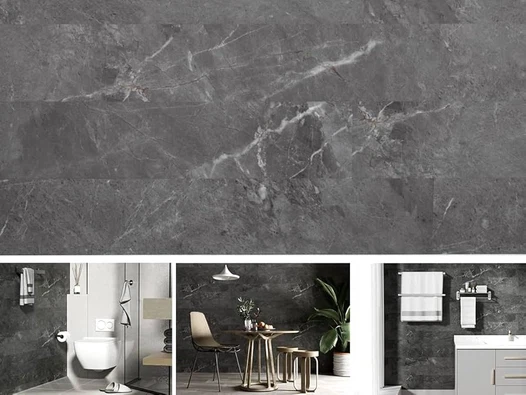
Advances in film-lamination technology now allow PVC panels to faithfully reproduce natural stone's crystalline veining, solid timber's annual-ring grain with synchronized embossing, brushed-metal or mirror-finish effects, and even the soft grain of leather or the warp-and-weft texture of linen. A Carrara-marble bathroom feature wall. A walnut-wood bedroom accent wall. On PVC panels, these visual ambitions materialize at a fraction - sometimes mere single-digit percentages - of the natural material's cost.
3. Why Vinyl Wall Panels Are Replacing Tile and Paint
"Replacing" may sound absolute, but in a growing number of real-world scenarios, vinyl wall panels are genuinely reordering the priority list for wall-finish selection, steadily encroaching on territory that tile and paint once owned uncontested.
3.1 In the Bathroom: Stealing Tile's Market
Tile's fundamental problem can be summarized in one sentence: the tile is easy to clean; the grout is impossible. Grout - whether cement-based or resin-based - is a porous material. Once it absorbs moisture, it becomes an ideal mold substrate, especially around floor drains, window frames, and vanity splash zones where humidity is chronic. The black mold spots that emerge are virtually inevitable, and periodic mold remediation is a frustrating, bottomless chore.
Vinyl wall panels change the game through joint design. Their interlocking edges produce far fewer seams, and premium systems with integrated sealing gaskets achieve a visually near-seamless surface. Because the panel material itself neither absorbs water nor supports mold growth, the entire hygiene strategy shifts from "reactive cleaning" to "proactive rejection." You are no longer scrubbing mold out of grout - you are preventing it from finding a foothold in the first place.
3.2 In the Kitchen: Making Paint Look Underpowered
Even kitchen-and-bath-specific paints labeled "scrubbable" gradually yellow and resist thorough cleaning when subjected to the long-term cumulative assault of hot cooking-oil aerosols. Vinyl wall panels in the cooktop backsplash zone can cover the entire vulnerable area with a single seamless sheet. The ease of wiping away grease matches that of a stainless-steel backsplash - but the decorative result, whether a marble-look or a warm neutral tone, far exceeds the cold industrial feel of bare metal.
3.3 In Commercial Spaces: Delivering a More Economical Full-Lifecycle Cost Than Paint
Hotel corridors. Restaurant dining areas. Retail display walls. If these surfaces are painted, they typically require repainting every two years to maintain an acceptable appearance. The hidden costs - business disruption during closure, the logistical ordeal of clearing furniture, the lingering solvent odor - are rarely captured in the upfront price-per-gallon comparison. Vinyl wall panels install quickly without interrupting operations. Over a 15-year-plus service window they require almost no active maintenance; when the surface gets dirty, a single wipe restores its original condition. For chain businesses, this translates to brand-image consistency and a dramatically reduced rolling-renovation budget.
3.4 In Renovation and Multi-Unit Projects: The "No Demolition" Advantage Over Tile
Installing vinyl panels directly over existing tile eliminates the entire demolition sequence - sledgehammer, debris removal, re-leveling - in a single decision. Construction timeline: shortened by over 70%. Construction waste: reduced by over 80%. For occupied homes undergoing renovation and for rental apartments that need to turn over fast, this light-intervention characteristic makes vinyl wall panels an almost surgically perfect solution.