I. The Building Inspector in Dubai Who Keeps a Lighter in His Pocket
The Dubai inspector's lighter test is not capricious. It is a practical response to a problem that every building code official in a high-density urban jurisdiction faces: the volume of new materials entering the construction market far exceeds the capacity of testing laboratories to evaluate them before they appear in specifications. A manufacturer can formulate, extrude, market, and ship a PVC-based wall panel or ceiling board faster than a certified lab can schedule, run, and report on a full ASTM E84 tunnel test. The lighter test is the inspector's way of separating materials that have a chance of passing a formal fire test from materials that have no chance at all.
The problem his lighter test addresses is not hypothetical. In a high-rise building, the interior finish materials - the ceiling panels, the wall coverings, the flooring, the trim and moulding - determine how fast a fire that starts in one unit spreads to the corridor, to the floor above, to the stairwell that is the only exit path for occupants on the upper floors. The structural steel and the concrete fireproofing protect the building from collapse. The interior finish materials protect the occupants from smoke and flame during the minutes that matter most for evacuation. A material that burns easily and produces dense smoke can turn a survivable fire into an unsurvivable one, not because the building falls down but because the exit path fills with smoke before the occupants reach it. The fire-safety contribution of a PVC-based interior finish material is not a marketing feature. It is a life-safety parameter that the building code treats as a requirement, not an option.
This article examines fire ratings in PVC building materials from the perspective of someone who needs to get a project approved - the architect submitting a material for code review, the contractor whose submittal has been kicked back for insufficient fire-test documentation, the building owner whose insurance underwriter has asked about the flame-spread classification of the interior finishes. It explains what the ratings mean, which test methods apply to which products, how PVC compares to the materials it replaces, and what a legitimate fire-test report should contain.
II. What Happens When PVC Meets Fire - the Chemistry Nobody Explains in a Brochure
The fire behavior of PVC is not a single number. It is a sequence of events that begins when the material surface temperature reaches roughly two hundred fifty to three hundred degrees Celsius and ends, if the material is properly formulated, with the fire self-extinguishing and a stable char layer protecting what remains of the material underneath. Understanding this sequence is the prerequisite to understanding what a fire rating measures and what it does not.
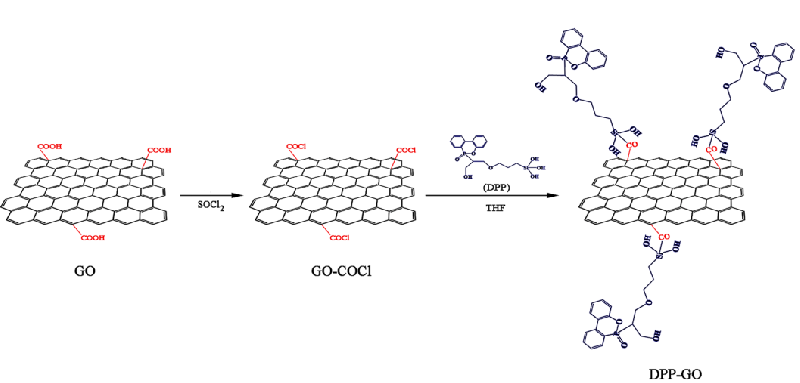
The sequential degradation of a PVC polymer chain under flame exposure. Stage one releases HCl and forms a conjugated polyene structure. Stage two cross-links the polyene into a carbonaceous char. Stage three - sustained combustion - is what the chlorine chemistry is designed to prevent.
The first thing that happens when heat reaches a PVC surface is dehydrochlorination. The chlorine atoms, bound to the polymer backbone, are released as hydrogen chloride gas. This process absorbs energy - it cools the material surface - and the HCl gas released into the flame zone dilutes the oxygen and combustible volatiles that the flame needs to sustain itself. The HCl molecule acts as a radical scavenger, capturing the highly reactive hydrogen and hydroxyl free radicals that propagate the combustion chain reaction. This is the same mechanism by which halon fire extinguishers work, built into the material itself.
The second thing that happens is char formation. After the chlorine atoms leave the polymer backbone, the remaining carbon and hydrogen atoms rearrange into a conjugated polyene structure - a sequence of alternating single and double carbon-carbon bonds that absorbs visible light and gives the char its characteristic dark color. This polyene structure then cross-links into a three-dimensional carbon network that sits on the surface of the material, insulating the underlying PVC from heat and slowing the release of additional combustible gases. The char is a physical barrier as well as a chemical one.
The third thing - the thing that does not happen in properly formulated rigid PVC - is sustained combustion after the external flame is removed. The combination of HCl radical scavenging and char-layer insulation makes the material self-extinguishing. Remove the flame, and the combustion stops. Other common plastics do not do this. Polyethylene, the most widely produced plastic in the world, has no chlorine in its structure and no built-in flame retardancy. It burns with a hot, clean flame and drips burning molten polymer as it burns, spreading the fire to surfaces below. Polypropylene behaves similarly. Polystyrene burns with heavy black smoke and also drips. PVC's chlorine content, a liability that the material's critics cite in discussions of incineration and disposal, is the very thing that makes it suitable for building interiors where fire safety governs material selection.
This is not to say that rigid PVC is fireproof. It is not. At sufficiently high temperatures and with a sustained external flame source, PVC will burn, and the combustion products include carbon monoxide, hydrogen chloride, and a range of organic compounds. No organic polymer is immune to fire. The question that fire ratings answer is not "will this material burn" but "how does this material behave in a fire compared to the alternatives, and does that behavior meet the building code requirement for the application." PVC's answer to that question, on a properly formulated product with a legitimate test report, is typically Class A or B1 - the highest or second-highest fire performance classification available for interior finish materials.
III. Three Rating Systems, Three Different Answers to the Same Question
The fire performance of a building material is measured differently depending on which part of the world the building stands in, which edition of which code the jurisdiction has adopted, and whether the material is being evaluated as an interior finish, an exterior cladding component, or a structural element. Three rating systems dominate the global construction market, and understanding the differences between them is the first step in interpreting a test report that arrives on an architect's desk.
1. ASTM E84 - the North American standard. The Steiner tunnel test has been the foundation of interior finish fire classification in the United States and Canada since the middle of the twentieth century. A sample twenty-four feet long and twenty inches wide is mounted on the ceiling of a test chamber, a gas flame is applied to one end, and the flame front's progress down the sample is measured against time. The test produces two numbers: the Flame Spread Index, calibrated so that red oak flooring scores one hundred and asbestos-cement board scores zero, and the Smoke Developed Index, calibrated on the same scale. A material with an FSI of twenty-five or less and an SDI of four hundred fifty or less earns a Class A rating, the highest available. An FSI of twenty-six to seventy-five earns Class B. An FSI of seventy-six to two hundred earns Class C. Anything above two hundred is unrated for interior finish applications in most jurisdictions.
Rigid PVC, properly formulated, typically scores an FSI in the single digits or low teens and an SDI well below four hundred fifty - a solid Class A. The Dubai inspector's lighter test does not predict the exact ASTM E84 score, but it predicts with reasonable accuracy whether the material has a flame-retardant formulation or not. A material that self-extinguishes under a lighter flame will almost certainly produce a Class A or Class B result in the tunnel test. A material that continues to burn will not.
2. EN 13501-1 - the European classification. The European system is more granular than the North American one. It classifies materials into seven Euroclasses: A1, A2, B, C, D, E, and F, with A1 being completely non-combustible and F being untested or failing the minimum performance threshold. The classification is based on a combination of tests: the single burning item test for reaction to fire, the non-combustibility furnace test for the highest classes, and a small-flame ignition test for the lower classes. The system also reports two additional parameters: smoke production, rated s1 to s3, and flaming droplet production, rated d0 to d2. A PVC wall panel that achieves a B-s1,d0 rating is performing at a high level for an organic material - limited combustibility, minimal smoke, and no flaming droplets. The d0 rating is particularly important in vertical applications where burning polymer dripping onto surfaces below can spread a fire downward through a building faster than flame spread alone.
3. GB 8624 - the Chinese standard. China's building material fire classification system, updated significantly in its 2012 revision, uses a structure similar to the European system: A1, A2, B1, B2, and B3, with B1 corresponding roughly to the European B class and the North American Class A. The test methods draw from both ISO standards and Chinese national standards, and the system includes additional requirements for smoke toxicity that are specific to the Chinese regulatory environment. For a manufacturer exporting PVC building materials to multiple markets, demonstrating compliance with all three systems - ASTM E84, EN 13501-1, and GB 8624 - requires maintaining a matrix of test reports that few manufacturers outside the top tier of the industry have invested in producing.
One practical consequence of these three parallel systems is that a fire rating without a test standard next to it is meaningless. "Class A" means something specific under ASTM E84. It means something different under EN 13501-1, where it does not exist as a classification at all. A supplier who claims a "Class A fire rating" without specifying which standard the rating refers to is either uninformed or hoping the buyer does not ask. The correct response to an unspecified fire rating is to request the full test report, confirm the test standard, and verify that the standard is recognized by the building code in the project's jurisdiction. The Dubai inspector's approach - the lighter test as a filter followed by a demand for the formal report - is the correct one at every scale from a single-family house to a sixty-story tower.
IV. Against Wood, Gypsum, and Metal - How PVC Holds the Line
A fire rating is useful only in comparison. A material's flame-spread index, standing alone, tells the specifier nothing about whether it is better or worse than the alternative. What follows is a comparison of PVC-based interior finish materials against the materials they most commonly replace, across the fire-performance dimensions that building codes regulate.
| Material | ASTM E84 Class (Typical) | EN 13501-1 Euroclass (Typical) | Self-Extinguishing? | Flaming Droplets? | Smoke Production | Char Formation |
|---|---|---|---|---|---|---|
| Rigid PVC (foamed or solid, FR-grade) | Class A - FSI <25, SDI <450 | B-s1,d0 (typical for high-quality formulation) | Yes - chlorine chemistry; extinguishes when flame removed | None - rigid PVC char forms; melt-drip rare in FR grades | Low to moderate; HCl gas is primary emission; smoke density controlled by formulation | Robust carbonaceous char; insulates underlying material from further decomposition |
| Untreated Wood / Plywood | Class C - FSI 76–200 (untreated); can reach Class A with fire-retardant treatment | D-s2,d0 typical for untreated; can reach B with treatment | No - untreated wood sustains combustion; fire-retardant treatment degrades over time | None; wood chars in place | Moderate to heavy depending on species density and moisture content | Char forms on surface but does not self-extinguish; char burns through as underlying wood reaches ignition temperature |
| Gypsum Board / Drywall | Class A - typically FSI 0–15 | A2-s1,d0 | Yes - non-combustible gypsum core releases chemically bound water at ~80°C; water vapor cools the surface | None; paper facing burns but gypsum core does not drip | Low; paper facing produces some smoke; gypsum core produces none | Not applicable; gypsum is mineral; no organic char formation |
| Aluminum Composite Panel (PE core) | Unrated or Class C - polyethylene core burns aggressively; FSI often exceeds 200 | E or F depending on core composition; PE core fails minimum combustibility threshold for most applications | No - PE core sustains combustion; burns with hot flame and molten dripping; fire spreads through core behind aluminum skin | Heavy; burning polyethylene drips and spreads fire to surfaces below; this is the mechanism of the Grenfell Tower fire | Heavy black smoke from polyethylene combustion; toxic combustion products including carbon monoxide | No char; PE melts, drips, and burns completely leaving only aluminum skins behind |
| Mineral Wool / Stone Wool Panel | Class A - FSI 0 (fully non-combustible) | A1 - no contribution to fire at any stage | Not applicable - does not ignite; does not burn; does not contribute fuel to any fire | None; material is inorganic fiber; no melting point within fire temperature range | None; inorganic material produces no smoke | Not applicable; mineral fibers resist temperatures to 1000°C+ without decomposition |
The table illuminates the position rigid PVC occupies in the fire-performance landscape. It is not as fire-inert as mineral wool or gypsum board, which contain no organic material whatsoever and contribute zero fuel to a fire. It is dramatically better than untreated wood, which sustains combustion and cannot achieve a Class A rating without chemical treatment that degrades over time. It is in a different category entirely from polyethylene-core aluminum composite panels, which behave in a fire the way a candle behaves - sustained flame, molten dripping, and complete consumption of the combustible core. The gap between PVC and PE-core ACP is not a matter of degree. It is a categorical difference between a material that resists fire and a material that fuels it.
The practical meaning of this positioning is that PVC-based interior finish products can be specified in virtually any building type where the code allows combustible interior finishes. In North American building codes, interior finish materials in exit corridors, stairwells, and lobbies of most building types above three stories must achieve Class A. Rigid PVC meets that requirement. Wood paneling, unless chemically treated and re-tested, does not. Aluminum composite panels with PE cores do not. The fire rating is not an abstract certification. It is a gate that opens or closes access to entire categories of building projects.
V. The Five Places Where a Fire Rating Changes Everything About the Specification
The fire performance of a PVC building material is not uniform across all products in the category. The formulation - specifically the type and loading of flame-retardant additives, the density of the foam if the product is foamed, and the thickness of the profile - determines the test result. What follows are the five applications where fire rating is the controlling variable in material selection, and what the specifier should verify before approving a submittal.
1. Ceiling panels in commercial and multi-family buildings. The ceiling is the most fire-sensitive surface in any occupied room because fire rises. A fire that starts at floor level heats the air, the hot air rises, and the ceiling is the first surface to reach the temperature at which materials ignite or decompose. A ceiling panel that ignites easily turns a small fire into a room flashover in seconds. A ceiling panel that resists ignition buys the occupants the minutes they need to exit. PVC ceiling panels specified for commercial or multi-family projects must carry a Class A or B1 rating with supporting test documentation from an accredited laboratory. The Dubai inspector's lighter test, applied to a corner of a ceiling panel sample, will identify in three seconds whether the product's fire rating is real or aspirational. The fire performance of PVC ceiling systems in commercial applications is examined alongside moisture resistance, installation methods, and cost data in the complete guide to PVC ceiling boards.
2. Wall panels in exit corridors and stairwells. The walls of an exit corridor are the last surfaces between a fire and the people moving through that corridor to reach a stairwell or exterior door. Building codes in most developed countries require Class A interior finish on exit-corridor walls in buildings over a certain height or occupant load. A PVC wall panel system that meets Class A allows the designer to specify a water-resistant, low-maintenance wall finish in a location where untreated wood paneling is prohibited and where tile, while code-compliant, carries a weight and installation-cost penalty. The fire rating is a specification enabler, not merely a compliance checkbox.
3. Flooring in high-rise residential and hotel towers. Flooring fire requirements are typically less stringent than ceiling and wall requirements because flame spreads upward more readily than it spreads horizontally. But the smoke-development rating of a flooring material matters enormously in a high-rise where evacuation times are measured in tens of minutes rather than seconds. An SPC floor with a low smoke-developed index does not contribute to the smoke layer that fills a stairwell and disorients occupants during evacuation. The SDI number on an ASTM E84 test report - the second number after the FSI - is the one that matters for flooring in tall buildings. A Class A rating with a low SDI - well below the four hundred fifty threshold - is what the specifier should look for. The SPC flooring products in our rigid-core range carry batch-level ASTM E84 and EN 13501-1 fire test documentation with flame-spread and smoke-development data applicable to high-rise residential and hospitality submittal requirements.
4. Exterior cladding and soffit materials. The fire that spread up the exterior of Grenfell Tower in London in 2017 was driven by the polyethylene core of aluminum composite panels - a material that burns like solid petroleum. In the regulatory aftermath of that fire, jurisdictions around the world have banned combustible materials in exterior cladding on buildings above a certain height, with "combustible" defined by tests that polyethylene-core ACPs fail and fire-retardant PVC products can, depending on the specific formulation, pass. Exterior PVC cladding, soffit panels, and fascia boards specified for mid-rise and high-rise buildings must carry fire test reports that demonstrate compliance with the jurisdiction's post-Grenfell cladding regulations. The standard has shifted. The burden of proof is on the manufacturer.
5. Interior fit-out of healthcare and education facilities. Hospitals and schools impose fire-safety requirements that go beyond the building code minimums because the occupants of these buildings cannot evacuate quickly - patients in hospital beds, children in classrooms, elderly residents in care facilities. The interior finish materials in these occupancies must minimize both flame spread and smoke production, and the smoke-toxicity characteristics of the combustion products are scrutinized more heavily than in other building types. PVC-based wall panels, ceiling panels, and flooring specified for healthcare and education must carry fire test reports that address not only the FSI and SDI but also the specific combustion-product data that these institutional clients require as part of their internal risk-assessment processes.
A material's fire rating is not a static property. It is a test result that applies to a specific product formulation at a specific thickness in a specific mounting configuration. A PVC foam board that achieves Class A at six millimeters thickness may not achieve Class A at three millimeters, because the thinner sample has less thermal mass to absorb heat before reaching ignition temperature. A product tested in a ceiling-mount configuration may behave differently when tested in a wall-mount configuration because the flame-spread dynamics differ when the sample is horizontal versus vertical. The specifier's responsibility is to verify that the test report matches the product, the thickness, and the installation configuration being specified. The Dubai inspector's lighter test, for all its informality, captures an essential truth: a fire rating is meaningless unless it applies to the specific product in the specifier's hand, not to a different product from the same manufacturer that happened to pass a test ten years ago.