Polystyrene Wall Panels in Commercial Buildings: Fire Rules Explained | YUPSENI
Sep 13, 2026
Is Polystyrene Wall Panelling Allowed in Commercial Buildings?
10 min read
By YUPSENI Team
A decorative wall panel system in a commercial interior. Whether it is permitted there depends on a document nobody asks for until the inspection.
On This Page
The wall is finished. It looks right, the client is happy, and the building inspector arrives on a Tuesday and asks for the fire classification of the decorative panelling in the corridor. Nobody has that document, because nobody thought to ask for it when the order was placed.
This is the single most common compliance failure in decorative wall panelling, and it is almost always discovered at the worst possible moment. The PS wall panel range is a decorative product, and polystyrene is a combustible material. Those two facts are compatible in some buildings and incompatible in others.
What follows is an attempt to make that boundary legible, because it is not a matter of opinion and it is not something a supplier can decide on the buyer's behalf.
I. The Question That Arrives Late
Decorative wall panelling is usually specified by an interior designer, ordered by a contractor, and approved by whoever is paying. Fire performance sits with none of those three people by default, so it falls through the gap until an inspector or a building control officer picks it up.

Decorative panelling is specified for appearance. Fire performance is a separate decision, and it is usually made by nobody.
The reason it goes wrong is structural rather than careless. A designer chooses a finish for how it looks. A contractor buys what the designer specified. A supplier ships what was ordered. Each of those steps is reasonable in isolation, and none of them naturally produces the question that matters: does this building require the wall surface to meet a particular fire classification, and does this product meet it?
The cost of asking late is high. Panelling that fails an inspection has to be removed, and removal damages it, so the material is not recoverable. On a completed fit-out, the labour to strip and reinstall is usually larger than the material cost that started the problem.
II. What Combustible Actually Means for a Wall Panel
Polystyrene is a thermoplastic. When it is exposed to sufficient heat it softens, then melts, then burns, and molten material can drip. That behaviour is different from a thermoset material that chars in place, and the difference matters in a corridor where people have to leave a building.

In a dwelling, decorative panelling rarely attracts a fire classification requirement. In a commercial or public building, the same panel may not be permitted at all.
Two indices are measured, and they are not interchangeable. Flame spread describes how fast fire travels across the surface. Smoke development describes how much obscuring smoke the material produces while it burns. A product can score well on the first and poorly on the second, and in an escape route the second is often the one that matters, because smoke is what prevents people from finding the exit.
There is also a third consideration that rarely appears in marketing material. Some polystyrene panels contain flame retardant additives that improve the surface spread result without changing the underlying chemistry. The panel still melts and still burns. It simply takes longer for the flame to travel across the face. A specification that treats the two as equivalent is a specification that has been written from a datasheet rather than from an understanding of the material.
III. Two Standards, One Confusing Label
Here is where most of the trouble starts. Several classification systems are in use internationally, and they reuse the same letters to mean very different things.
| System | Grades | What the grades mean |
|---|---|---|
| ASTM E84, North America | Class A, B, C | Flame spread index 0 to 25, 26 to 75, 76 to 200. Class A is the best of the three |
| EN 13501-1, Europe | A1, A2, B, C, D, E, F | A1 is non-combustible and F is unrated. The scale runs the opposite way to ASTM in letter order |
| GB 8624, China | A, B1, B2, B3 | A is non-combustible and B3 is highly flammable |
A panel described as Class B in one system may be well short of Class B in another. The letter alone carries no information.
ASTM Class B allows a flame spread index as high as 75. EN 13501-1 Class B is a considerably more demanding classification that requires a controlled test on a full assembly. A supplier who states that a panel is Class B without naming the standard is not making a claim that can be evaluated, and a specifier who accepts that statement is taking on a risk that has been quietly transferred to them.
The same trap exists between ASTM Class A and EN A1 or A2. ASTM Class A is achievable by many combustible materials that simply resist surface flame spread. EN A1 requires the material to be effectively non-combustible. No polystyrene product will reach A1. A specification that calls for A1 and receives a document quoting ASTM Class A has not been satisfied, even though both documents contain the letter A.
IV. Reading a Fire Test Report
A test report is only meaningful if the assembly that was tested resembles the assembly being built. That sounds obvious and is routinely ignored.
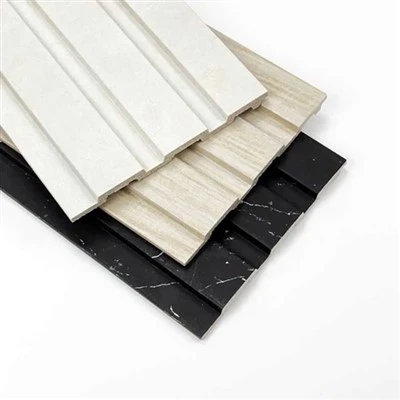
The report describes a panel tested in a specific build-up. Change the substrate and the result may no longer describe what is being installed.
Four things to check on the document itself. The standard the test was conducted to, named in full. The substrate the panel was mounted on, because a panel tested over mineral wool behaves differently from the same panel over timber battens. The thickness tested, since a report for one gauge does not automatically cover another. And the date, because formulations change and an older report may describe a product that is no longer being manufactured.
A fifth item is worth asking about even though it is rarely on the report. Fire performance testing is often carried out on a small specimen in a laboratory furnace, and the behaviour of a large wall in a real fire depends on the geometry, the joints and the ventilation as well. The report establishes a classification. It does not establish how the wall will perform, and treating it as though it does is how buildings get designed around a number rather than around a fire.
V. Where Polystyrene Stops Being an Option
The rules vary by country, state and building type, so no supplier can give a universal answer. What can be said is where the restrictions cluster.

Escape routes, high-rise buildings and places of public assembly are where decorative combustible panelling most often becomes non-compliant.
Corridors, stairwells and other escape routes are the most tightly controlled locations in almost every jurisdiction, and for good reason. High-rise and multi-occupancy residential buildings are next, particularly where the external envelope is regulated. Places of public assembly, schools, hospitals and hotels follow. Retail and office interiors are frequently less restricted, though the position of the wall within the building still matters.
A single dwelling is usually the least constrained setting of all. This is why the same panel can be entirely appropriate in one building and prohibited in the next, and why a supplier asking only whether the product is suitable for commercial use has not asked a question that can be answered.
The question that can be answered is narrower and more useful. What classification does this project require, in which standard, tested in what assembly? Give a supplier those three pieces of information and the answer becomes verifiable. Withhold them and the answer is a marketing statement.
VI. What to Specify Instead
Where a classification cannot be met by a polystyrene product, the substitution is usually made at the material level rather than the design level. The wall looks the same; the board behind it changes.
| Material | Fire position | Trade-off |
|---|---|---|
| PVC wall panel | Combustible, but better-performing formulations are available | Heavier, higher cost, wider finish range |
| Mineral fibre or gypsum | Can reach non-combustible classifications | Not a decorative grille; needs a separate finish |
| Mineral core composite | Non-combustible core with a decorative face | Higher cost, different working methods |
| Fibre cement | Non-combustible | Heavy, requires mechanical fixing, limited patterns |

Substituting at the material level usually keeps the design intact. Substituting at the design level means starting the drawing again.
In practice the substitution decision is often made on a room-by-room basis rather than for the whole project. Decorative panelling in a reception area, a meeting room or a sales floor can usually stay as specified, while the corridor that connects them moves to a different product. That keeps the design intent where it is visible and puts the compliant material where the regulation actually applies, which is usually a smaller area than the client expects.
Frequently Asked Questions
Polystyrene Wall Panel Fire Questions
Compliance questions from specifiers, contractors and importers working on commercial projects.
Is polystyrene wall panelling banned in commercial buildings?
Not universally. The restriction depends on the jurisdiction, the building type, the height, and where within the building the wall sits. In some settings it is permitted without any classification requirement. In others, particularly escape routes and high-rise buildings, a combustible decorative panel cannot be used at all. There is no single answer, and a supplier who gives one has not understood the question.
What does Class A mean?
It depends entirely on which standard is being quoted. Under ASTM E84, Class A means a flame spread index between 0 and 25, which many combustible materials achieve. Under EN 13501-1, A1 means effectively non-combustible, which no polystyrene product will reach. Always ask which standard the classification is quoted against before accepting the claim.
Do flame retardant additives make a PS panel non-combustible?
No. Additives can slow the spread of flame across the surface and improve a test result, but the base material remains a thermoplastic that softens, melts and burns. A panel with additives may meet a specific classification it would otherwise fail. It has not become non-combustible, and treating it as though it has is a common and expensive error.
What documents should a supplier provide?
A test report naming the standard in full, identifying the substrate the panel was tested on, stating the thickness tested, and dated. Where the report covers a different thickness or a different build-up from the one being ordered, ask for the relevant report rather than accepting an assurance that the result applies. Batch documentation should be issued per shipment.
Can a wall panel be treated or coated to improve its rating?
In some cases an intumescent coating or a fire-retardant backing can improve the performance of an assembly, but this changes the tested build-up and the original report no longer applies. Any such treatment has to be assessed as part of a new assembly and tested accordingly. Applying a coating on site to a panel that was tested without it produces a wall with no valid classification at all.
How early should the fire question be raised?
Before the specification is issued, not before the order is placed. By the time a contractor is ordering material, the panel size, the fixing method and the finish have all been settled, and a change of material at that point usually means a change of fixing method as well. Raising it at specification stage costs nothing. Raising it after the fit-out costs the whole wall.
Asking a Better Question
The reason this problem keeps recurring is that the industry asks whether a product is suitable for commercial use, and that question has no answer. Suitability is a property of the building, not the panel.
Ask instead what classification the project requires, against which standard, in which assembly. That question has an answer, it can be verified against a document, and it can be asked before a single panel is ordered. The alternative is to find out on a Tuesday, in a finished corridor, with the client standing next to you.
Checking a Specification Against a Project
Tell us the classification your project requires and we will confirm which products meet it, and which do not.
Talk to Our TeamYUPSENI Team
23 years in PVC and PS building material manufacturing and supply chain. We help importers, distributors, and project buyers source wall panels, flooring, ceilings and fencing that pass compliance the first time. More about YUPSENI
© 2026 YUPSENI. All rights reserved. The information in this article is for general informational purposes only and does not constitute professional advice. Fire classification requirements vary by jurisdiction and project. Always confirm against local building regulations and current test documentation before making procurement decisions.