

SPC Flooring on Uneven Ground: Why Rigid Cores Need a Level Subfloor | YUPSENI
Oct 31, 2026
A Rigid Floor Is Not a Forgiving Floor. What Uneven Ground Does to SPC
A rigid plank holds its shape. The ground underneath has to be ready for that.
On This Page
The floor went down over the old surface, and for a few days it looked perfect. Then came the sounds - a hollow knock underfoot, a click in one spot, a board that moved when you stepped on it. The buyer's first thought was that the floor was faulty.
The floor was not the problem. The ground underneath was. A rigid SPC core does not bend to follow the dips and bumps of an old surface; it holds its shape and leaves every unevenness right where it was - under your feet.
I. The Floor That Sounded Hollow
The first sign is almost always a sound. You walk across a room and one spot answers back - a soft, hollow knock where the floor should feel solid. Then a click develops in another spot, the faint sound of a board flexing underfoot and springing back. Then, in the worst cases, an edge begins to lift, and a seam opens where two planks were once locked tight.
None of this was visible when the floor went in. The planks looked flat, the surface looked smooth, the room looked finished. The problem was not on top of the floor. It was underneath it, in the old subfloor that the new floor was supposed to hide - the dips, the humps, the hollows that had been there for years and were now pressing up against a material that refused to absorb them.
The floor was not the problem. The ground underneath was.
And to understand why, you have to understand what makes SPC different from the floors that came before it - and what that difference costs.
II. A Rigid Core Doesn't Bend to Fit
SPC gets its name from the stone-plastic core at its centre - a dense, stiff board made of limestone powder and PVC resin. That core is the source of everything people like about SPC: it is hard, dimensionally stable, resistant to water, and it does not swell or shrink with humidity the way wood does. It is the reason an SPC floor feels solid underfoot and stays flat season after season.
But a rigid core is rigid in every direction, including the one that matters at installation. A flexible material, laid over a floor with a slight dip, will settle into the dip and follow it. A rigid plank will not. It bridges the dip instead, holding its flat shape across the gap and leaving an empty space underneath - a space you cannot see, but can feel and hear every time a foot steps on it.
This is the quiet trade-off behind the SPC selling point. The same stiffness that makes the floor stable and waterproof also makes it unforgiving. It will not accommodate an uneven subfloor; it will simply sit on top of the unevenness, preserving every bump and hollow as faithfully as it preserves its own shape. A rigid floor is a precise instrument, and a precise instrument needs a precise surface beneath it.
The floor is not hiding the ground. It is displaying it, plank by plank, in sound.
The stiffness that makes SPC stable is the same stiffness that refuses to bend over a dip - and leaves the dip exactly where it was.
III. What the Uneven Ground Does
The consequences arrive in three steps, and each one gets blamed on the wrong thing.
| What you notice | What is actually happening | What it gets blamed on |
|---|---|---|
| A hollow, soft spot | The plank bridges a dip, leaving a void beneath | "The board is too thin" |
| A click when you walk | The plank flexes down and springs back over the gap | "The lock is loose" |
| An edge lifting, a seam opening | The locking joint cracks under repeated stress | "The floor is poor quality" |
The hollow spot is the simplest to explain. A plank that spans a low area is carrying your weight without support underneath it, so it flexes and rebounds with every step. It is not a thin board; it is a board asked to bridge a gap it was never meant to bridge.
The click is the same flexing, made audible. Each step pushes the plank down, the plank springs back, and the locking mechanism - the tongue-and-groove joint that holds the planks together - takes the strain of that repeated movement. A locking joint is designed to hold two planks together, not to act as a spring. When it is forced into that role, day after day, it begins to fail.
The opened seam is the end of that story. A lock that has flexed too many times cracks or loses its grip, and the two planks separate. The floor was never weak; it was placed on a surface that forced it to move, and the movement is what broke it.
In every case, the real cause is the same: the ground was not level, and the rigid plank was made to carry that fact.
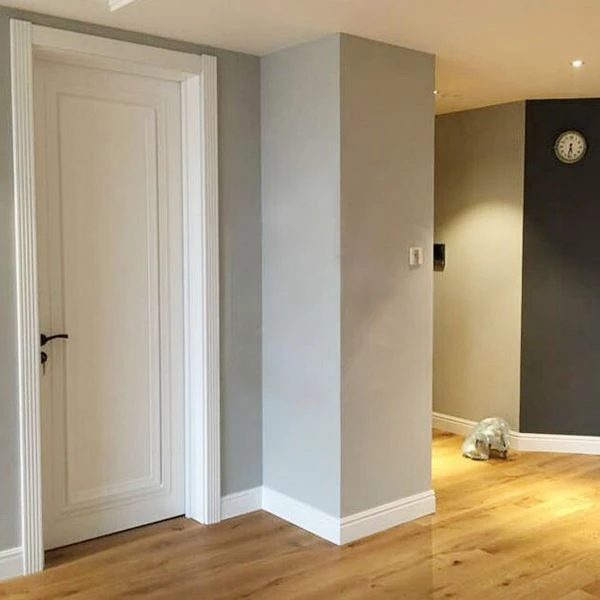
The seam opens not because the lock was weak, but because the plank was made to flex over a gap.
IV. The Softer Floor That Got Away With It
The clearest way to see what a rigid core demands is to put it next to a flexible one. Before SPC became the standard, the market was full of softer vinyl flooring - planks and tiles with enough give to settle into a slightly uneven subfloor. Lay one of those over a floor with a mild dip, and it follows the contour, staying in contact with the ground the whole way. No void, no flex, no click.
That flexibility came at a price, of course - a softer floor is less stable, more prone to telegraphing the texture of the subfloor, and less rigid underfoot. SPC solved those problems by making the core stiffer. But in solving them, it also removed the floor's ability to forgive. The same give that let soft vinyl absorb a bump is exactly what SPC no longer has.
This is why SPC is often described as more demanding to install than the vinyl it replaced. It is not that the product is fussier or worse - it is that its greatest strength, rigidity, comes with a specific condition attached: the surface beneath it must be flat. A rigid plank on a flat floor is the best version of itself. A rigid plank on a wavy floor is a floor that will tell you, step by step, exactly where every wave is.
The floor that feels solid and stable is the one whose ground was made solid and stable first.

A softer floor can follow a dip. A rigid one cannot - and that is the whole difference.
V. Level the Ground Before You Lay the Floor
The good news is that none of this is a reason to avoid SPC. It is a reason to do the preparation the floor quietly requires - and the preparation is almost always cheaper than the callbacks.
Check the subfloor first. Before any plank goes down, the subfloor should be checked with a straightedge or level, looking for the dips and humps that a rigid plank will not forgive. The standard is strict, and for good reason: the flatter the base, the better the floor performs.
Level the low spots. A self-leveling compound poured into the dips brings them up to the surrounding surface, removing the voids that cause the hollow sound. It is a small, unglamorous step that the finished floor will never show - and will never stop thanking you for.
Grind the high spots. A hump is just as bad as a hollow, because it forces the plank to climb and creates a pivot point. Grinding down a raised seam or a lump in the old surface is part of the same job as filling the dips.
Leave the expansion allowance. A rigid floor still moves, however slightly, with temperature, and the gap around the perimeter is where that movement goes. A floor pinned too tight against the wall will buckle on its own, even over flat ground.
Put the preparation first and SPC repays you with the floor you paid for: solid, quiet, and stable. Skip it, and the floor will spend its life announcing, one hollow knock at a time, that the ground was never ready. The installation system is built around this exact order - subfloor first, planks second.

Check, fill, grind, and leave the gap - then lay the planks, and the floor stays silent.
The Floor Is Only as Good as the Ground Beneath It
SPC is an honest product with an honest demand. It offers stability, water resistance, and a solid feel - and in return it asks for one thing: a flat surface to lie on. The hollow sound, the click, the opened seam are not the floor complaining about its own quality. They are the floor telling you, clearly and repeatedly, what the ground underneath failed to provide.
The buyer who levels first gets the floor they imagined - silent, solid, and flat. The buyer who skips it gets the same planks, but a different experience, because the ground was never prepared to be the floor's partner. A rigid floor is not a forgiving floor. Prepare the ground, and it never has to forgive anything.
Prepare the ground, then enjoy the floor
Level subfloors, proper expansion gaps, and an installation system that prevents callbacks.
Request a Quotation Browse SPC FlooringFrequently Asked Questions About SPC and Uneven Subfloors
Answers to the questions that come up when a new SPC floor starts to sound hollow.
Q1: Why does my new SPC floor sound hollow?
A: Because the rigid plank is bridging a dip in the subfloor, leaving a void underneath. Each step makes the plank flex and rebound, producing the hollow sound.
Q2: Does SPC flooring need a perfectly level subfloor?
A: It needs a flat subfloor within a strict tolerance. SPC is more demanding than soft vinyl because its rigid core will not bend to follow dips and bumps.
Q3: Why is SPC more demanding than vinyl about the subfloor?
A: Soft vinyl flexes and settles into a slight dip, staying in contact with the ground. A rigid SPC core holds its shape and bridges the gap, creating a void.
Q4: How do I fix an uneven subfloor before laying SPC?
A: Check with a straightedge, fill low spots with a self-leveling compound, and grind down any high spots or raised seams until the surface is flat.
Q5: Can uneven ground damage the locking system?
A: Yes. A plank flexing over a gap puts repeated stress on the locking joint, which is not built to act as a spring - over time it can crack and open the seam.
YUPSENI Team
23 years in PVC building material manufacturing and supply chain. We help importers, distributors, and project buyers source SPC flooring, PVC foam boards, wall panels, and fencing that pass compliance the first time. More about YUPSENI
© 2026 YUPSENI. All rights reserved. The information in this article is for general informational purposes only and does not constitute professional advice. Product specifications may vary by region and production batch. Always request current datasheets before making procurement decisions.


