SPC Flooring Slip Rating Explained: What the R-Value Doesn't Tell You | YUPSENI
Oct 28, 2026
The R-Slip Rating on Your Floor Box Is a Lab Number, Not a Wet Bathroom Number
The number on the box promises safety. The test behind it never set foot in a wet bathroom.
On This Page
On the box, it looks reassuring: R10, maybe R11. A number that promises the SPC floor will hold you, even wet. Buyers see a higher number and pay for the safety it seems to guarantee.
The number was never about your bathroom. It was generated in a lab, on a tilted platform, with oil on the surface and a standardised shoe on the tester's foot. The moment you step on it barefoot, wet, after a shower, you are running a test the rating never took.
I. The Number That Feels Like a Promise
The R-slip rating has become the default way to talk about floor safety, because it reduces a complicated question to a single, sortable digit. Higher is safer. Lower is riskier. The scale runs from R9 at the low end to R13 at the top, and the number sits on the packaging like a guarantee that the floor has been measured, verified, and cleared for use.
The appeal is obvious, and it is also the problem. A number feels objective, so nobody asks what was actually measured. The buyer sees R11 and assumes the floor will be safe in their situation - the restaurant kitchen, the hallway, the bathroom - because one digit cannot possibly be expected to carry the nuance of every real surface and every real foot.
The number was never about your bathroom.
It was about a specific laboratory scenario, and the gap between that scenario and your floor is where the safety actually lives.

One number, many situations - and the number only ever described one of them.
II. What the R-Rating Actually Tests
The R-rating comes from a ramp test. A tester stands on a sample of the flooring, wearing a standardised test shoe, while the platform is slowly tilted. The surface is lubricated - with oil, not water - and the tester walks until they begin to slip. The angle at which slipping starts decides the rating: a low angle puts the floor in R9, a steep one in R12 or R13.
Notice what that test assumes. It assumes oil, because the standard was written for industrial and commercial workplaces where spills are oil-based. It assumes a standard shoe, a controlled, clean platform, and a tester who knows they are being tested. Those assumptions are all reasonable - for a factory floor or a commercial kitchen. They are simply not the conditions of a domestic bathroom.
| Condition | What the R-test assumes | Your bathroom reality |
|---|---|---|
| Lubricant | Standard oil | Water, soap, shampoo, body oil |
| Foot | Standardised test shoe | Bare feet, wet feet, slippers |
| Surface | Clean, controlled ramp | Wet floor, residue, hard water film |
| Person | A tester expecting a slip | Anyone, mid-step, off balance |
None of this makes the R-rating useless. For its intended purpose - comparing the oil-slip performance of commercial floors - it is a real, repeatable standard. The failure is not in the test; it is in the translation. The number travels from the laboratory to the showroom and arrives on the box with its assumptions stripped away, leaving only the digit and the implied promise that it applies everywhere.
A rating is only as honest as the question it was built to answer, and the R-rating was never asked about your shower.
The R-test lubricates the ramp with oil, not water. Its assumptions end exactly where your bathroom begins.
III. The Bathroom Is a Different Test
A wet bathroom is the hardest case for any floor, and it fails the R-test's assumptions in every direction at once. The lubricant is water mixed with soap and shampoo - slipperier in practice than plain water, and nothing like the oil the ramp was designed for. The foot is bare, with skin instead of a shoe sole, and wet skin on a wet floor is a fundamentally different contact than a standardised test shoe.
For barefoot wet areas, there is a separate standard entirely - a barefoot slip test with its own letter scale, usually reported as A, B, or C. A floor that earns a strong R-rating under the oil test can perform very differently when the question changes to bare feet and soapy water. The two ratings measure different things, under different conditions, and a high score on one says little about the other.
The uncomfortable truth is that a floor can look safe on paper and turn treacherous the moment it is actually wet. A glossy, smooth plank can carry a respectable R-rating in the lab and still become a skating surface under a film of water at home, because the water fills the surface and the rating never asked what happens then. The number was tested dry, for oil, in shoes. The failure happens wet, with water, and barefoot.
The rating and the reality are answering two different questions, and the buyer who trusts only the rating is trusting the answer to a question they never asked.

Wet skin, soap, and water - the test the R-rating never ran is the one your bathroom runs every day.
IV. Where Real Grip Comes From
If the number does not guarantee grip, what does? The answer is almost embarrassingly physical: the surface texture.
Grip on a wet floor is a matter of what the surface does with the water. A deep, well-defined emboss - the pressed texture on the wear layer - gives the water somewhere to go. The raised pattern pushes through the water film and makes direct contact with the foot, and the channels between the raised areas carry the water away. That mechanical contact is what actually keeps a bare foot from sliding, and it has nothing to do with a rating on a box.
The opposite is a smooth or high-gloss surface. It looks clean and modern, and it is - until water sits on top of it as an unbroken film, turning the floor into a lubricated plane. A smooth plank can hold a fine R-rating in an oil test and still be the slipperiest thing in the house when it is wet, because the rating measured a shoe on oil, not skin on water.
This is where the rating and the texture part ways. The rating is a number; the texture is a behaviour. The number can be printed on any surface, smooth or embossed, and say nothing about what happens under water. The texture is the thing you can actually feel with your fingers, and it predicts wet-floor grip better than the digit ever will. The surface and construction choices that matter for grip are the same ones that matter for wear - and they are all on the outside, where you can feel them.
A rough, deeply embossed plank will out-grip a glossy one every time it gets wet, whatever numbers the two boxes happen to carry.
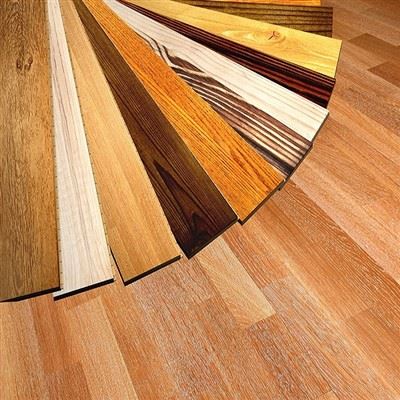
The texture is the grip. Deep emboss pushes through the water film; a smooth gloss turns it into a plane.
V. Read the Surface, Not Just the Rating
You cannot run a ramp test in the showroom, but you can do something better: interrogate the surface and match it to the room it will live in.
Run your fingers over the plank. A deep, sharp emboss that catches your fingertips is a surface that will push through water and hold a wet foot. A smooth or glassy finish is the opposite, no matter what the box says.
Ask about the barefoot rating for wet areas. For bathrooms, pools, and change rooms, the barefoot slip rating - the A/B/C scale - is the one that matches the actual conditions. A supplier who can only quote the R-rating is answering a question you did not ask.
Test it wet, if you can. A splash of water on a sample tells you more than the packaging. Watch how the surface behaves under a wet hand or a wet foot, and whether the water beads on top or channels away through the texture.
Match the texture to the room. A deep, rustic emboss grips well but collects dirt in a commercial space; a smoother texture cleans easily but slips when wet. The right surface is the one that matches the actual foot, the actual liquid, and the actual traffic - which is why commercial spaces choose differently from a family bathroom.
The rating is a starting point, not a verdict. The verdict is in the texture, the wet test, and the honest matching of the floor to the room it will actually serve - because the only slip that ever mattered happened on your floor, in your bathroom, with your bare feet.

Feel the texture, ask the barefoot rating, test it wet - and the number stops being a guess.
The Safest Floor Is the One Tested for Your Feet, Not the Lab's
Slip resistance is one of the few floor properties that people trust to a number and then bet a fall on. The R-rating is a real measurement, but it is a measurement of a specific, artificial moment - oil on a ramp, a standard shoe, a prepared surface - and it answers a question that most home floors never actually ask.
The floor that keeps you upright is the one chosen the slow way: by running a hand over the emboss, by asking how it behaves barefoot and wet, by matching the texture to the room. The number on the box will always be there, looking reassuring. It is just not the number that decides whether you fall.
Ask how it grips wet, not just what it scores
Surface texture, barefoot ratings, and wet-room matching - the real measure of a safe floor.
Request a Quotation Browse SPC FlooringFrequently Asked Questions About SPC Slip Ratings
Answers to the questions that come up once the R-rating stops being taken at face value.
Q1: What does the R-slip rating on flooring actually measure?
A: It measures slip on a tilted ramp, lubricated with oil, using a standardised test shoe. The angle at which the tester slips determines the R9-to-R13 grade.
Q2: Is a higher R-rating always safer?
A: Not in every situation. A higher rating means better performance under the oil-and-shoe test, but it says little about wet, barefoot conditions in a bathroom.
Q3: Does the R-rating apply to wet bathrooms?
A: Only indirectly. The R-test uses oil and a shoe, not water and bare feet. Wet areas have a separate barefoot slip test with an A/B/C scale that matches the real conditions.
Q4: What makes SPC flooring genuinely non-slip?
A: The surface texture. A deep, well-defined emboss pushes through the water film and channels it away, providing real grip that a smooth, glossy surface cannot match when wet.
Q5: How can I check slip resistance before buying?
A: Run your fingers over the emboss, ask for the barefoot rating in wet areas, and test a sample with a splash of water to see how the surface behaves.
YUPSENI Team
23 years in PVC building material manufacturing and supply chain. We help importers, distributors, and project buyers source SPC flooring, PVC foam boards, wall panels, and fencing that pass compliance the first time. More about YUPSENI
© 2026 YUPSENI. All rights reserved. The information in this article is for general informational purposes only and does not constitute professional advice. Product specifications may vary by region and production batch. Always request current datasheets before making procurement decisions.