PVC Sheet for Chemical Containment — Which Grade Survives Which Chemical
Sep 25, 2026
14 min read
By YUPSENI Team
Chemical service is not one property. It is a combination of the sheet, the medium, the temperature and the load on the panel.
On This Page
The enquiry usually arrives as a chemistry question. Can your sheet handle this? It gets answered with a chart, and both the question and the chart tend to be incomplete in the same way.
Chemical resistance is not a property that belongs to PVC. It belongs to a particular sheet, in a particular medium, at a particular concentration, at a particular temperature, under a particular load. Change any one of those and the answer changes.
What follows is built on the composition described in our guide to what is actually in a PVC sheet, because the component that limits performance in chemical service is usually not the polymer.
I. Why PVC Resists Anything at All
PVC owes its chemical behaviour to two structural facts, and understanding them explains almost every entry in any resistance table you will ever read.
The first is the carbon-chlorine bond. PVC carries a very high proportion of chlorine by weight, and the bond holding it is strong and chemically unreactive. That gives the material broad resistance to acids, alkalis and salts, which is why it turns up in chemical plant pipework, tank linings and ductwork.
The second is the saturated backbone. There are no double bonds along the chain waiting to be attacked, so the polymer is resistant to oxidation and to ultraviolet-driven degradation in a way that unsaturated rubbers are not.
Resistance has a shape, not a level
PVC is not uniformly resistant across the chemical spectrum. It sits high against acids, alkalis, salts, water and aliphatic hydrocarbons, and low against a specific group of organic solvents whose polarity happens to match its own. A single number describing overall resistance would be meaningless.
The group it loses against is well defined and worth memorising, because it accounts for the overwhelming majority of chemical failures. Ketones, esters, chlorinated hydrocarbons and aromatic hydrocarbons attack PVC. That list covers the solvents used to make PVC adhesive, which is a useful way to remember it. If a substance appears as a solvent in a PVC solvent cement, it will attack a PVC sheet given enough time.
Water, salts and mild detergents are the easy end of the spectrum. PVC handles them for decades without measurable change.
A practical summary, before the complications begin.
| Medium | Typical response | Note |
|---|---|---|
| Water, brines, salts | Excellent | The baseline case, and what rigid PVC is most used for |
| Dilute mineral acids | Good | Filler in the compound can still be affected |
| Concentrated oxidising acids | Limited to poor | Attack increases sharply with strength and temperature |
| Alkalis and caustic solutions | Good | Commonly used in caustic service |
| Aliphatic hydrocarbons | Good | Fuels, oils and greases are generally tolerated |
| Aromatic hydrocarbons | Poor | Swelling, then loss of strength |
| Ketones | Poor | These dissolve PVC rather than merely swelling it |
| Esters | Poor to limited | Effect grows with temperature |
| Chlorinated solvents | Poor | Fast attack even at ambient temperature |
| Alcohols | Good to limited | Lower alcohols are tolerated better than higher ones |
II. Three Variables Every Resistance Chart Leaves Out
A resistance table compresses a four-variable relationship into a two-column list. The variables it drops are the ones that decide real installations.
Temperature
Chemical attack is a reaction, and reactions accelerate with heat. A rough rule of thumb is that the rate roughly doubles for every additional ten degrees. A material rated as resistant at ambient can behave very differently at sixty degrees, and the chart usually does not say which one it meant.
Concentration
Dilute and concentrated forms of the same acid are different problems. Sulfuric acid at low strength is routine for PVC. At high strength and elevated temperature it is not. A chart entry reading simply "sulfuric acid" has told you almost nothing.
Duration and stress
A splash and a permanent immersion are not the same exposure, and an unstressed test specimen is not the same as a bolted panel. Duration is usually implied rather than stated, and stress is almost never mentioned at all.
Of the three, temperature is the one that most often turns a specified application into a failure. A panel selected on ambient-temperature data and installed in a process that reaches fifty degrees has been selected on the wrong column, and nothing in the documentation will have warned anyone.
Ask for a temperature with every rating
Any resistance data presented without a stated temperature and concentration should be treated as indicative only. A supplier who can supply the temperature is describing tested material. One who cannot is passing on a table from somewhere else.
III. Where the Weak Link Actually Sits
This is the part that decides most chemical failures, and it is almost never discussed.
A PVC sheet is not pure PVC. It is a compound, and in a foam board the polymer is often a minority of the formulation. Fillers, stabilisers, lubricants and processing aids all sit in the same matrix, and each of them has its own chemical vulnerabilities.
| Component | Vulnerability in chemical service |
|---|---|
| Calcium carbonate filler | Reacts with acids. A heavily filled sheet exposed to acid loses filler at the surface, which roughens and opens the material rather than dissolving the polymer. |
| Plasticiser | Extractable by solvents and by many oils and fats. Flexible grades are markedly less resistant than rigid ones for this reason alone. |
| Stabiliser system | Some stabilisers are more resistant to specific media than others. The choice is covered in our piece on lead and calcium-zinc stabiliser systems. |
| Pigments | Generally stable, but some inorganic pigments are affected by strong acids or alkalis |
The calcium carbonate entry deserves the most attention, because it is counterintuitive. The polymer resists dilute acid well. The filler inside it does not. The failure therefore presents as surface erosion, discolouration and a gradual loss of material rather than as obvious swelling or dissolution, and it is easy to attribute to something else entirely.
Filler loading is the grade variable that matters
Where a sheet will see acid in service, filler loading is the specification line to look at. A general-purpose board and a lower-filled board can be visually identical and behave completely differently over a year of exposure. The difference shows up in the price, which is usually the first thing that gets questioned.
Density plays a secondary role through porosity. A denser sheet presents less internal surface area to a medium, and permeation through the section is slower. That is one reason denser grades are preferred for containment work, and the relationship between density and porosity is explained in our piece on why density is not strength.
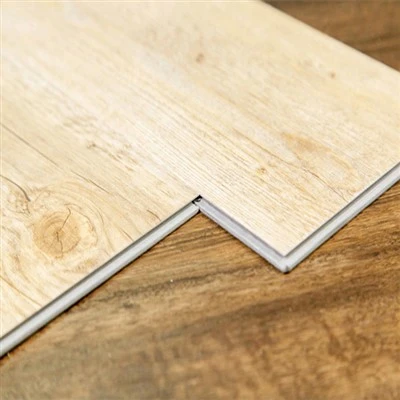
Environments combining routine chemical exposure with washdown are where filler loading and surface condition both become visible over time.
The cut edge is the other weak point, and it is worth stating separately. A foam board carries a dense skin on both faces and an open-celled core between them. Machining exposes that core. In chemical service the cut edge becomes the entry route, which is why edge sealing or capping is treated as essential in containment work and optional in decorative applications. The structural reason is set out in our guide to skin and core in PVC foam board.
IV. What Stress Does to a Rating
Here is the gap between a laboratory rating and a working installation, and it is wider than most buyers expect.
Resistance data is generated on unstressed specimens. A coupon is immersed, left for a defined period, removed, weighed and examined. That specimen carries no load. A panel bolted to a frame, or a tank wall holding a head of liquid, carries a load all the time.
Combining a chemical environment with a sustained tensile stress produces a failure mode that neither condition would cause alone. It is called environmental stress cracking, and the mechanism is straightforward. The chemical penetrates the surface and locally reduces the material's resistance to crack growth. The stress, concentrated at whatever feature is present, opens a crack. The chemical then reaches fresh material at the crack tip and the process repeats.
The failure will not be where you are looking
Environmentally assisted cracking begins at stress concentrations: fixing holes, cut edges, machined grooves, sharp corners. A panel that has been in service for two years and then cracks around its fixings is telling you about the combination of the medium and the load, not about the medium on its own.
This is why a material can pass every immersion test in the standard and still fail in service. The tests were answering a different question. It also explains why the same sheet works in one installation and fails in another when the same chemical is involved, since the difference was the load, not the chemistry.
Where a panel is both loaded and chemically exposed, the design measures that matter are the ones that reduce stress concentration. A radius instead of a corner, an oversized fixing hole rather than a tight one, a deburred cut edge, and fixings that do not pre-load the material. None of those change the grade. All of them change the outcome.
V. Reading a Resistance Chart Without Being Misled
Charts use categories, and categories hide consequences. That is the single most important thing to understand about them.
A rating of poor can mean the sheet dissolves. It can also mean the sheet swells by three percent, changes colour slightly, and continues to perform its function for another fifteen years. Those are very different outcomes sharing the same word.
What a rating tells you
That something happens. That a category boundary was chosen by somebody, on the basis of a test method you have not seen, at a temperature that may or may not be stated.
What it does not tell you
Whether the consequence is cosmetic or structural. Whether the effect is reversible. Whether it stabilises after an initial change or continues indefinitely. Those are the questions that decide whether a material works.
There is also a question of what the chart was measuring. Some test methods assess mass change, some assess visual appearance, some assess retention of mechanical properties after exposure. They do not rank materials in the same order, and a chart that does not state its criterion is a chart you cannot act on.

Installed panels carry load continuously. Immersion coupons do not, and that difference is where service failures originate.
The practical approach is to take any chart as a screening tool rather than an answer. Its job is to eliminate the obviously unsuitable options quickly. It cannot confirm that the remaining candidate will work, and treating a favourable rating as confirmation is how containment projects end up replacing panels two years into service.
VI. Testing a Candidate Sheet Yourself
A short immersion programme run in-house tells you more than any published table, because it tests your actual medium against your actual candidate at your actual temperature.
Cut matched specimens from the candidate sheet and from a reference material you already trust in this medium. Include one specimen with a machined edge and one with a drilled hole, because cut surfaces behave differently from moulded ones.
Weigh and measure each one, record the dimensions, and photograph them. Permanently identify every specimen, because after exposure they become difficult to tell apart.
Immerse at the highest temperature the application will see, not at room temperature. Temperature is the variable most often got wrong, and testing at ambient when the process runs hot produces a falsely reassuring result.
Add a stressed set. Bend a strip into a jig so it is held under load, fasten it there, and immerse it alongside the free specimens. This is the part that most test programmes leave out and the part that predicts service behaviour.
Inspect at intervals rather than only at the end. A change that happens in the first week and then stops is a different problem from one that continues to develop, and only intermediate readings distinguish them.
Load the specimens mechanically at the end. Weight change and appearance are useful, but retained strength is the property that decides whether a containment panel is still doing its job.
Four weeks of this produces a data set more relevant to your installation than any published chart, and it costs a few hundred grams of material and some bench time. Where the medium is aggressive or the consequence of failure is severe, that is a favourable exchange.
Safety applies to the test as much as the installation
Heating aggressive media accelerates their attack on everything, including the container holding the specimens and anyone working nearby. Run these tests in a suitable area with appropriate containment and ventilation, and confirm the safe handling requirements for the medium before starting.
VII. Specifying for Chemical Service
Six lines of information turn a chemical resistance enquiry into an answerable question.
The chemical identity, including any additives, surfactants or co-solvents present in the actual process stream.
Concentration, as a range if it varies through the process cycle.
Maximum temperature and typical temperature, stated separately. The maximum governs, because that is when the attack is fastest.
Exposure pattern: continuous immersion, intermittent contact, splash and spillage, or vapour only. Each is a different requirement.
Whether the panel carries a sustained load, and where the stress concentrations fall.
The acceptable consequence. Some swelling or discolouration may be tolerable in a screening application and not in a containment one.
With those six answered, the grade question becomes specific. Filler loading for acid service. Rigid rather than plasticised where solvents or oils are present. Adequate density for the permeation rate required. A stabiliser system suited to the medium. Sealed edges wherever the core would otherwise be exposed.

Where the consequence of failure is containment, the grade selection has to be documented rather than assumed from a general-purpose datasheet.
Documentation matters as much as selection here, because the compliance side of a containment project usually requires it. The certification routes that apply to construction products are set out in our guide to PVC building material certifications, and where the service environment is hygienic or regulated, there is a related discussion in our piece on vinyl antibacterial board for medical environments.
The one thing worth refusing outright is a general-purpose board sold into a containment application on the strength of a chart alone. The polymer will almost certainly cope with the medium. Something else in the formulation may not, and the failure will take two years to appear and will be attributed to the wrong cause when it does.
The short version
PVC resists acids, alkalis, salts and aliphatic hydrocarbons, and loses against ketones, esters, chlorinated solvents and aromatics. Resistance data is meaningless without temperature and concentration. The weak link in a compound is usually the filler, not the polymer. Immersion ratings are measured on unstressed specimens, so a loaded panel can fail in a medium that passed every test. Specify the medium, the temperature, the exposure pattern and the load, then confirm the candidate with a short in-house immersion programme that includes stressed specimens.
Frequently Asked Questions
Chemical Resistance Questions
Common questions from industrial buyers, specifiers and plant engineers.
What chemicals will attack PVC sheet?
The predictable group is ketones, esters, chlorinated hydrocarbons and aromatic hydrocarbons. A useful way to remember the list is that these are the same solvents used in PVC adhesive, and anything that dissolves PVC in a glue pot will attack a sheet eventually. PVC is broadly resistant to acids, alkalis, salts, water and aliphatic hydrocarbons.
Why did my PVC panel fail in a chemical that the chart said was resistant?
Common causes are temperature higher than the chart assumed, a heavier filler loading than the grade that generated the data, or a sustained load the test specimens did not carry. Immersion ratings are measured on unstressed coupons, so a bolted panel in the same medium is a materially different situation. Failures appearing around fixings usually point at the combination of stress and medium rather than the medium alone.
Does filler content affect chemical resistance?
Significantly, particularly against acids. Calcium carbonate filler reacts with acid, so a heavily filled sheet loses material at the surface where the polymer itself would have been unaffected. The failure shows as roughening and erosion rather than swelling, which makes it easy to misdiagnose. For acid service, filler loading is the specification line worth checking first.
Is flexible PVC as chemically resistant as rigid PVC?
Generally not. Plasticiser can be extracted by solvents, oils and fats, and losing it changes both the mechanical properties and the dimensions of the panel. Where chemical resistance is the requirement, rigid material is the safer choice. If a flexible grade is necessary for other reasons, the plasticiser system becomes a specification item in its own right.
What is environmental stress cracking?
A failure mode where a chemical environment and a sustained tensile stress combine to crack a material that would survive either condition alone. The chemical reduces the material's resistance to crack growth, and the stress opens a crack at a stress concentration. It typically appears at fixings, cut edges and machined corners, and it is the reason a material can pass every standard test and still fail in service.
Should cut edges be sealed in chemical service?
Yes, wherever the medium will reach them. Machining a foam board exposes the open-celled core between the two dense skins, which presents far more internal surface area than the face does. In containment work edge sealing or capping is standard practice rather than an optional refinement, and the same applies to drilled holes and machined grooves.
How long should an immersion test run?
Long enough to distinguish an initial change from a continuing one, which usually means at least four weeks with intermediate inspections rather than a single reading at the end. Temperature matters more than duration. Testing at the highest temperature the process will see, even for a shorter period, tells you more than a long test at ambient. Include stressed specimens alongside free ones.
Matching a Grade to a Medium
Send us the chemical, its concentration, the maximum temperature and the exposure pattern, and we will confirm the filler loading, density and edges treatment that suits the application.
Request a Quotation View the RangeYUPSENI Team
23 years in PVC building material manufacturing and supply chain. We help importers, distributors, and project buyers source foam board, sheet, wall panels, flooring and fencing that pass compliance the first time. More about YUPSENI
© 2026 YUPSENI. All rights reserved. The information in this article is for general informational purposes only and does not constitute professional advice. Chemical resistance varies by formulation, filler loading, temperature, concentration and mechanical stress. Published resistance data is indicative only. Confirm suitability through testing under conditions representative of the actual service environment.