Food Contact PVC: What the Certificates Actually Cover — And What They Don't
Sep 26, 2026
13 min read
By YUPSENI Team
On This Page
A buyer asks whether a sheet is food safe. A supplier sends a certificate. Both parties consider the matter settled, and in a large number of cases both are wrong about what was just established.
Food contact compliance is not a property that a material possesses. It is a conclusion drawn about a specific material, in contact with a specific food, at a specific temperature, for a specific duration, in a specific market. Remove any one of those and the conclusion no longer applies.
The chemistry that makes this complicated starts in the formulation. What sits in the sheet alongside the polymer is set out in our guide to what is actually in a PVC sheet, and for food contact every one of those components has to be individually accounted for.
I. There Is No Such Thing as a Food Safe Material
The first thing to establish is that no global food contact status exists. There is no international register a material can be entered into.
What exists instead is a set of national and regional frameworks, each with its own permitted list of substances, its own migration limits and its own testing regime. The European Union operates under a framework regulation covering all food contact materials, with a specific regulation governing plastics that contains a positive list of authorised substances. The United States regulates under a separate code with its own permitted inventory. Germany publishes recommendations that function as a de facto standard across much of the industry. Other markets maintain their own systems.
Compliance does not transfer between markets
The permitted lists are not identical. An additive accepted in one jurisdiction may be absent from another's list, or permitted at a different limit, or permitted with a restriction that does not exist elsewhere. A sheet fully compliant for the European market may not be compliant for the American one, and the certificate will not mention this because it was never asked to.
The practical consequence is that the first question about any food contact certificate is not what it says. It is which market it was written for.
This is also a moving target. Positive lists are revised, limits are tightened and substances are withdrawn. A certificate issued four years ago against a regulation that has since been amended is a historical document rather than a current one, and the date on it matters as much as its contents.
II. What the Certificate Actually Certifies
Food contact compliance has two separate components, and almost every certificate addresses only one of them.
Composition
Is every substance in the formulation on the relevant positive list, at a permitted level, and used within any conditions attached to its authorisation? This can be established by paperwork alone, provided the full formulation is disclosed to whoever is signing.
Migration
How much of that formulation actually transfers into food under the conditions of use? This cannot be established by paperwork. It requires a test on a physical specimen under defined conditions.
A composition statement tells you the material is permitted. A migration test tells you how it behaves. They answer different questions and neither substitutes for the other, yet they arrive in the same envelope and are read as one document.
A material approval is not a product approval
Most documents described as food contact certificates cover the formulation supplied by a resin or compound producer. They do not cover the finished board. Your thickness, your surface, your processing history and your colour all sit outside the scope of a statement written about a compound, and none of those are covered by the signature on it.
This is not a technicality invented by lawyers. Processing changes migration behaviour. Heat history alters the distribution of additives within the section, surface finish changes the exposed area, and thickness changes the distance a substance must travel to reach the food. A compound that migrates within limits as a pressed plaque may behave differently as an extruded board of a different thickness.

A panel and a compound are different objects for compliance purposes. The certificate usually describes the second while the buyer is installing the first.
III. Test Conditions Decide the Answer
Where a certificate rests on a migration test, the test conditions are the certificate. Everything else on the page is context.
Migration is measured in two ways. Overall migration captures the total mass of everything that transfers from the material, expressed as a limit per unit of surface area or per unit mass of food. Specific migration measures individual substances against their own limits. A material can pass the overall limit comfortably while breaching a specific one, so a report that gives only the first is incomplete.
| Variable | Why it changes the result |
|---|---|
| Food type | Fatty foods extract far more than aqueous ones. Testing uses simulants chosen to represent food categories, and a result obtained with an acidic or aqueous simulant says very little about a fatty contact. |
| Temperature | Warmer contact accelerates transfer. A room-temperature test does not predict a hot-fill or cooking application. |
| Contact time | Transfer is not instantaneous, and a short-exposure result is not a long-exposure result. Testing is done against defined time and temperature conditions for this reason. |
| Surface to volume ratio | A thin container wall in contact with a small volume of food is a more demanding geometry than a thick wall against a large volume. |
| Repeat use | A material tested once and used daily for years is a different case, and repeat-use protocols account for it. |
The single most common mismatch is simulant. A report quoting results against an aqueous or acidic simulant, presented as evidence for an application that actually involves cooking oil, dairy or meat, is not evidence for that application.
Match the simulant to the food before anything else
If the intended use involves fat, the only relevant migration evidence is that obtained with a fatty simulant under representative time and temperature conditions. Everything else, however official it looks, is answering a question slightly different from the one being asked.
Testing conditions are usually expressed in the report as a defined set of time and temperature regimes. The practical check is straightforward: find the regime on the certificate and compare it against the hottest, longest, fattiest contact your application will actually involve. If the certificate regime sits below your application, the certificate does not cover you.
IV. What PVC Adds to the Problem
PVC carries a set of specific issues in food contact that other commodity plastics largely avoid, and one of them is absolute.
The stabiliser system is the first gate. Lead-based stabilisers are prohibited in food contact applications across the major regulated markets, and this is not a matter of limits or conditions. A sheet stabilised with lead cannot be food contact material regardless of how it is processed, finished or tested. The choice between stabiliser families, and why it varies by market, is covered in our piece on lead and calcium-zinc stabiliser systems.
That single fact explains most of the shape of the food contact PVC market. Material intended for it is stabilised with calcium-zinc or another permitted system, and the cost difference between that and a lead-stabilised general-purpose grade is one of the reasons food contact board is priced where it is.
| Component | Food contact relevance |
|---|---|
| Lead stabiliser | Prohibited outright. A binary gate rather than a limit to be managed. |
| Plasticiser | Several phthalate plasticisers are restricted or withdrawn in food contact. Rigid unplasticised material avoids the issue entirely, which is why food contact PVC is usually rigid. |
| Residual monomer | Vinyl chloride monomer is limited both as residual content in the material and as a specific migration value. It is one of the few substances where the material itself is tested, not only the migration. |
| Lubricants and processing aids | Must appear on the relevant positive list. These are present at low levels and easy to overlook in a formulation review. |
| Filler | Calcium carbonate is generally acceptable, but purity and trace metal content matter where limits apply. |
The practical summary for PVC is that food contact material is a narrow, specifically formulated subset of the range. It is not a general-purpose board that happened to pass a test. It is a different compound, made with a permitted stabiliser, without restricted plasticisers, with lubricants chosen from an approved list, and priced accordingly.
V. Five Things No Certificate Covers
This is the list that decides whether the document in your hand is relevant to the product in your warehouse.
Your thickness. Migration depends on how far a substance has to travel to reach the surface and on the surface-to-volume relationship. A test run on a plaque of one thickness does not automatically cover a board of another.
Your colour. Colour is delivered as a masterbatch, and a masterbatch is a separate formulation with its own additives, carriers and pigments. None of them are covered by a certificate issued for the uncoloured compound. A colour change voids the declaration unless the colourant carries its own clearance.
Your processing history. Thermal history during extrusion affects how additives are distributed through the section. A compound approved as a pressed specimen and then run hot on a production line is a slightly different material at the end of it.
Your food and your temperature. A certificate states the conditions it was tested under. It does not state that those conditions match yours, and it has no way of knowing whether they do.
Recycled content. Where recycled material is involved, food contact use generally requires it to come through a specifically authorised recycling process. Recyclate from an uncontrolled source cannot be used regardless of what it is blended into, and a food contact certificate and an unverified recycled content claim are usually mutually exclusive. The field methods for checking recyclate are set out in our guide to recycled content in PVC sheet.
The colour point catches the most people
A food contact board ordered in white and delivered in white is covered. The same board ordered in blue is a different product for compliance purposes, because the masterbatch that made it blue introduced substances that were not in the certificate. Buyers routinely request colour changes after approval and do not realise the approval has to follow.
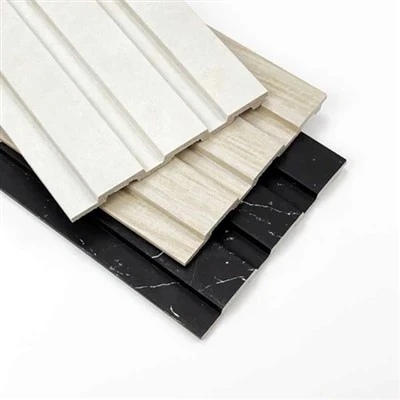
A change of colour is a change of formulation. For food contact purposes it is a change of product.
VI. Reading the Document You Were Sent
Food contact paperwork arrives in several forms that look similar and mean quite different things. Identifying which one you have takes about a minute.
| Document type | What it actually establishes |
|---|---|
| Supplier declaration of compliance | That the supplier asserts the formulation meets a named regulation. No independent testing. The most common document and the weakest evidence. |
| Migration test report | A laboratory tested a specific specimen under stated conditions and obtained stated results. Stronger, but bounded strictly by the conditions tested. |
| National approval or recommendation | A formulation guideline published by a national body. Confirms composition against a list. Says nothing about a finished article. |
| Framework certificate | Usually a restatement of one of the above in a more formal layout. The layout is not the substance. |
Having identified the type, four items are worth locating on the page. Which jurisdiction and which regulation, including its version or date. Whether the basis is composition or an actual migration test. If tested, the simulant and the time and temperature regime. And whether the document names the specific grade or only a general material family.
A document that cannot answer those four is not useless, but it is a starting point for enquiry rather than a conclusion. The distinction matters most at the point where something has gone wrong and somebody is being asked to explain why the paperwork said one thing and the application required another.
VII. Paperwork Worth Asking For
Six requests turn a vague assurance into something that can be checked and defended.
Name the destination market, and ask for compliance against that market specifically rather than in general terms.
Ask for the regulation reference and its version or date, so you can tell whether the document is current.
State the intended contact conditions in the enquiry: the food type, the maximum temperature and the duration. A supplier cannot select the right evidence without them.
Ask specifically whether migration testing has been done, and under what conditions, rather than accepting a composition statement in its place.
Confirm that the colour you are ordering is covered, and ask for the masterbatch to be included in the declaration if it is not.
Ask whether recycled content is present in any proportion, and if so under what authorisation.
The wider certification picture, including the schemes that apply to construction products and the ones that are frequently misread, is covered in our guide to PVC building material certifications. Where the application is a commercial kitchen or food storage environment, there is relevant material in our pieces on waterproof PVC cabinet panels for kitchens and on cabinet making with PVC foam board.

Where the application is regulated, the paperwork is part of the product. A panel without the documentation is not the same deliverable as one with it.
None of this means food contact material is difficult to buy. It means the compliance question has more parts than a certificate can hold, and the parts that get left out are the ones that depend on your application rather than the supplier's product. Establishing them at the enquiry stage takes an email. Establishing them after a retailer audit or a port inspection takes considerably longer.
The short version
There is no global food contact status. Approval belongs to a jurisdiction, a regulation version, a formulation and a set of test conditions. Most certificates cover composition rather than migration, and composition is only half the question. For PVC, lead stabilisation is an absolute bar and plasticisers are a second restriction, which is why food contact material is a specifically formulated rigid subset of the range. Colour changes void a declaration, and recycled content generally cannot be reconciled with food contact use. Match the simulant to your food and the test regime to your temperature before accepting any document.
Frequently Asked Questions
Food Contact Compliance Questions
Common questions from importers, brand owners and specifiers.
Is there a single international food contact approval?
No. Food contact regulation is national or regional, and the permitted substance lists differ between jurisdictions. A material compliant in one market may not be compliant in another because an additive accepted in one place is absent or restricted in the other. The first question about any certificate is which market it was written for.
Does a food contact certificate cover the finished board?
Usually not. Most documents described as food contact certificates cover the formulation supplied by a resin or compound producer rather than the finished article. Your thickness, surface finish, processing history and colour all sit outside their scope. Processing changes migration behaviour, so a compound approval is not automatically a product approval.
Can I use lead-stabilised PVC for food contact?
No. Lead-based stabilisers are prohibited in food contact applications in the major regulated markets, and this is an absolute bar rather than a limit to be managed. That is why food contact PVC is stabilised with calcium-zinc or another permitted system, and it is one of the main reasons the material costs more than general-purpose grades.
Does changing the colour invalidate the approval?
For compliance purposes, yes, unless the colourant carries its own clearance. Colour is delivered as a masterbatch, which is a separate formulation containing its own pigments, carriers and additives. None of those are covered by a certificate issued for the uncoloured compound. Buyers frequently request colour changes after approval without realising the declaration has to follow.
What is the difference between overall and specific migration?
Overall migration is the total mass of everything transferring from the material into the food or simulant, expressed as a limit per unit area or per unit mass. Specific migration measures individual substances against their own limits. A material can pass the overall limit comfortably while breaching a specific one, so a report quoting only overall migration is incomplete.
My certificate was tested with an aqueous simulant. Is that enough for cooking oil contact?
It is not. Fatty foods extract substantially more than aqueous or acidic ones, which is why testing uses different simulants for different food categories. A result obtained with an aqueous simulant does not describe behaviour in contact with oil, dairy or meat. For those applications the migration evidence has to come from a fatty simulant tested under representative time and temperature conditions.
Can food contact material contain recycled PVC?
Only where the recyclate comes through a specifically authorised recycling process. Material from an uncontrolled source cannot be used in food contact regardless of what it is blended into, and in practice a food contact declaration and an unverified recycled content claim are usually mutually exclusive. Where recycled content is present in any proportion, it should be declared and its authorisation confirmed.
Food Contact Enquiries Welcome
Tell us the destination market, the food type, the maximum contact temperature and the colour, and we will confirm the stabiliser system, the declarations available and the migration evidence that applies.
Request a Quotation View the RangeYUPSENI Team
23 years in PVC building material manufacturing and supply chain. We help importers, distributors, and project buyers source foam board, sheet, wall panels, flooring and fencing that pass compliance the first time. More about YUPSENI
© 2026 YUPSENI. All rights reserved. The information in this article is for general informational purposes only and does not constitute legal or regulatory advice. Food contact requirements vary by jurisdiction and are subject to amendment. Confirm the current applicable regulation and obtain advice specific to your product and application before placing material into a regulated supply chain.