Full-Case Renovation & Building Material Supply Chain: The PVC Advantage
Jul 08, 2026
Read time: 11 minutes | By: YUPSENI Team
An integrated interior finish where wall panels, ceiling, and flooring are specified as a single material system rather than independently sourced components.
On This Page
- I. The 1.8 Trillion Question Renovation Brochures Never Answer
- II. Full-Case vs Full-Package - Two Terms That Brand Completely Different Liability Structures
- III. LDKBS and the Vanishing Material Break Line
- IV. E1 Is Gone. E0 Is the Floor. What Comes Next Is Already in the Spec.
- V. Four Supply Chain Questions That Separate a Delivered Renovation From a Lawsuit
- VI. The Chemical Family Tree: Why Walls, Floors, and Cabinets Sharing One Material Chemistry Changes Everything
- VII. PVC in the Full-Case Stack - Where the Spec Sheet Meets the Site
The global full-case renovation market has crossed US$1.8 trillion. In China alone, the model known as full-case turnkey delivery has evolved through five distinct generations of service integration, and the latest iteration-LDKBS, or living-dining-kitchen-bedroom-study space unification-now penetrates over 70% of new renovation contracts. What started as a premium service for high-net-worth homeowners has become the default expectation for middle-market apartment upgrades, office fit-outs, and hotel refurbishments.
For building material importers, distributors, and project-specification buyers, this is not a design trend. It is a procurement reorganization event. When a renovation company or property developer commits to delivering a fully furnished, fully finished interior under a single contract with zero-addendum pricing, the material specification process stops being a series of independent decisions made room by room and becomes a system-level decision made at the project's inception.
The question that determines whether a full-case project succeeds or collapses into contractual dispute is not "which brand of flooring" or "which wall panel supplier." The question is: can the entire interior surface stack-walls, floors, ceilings, and cabinetry-be sourced from suppliers whose materials share compatible expansion coefficients, joint treatment chemistry, and supply lead times? The projects that answer yes deliver on time and on budget. The ones that don't are the ones you read about in contractor dispute forums. This article traces the full-case renovation model from its market structure down to the material-level decisions that separate a smooth handover from a six-month delay. For a deep dive into how these material choices play out room by room, see our Room-by-Room Material Specification Guide.
I. The 1.8 Trillion Question Renovation Brochures Never Answer
Walk through a full-case showroom in any major city and you will see render-quality interiors: walls, ceilings, cabinetry, flooring, lighting-all coordinated, all priced, all promised for delivery within a stated timeline. The render is not the problem. In 2026, rendering technology can produce photorealistic interior visualizations from a tablet in under an hour. The problem is that the render contains no information about where the physical materials will come from, what their lead times are, and whether they will fit together on site the way they fit together in the rendering engine.
The 1.8 trillion figure represents total contract value signed. What it does not represent-and what no industry association tracks systematically-is the percentage of those contracts that finish on time, on budget, and without material substitution. The data that does exist, gathered anecdotally from project managers and procurement officers, suggests that fewer than 10% of full-case projects with a contract value above US$50,000 deliver without at least one material-related delay or cost overrun. The root cause, in the majority of cases, is not labor availability or design changes. It is a supply chain assembled reactively-material by material, supplier by supplier, each with its own lead time, its own tolerance stack, and its own excuse when a container is delayed.
A full-case contract is only as strong as the weakest supplier in the material chain.
II. Full-Case vs Full-Package - Two Terms That Brand Completely Different Liability Structures
The distinction between "full-case" and "full-package" is not semantic. It is a structural difference in who carries the material specification risk, and it is the most common source of buyer confusion in the renovation market.
Full-package is a pricing model, not a delivery model. The contractor bundles a fixed set of materials-typically economy-grade flooring, basic wall paint, standard sanitary ware-into a contract price. The material palette is predetermined and narrow. If the homeowner wants a specific wall panel texture, a specific floor thickness, or a specific ceiling profile, those items fall outside the package and become "additions." This is where the low advertised price unravels. The contractor's margin depends on the homeowner accepting the bundled materials. Any deviation generates a change order, and change orders are where full-package contractors make their profit.
Full-case is a specification model. The designer or project manager specifies every visible surface, every fixture, and every fitting before the contract is signed. The materials are not chosen from a limited catalog. They are sourced to match the render. The contract price includes procurement, delivery, and installation of those specified materials, down to the door handles and the light switch covers. The contractor's margin is built into the total price, not into individual material markups. This means there is no incentive to substitute a cheaper material mid-project, because the contractor's profit does not increase when the material cost decreases. The homeowner sees the exact material schedule before signing, and the contract typically includes a clause stating that cost overruns caused by contractor error are borne by the contractor.
For a building material supplier, the difference determines how you are approached. Full-package buyers ask for your cheapest SKU that meets a minimum specification. Full-case buyers ask for your full specification sheet, your lead time range, your batch-to-batch color consistency data, and your custom dimension capability. They are not buying a product. They are buying a component of a system that must integrate with other components from other suppliers, and they need to know-before they sign their contract-that your component will not be the one that fails the integration.
III. LDKBS and the Vanishing Material Break Line
LDKBS-Living, Dining, Kitchen, Bedroom, Study-is the acronym driving the most significant material specification shift in residential interiors since the open-plan kitchen went mainstream in the 1990s. The concept is deceptively simple: instead of treating each room as an independent design problem with its own wall finish, floor material, and ceiling treatment, the entire apartment is treated as a single continuous interior volume. The wall panel that runs through the living room continues into the dining area without a trim break. The cabinet board used in the kitchen matches the built-in wardrobe in the bedroom. The ceiling profile in the corridor is the same profile used in the study.
This is not aesthetic minimalism for its own sake. It is a supply chain optimization disguised as a design philosophy. When a 120-square-meter apartment specifies the same wall panel across five rooms, the procurement officer places one order instead of five. The installer learns one installation method instead of five. The spare material from the living room cut-offs works in the bedroom. The joint treatment compound is the same in every room. The expansion gap calculation is the same. The maintenance instructions for the homeowner are one page, not five.

LDKBS integration: wall panels, ceiling, and flooring specified as a unified material system across multiple rooms-no visible break lines between functional zones.
For the building material manufacturer, LDKBS changes what "product range" means. A full-case project does not need fifty wall panel designs. It needs one design available in three widths and two edge profiles. It does not need ten flooring colors. It needs one color that can be ordered in three thicknesses to accommodate different subfloor conditions in different rooms. The supplier who can deliver a single material family across the wall-floor-ceiling-cabinet stack becomes a strategic partner to the full-case company. The supplier who can only deliver one product category becomes a commodity vendor, easily replaced by whoever quotes a lower price on the next project. Our analysis of a full PVC show house demonstrates how a single-material approach performs across every room type.
IV. E1 Is Gone. E0 Is the Floor. What Comes Next Is Already in the Spec.
The E1 formaldehyde emission standard for wood-based panels has been legally phased out of interior applications across China, the European Union, and an increasing number of Southeast Asian markets. E0-0.5 mg/L formaldehyde emission or lower-is now the regulatory floor, not a marketing upgrade. Full-case renovation companies bidding for projects in this regulatory environment cannot specify E1 materials even if the client requests them on cost grounds. The compliance risk transfers to the contractor, and no contractor with a functioning legal department is going to sign a contract that includes materials already deemed unfit for interior use by the jurisdiction's building code.
This regulatory shift has an under-discussed consequence for the material supply chain: it eliminates the bottom tier of wood-based panel manufacturers from the full-case procurement universe. E1-capable factories that never invested in the process upgrades required for E0 compliance are now excluded from the largest and fastest-growing segment of the interior finishing market. Their capacity has been redirected to export markets where E1 remains acceptable, which creates an opening for non-wood alternatives that never contained formaldehyde in the first place.
PVC-based building materials-PVC foam boards for cabinetry, SPC flooring for floor coverings, PVC wall panels for interior cladding, and PVC ceiling boards for overhead finishes-do not contain formaldehyde as a raw material component. There is no urea-formaldehyde resin in a PVC extrusion. Compliance is inherent to the chemistry, not achieved through process control of a hazardous input. For a full-case contractor assembling a materials package for a project in a jurisdiction with strict indoor air quality regulations, specifying a PVC-based surface stack removes a compliance variable from the equation. That variable used to be a cost negotiation point. It is now a liability elimination point, and that changes the procurement calculus in favor of materials that do not require formaldehyde management at any stage of production, transport, or installation.
V. Four Supply Chain Questions That Separate a Delivered Renovation From a Lawsuit
The full-case model concentrates procurement risk into a single contract. When material-driven delays or defects occur, there is no "subcontractor's subcontractor's supplier" chain to diffuse responsibility. The contractor who signed the full-case contract is directly liable. This has produced a vetting framework that sophisticated full-case buyers use to evaluate material suppliers before they are included in the project specification. The framework reduces to four questions.
First: does the supplier own the production line, or are they trading factory output they do not control?
A trading company that sources from multiple factories cannot guarantee batch-to-batch consistency across an order of 5,000 square meters of wall panel, because the panels may come from different production runs at different facilities with different extrusion parameters. A manufacturer with dedicated extrusion lines can store the production parameters per SKU and recall them for repeat orders. For full-case projects that phase delivery across multiple containers over six months, the consistency of the fifth container with the first is not a quality preference-it is a contractual requirement. If the wall panel color shifts between phase one and phase three, the contractor is reordering material at their own cost.
Second: can the supplier produce multiple product categories from the same material family?
A supplier who provides PVC wall panels but not PVC ceiling boards, or SPC flooring but not PVC cabinet boards, forces the full-case contractor to manage multiple supplier relationships for what is chemically the same material in different form factors. Each additional supplier is an additional lead-time variable, an additional quality-control relationship, and an additional point of failure. A supplier who runs wall panels, ceiling boards, flooring, and foam board for cabinetry from the same factory compound simplifies the procurement to a single production schedule, a single logistics chain, and a single quality standard. For a discussion of what happens when PVC is not the answer for a particular application, see our honest-limits analysis.
Third: is the contract appendix exhaustive?
Every SKU, every dimension, every finish code, and every quantity must appear in the contract appendix before signing. The appendix must also state the tolerance standard for each dimension, the acceptable color variation range (typically expressed as a Delta E value), and the procedure for handling goods damaged in transit. Vague language such as "similar to sample" or "standard commercial quality" is the legal equivalent of an open checkbook for the supplier. Full-case contracts that specify materials at this level of detail rarely go to dispute over material quality, because the criteria for acceptance and rejection are established before the first container is loaded.
Fourth: does the supplier understand the climate at the installation site?
A wall panel that performs perfectly in a Beijing apartment may bow in a coastal condo in Haikou if the manufacturer has not accounted for thermal expansion in high-humidity, high-temperature environments. A flooring click-lock mechanism that holds through winter in a Shanghai heated apartment may separate in an unheated warehouse conversion in a temperate climate. Full-case contractors operating across multiple climate zones need suppliers who can specify different formulations or installation parameters for different site conditions-and who can document those specifications in a format that the contractor can include in their own installation manual for the site crew.
VI. The Chemical Family Tree: Why Walls, Floors, and Cabinets Sharing One Material Chemistry Changes Everything
In a traditional multi-supplier renovation, the wall paint is acrylic latex, the ceiling is gypsum board with a skim coat, the floor is engineered wood with a polyurethane wear layer, and the cabinet doors are MDF with a melamine face. These four material systems have four different thermal expansion coefficients, four different responses to humidity, four different joint treatment chemistries, and four different cleaning and maintenance regimens. They meet at corners, baseboards, and transitions where the gaps between them are filled with caulk, trim, or hope. Over five years of seasonal humidity cycling, those junctions open, crack, or discolor at different rates. The render from five years ago looks nothing like the room today.

SPC flooring as part of a unified material specification-sharing the same PVC polymer base as the wall panels and ceiling boards used elsewhere in the room.
A PVC-based surface stack-PVC foam board cabinets, PVC wall panels, SPC flooring, PVC ceiling boards-is chemically a single material family. Polyvinyl chloride, compounded with stabilizers, fillers, and processing aids specific to each form factor, but fundamentally the same polymer. The thermal expansion coefficient is similar across the stack because the base resin is the same. Joints between wall and ceiling, between floor and baseboard, between cabinet and wall-all move at similar rates under temperature change. The cleaning chemistry is universal: a neutral detergent and a microfiber cloth works on every surface in the room. The homeowner's maintenance instruction card has five words on it. No separate products for wood care, tile grout sealing, painted wall touch-up, or laminate refinishing.
This is not theory. This is what an LDKBS project looks like when the material specification is treated as a system decision.
For importers and distributors, the single-chemistry argument is a sales proposition that did not exist five years ago. A distributor supplying PVC wall panels to a full-case contractor can expand the relationship into SPC flooring, PVC ceiling, and PVC cabinet board without adding a new supplier relationship, a new logistics chain, or a new quality-control protocol. The contractor's procurement officer reduces their supplier count without reducing their material coverage. The distributor's average order value per contractor increases. The risk of multi-supplier coordination failure decreases. This is the commercial logic behind the material-family approach to full-case procurement, and it is driving consolidation among building material distributors at a pace that the industry has not seen since the shift from solid wood to engineered wood in the 2000s.
VII. PVC in the Full-Case Stack - Where the Spec Sheet Meets the Site
The preceding sections describe a market structure. This section describes what that structure demands of the materials themselves. The following table maps each component of a PVC-based full-case interior to the spec-sheet parameters that a full-case procurement officer will request before including a supplier in the project specification.
| Material Component | YUPSENI Product Link | Key Spec Parameters Requested |
|---|---|---|
| Wall panels | Vinyl Wall Panel | Thickness, fire rating (ASTM E84), surface hardness, color Delta E tolerance, edge profile type |
| Flooring | SPC Flooring | Wear layer thickness, click-lock tensile strength, underfloor heating compatibility, expansion gap specification |
| Ceiling boards | PVC Ceiling Board | Weight per square meter, sag resistance at elevated temperature, clip spacing specification, edge interlock design |
| Cabinetry | PVC Cabinet Board | Density grade, screw-holding capacity, edge-banding compatibility, moisture resistance rating |
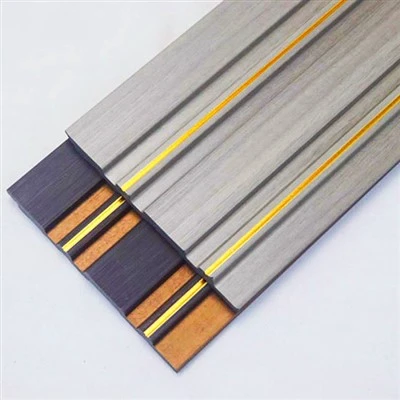
| Trim & moulding | PVC Moulding | Profile cross-section, linear expansion coefficient, paint adhesion (if paintable grade), fastener compatibility |
Each row in this table represents a separate procurement decision in a multi-supplier renovation. Each row also represents a potential failure point where incompatible specifications between suppliers create a site-level problem that no individual supplier is contractually responsible for. The full-case model solves this by consolidating specification responsibility into a single contract. The logical next step-already underway among the largest full-case operators-is to consolidate the material supply itself into as few supplier relationships as possible, ideally with manufacturers who can supply multiple rows of the table from a single production facility.
YUPSENI's product structure is built around this consolidation logic. Wall panels, SPC flooring, ceiling boards, cabinet-grade foam board, and decorative trim all ship from the same Shandong manufacturing base. The full-case contractor who specifies YUPSENI across the surface stack deals with one quality standard, one logistics contact, one set of technical datasheets, and one batch-traceability system. This does not guarantee a problem-free project. No supplier can make that guarantee honestly. What it does is reduce the number of independent variables that can produce a problem, and in a business where a single material delay can derail a six-month construction schedule and trigger penalty clauses, reducing the number of independent variables is the closest thing to insurance that the building material supply chain offers.
Frequently Asked Questions About Full-Case Renovation & Material Specification
Frequently Asked Questions About Full-Case Renovation & Building Material Supply
Questions building material buyers and full-case contractors ask when evaluating PVC-based materials for turnkey renovation projects.
Q1: What is the difference between full-case and full-package renovation?
A: Full-package (全包) bundles a fixed set of standard materials into a contract price. Any deviation from the bundled materials generates a change order and additional cost. Full-case (全案) specifies every surface, fixture, and fitting before contract signing, sources materials to match the render rather than from a limited catalog, and the contract price includes procurement, delivery, and installation of all specified materials. Full-package is a pricing model. Full-case is a specification and delivery model. The contractor's liability, the material quality, and the likelihood of budget overruns differ substantially between the two.
Q2: Why are PVC-based materials gaining share in full-case renovation projects?
A: Three converging factors. First, formaldehyde regulations have eliminated E1-grade wood panels from interior applications in major markets; PVC materials contain no formaldehyde by chemistry rather than by process control. Second, full-case projects benefit from single-chemistry material stacks: PVC wall panels, SPC flooring, PVC ceiling boards, and PVC cabinet boards share similar expansion coefficients, joint treatment methods, and maintenance requirements, reducing integration risk. Third, a single manufacturer supplying the full stack simplifies procurement to one quality standard and one logistics chain rather than five separate supplier relationships.
Q3: How should a full-case contractor vet a building material supplier?
A: Four criteria. One: does the supplier own the production line or trade factory output? Factory ownership means batch-to-batch consistency is auditable at source. Two: can the supplier provide multiple product categories from the same material family, reducing the number of supplier relationships? Three: will the supplier commit to an exhaustive contract appendix with SKU-level specifications, tolerance standards, and acceptance/rejection criteria? Four: can the supplier document climate-specific installation parameters for projects in different geographic zones? A supplier who answers yes to all four is structured for full-case procurement.
Q4: Can YUPSENI supply the full material stack for a turnkey renovation project?
A: Yes. YUPSENI manufactures PVC and PS wall panels, SPC flooring, PVC ceiling boards, PVC cabinet-grade foam board, and PVC moulding and trim at a single production facility in Shandong, China. All product lines share the same quality-control system, batch-traceability protocol, and export-logistics infrastructure. Custom dimensions, colors, and surface textures are available across the product range. Contact our team with your project specification for a consolidated quotation.
Q5: What documentation should I expect from a PVC material supplier for a full-case project?
A: At minimum: an English-language technical datasheet per product SKU covering dimensional tolerances, fire rating classification (ASTM E84 or EN 13501-1 equivalent), material composition, and storage recommendations; a formaldehyde test report demonstrating compliance with the target market's regulatory standard; a colorimetry report establishing the Delta E tolerance for batch-to-batch color matching; and an installation guide covering substrate preparation, adhesive or fastener specification, joint treatment, and expansion gap requirements. Suppliers structured for full-case procurement provide these documents as standard with every commercial quotation, not as a follow-up upon request.
Specify Materials for Your Next Full-Case Project
Single-factory supply of SPC flooring, PVC wall panels, ceiling boards, cabinet board, and trim-one quality standard, one logistics chain, one technical contact.
Request a Consolidated QuoteYUPSENI Team
23 years in PVC building material manufacturing and supply chain. We help importers, distributors, and project buyers source SPC flooring, PVC foam boards, wall panels, and fencing that pass compliance the first time. More about YUPSENI
© 2026 YUPSENI. All rights reserved. The information in this article is for general informational purposes only and does not constitute professional advice. Market data cited is based on publicly available industry reports and should be independently verified. Product specifications may vary by region and production batch. Always request current datasheets before making procurement decisions.