How to choose between LVT and SPC?
May 20, 2024
How to choose between LVT and SPC: the main differences and advantages of each type of coating
Description
When choosing floor coverings, many are confused by the abbreviations LVT and SPC on the labeling of quartz-vinyl tiles. It would seem that they have the same names, identical properties: both types of materials are moisture-resistant and wear-resistant - why are they separated? Let's figure out what these abbreviations mean, how the materials differ and where they can be used.

Abbreviation meanings
Despite the apparent similarity, the materials are very different. Mainly - the composition and structure of materials.
LVT (Luxury Vinyl Tile - luxury vinyl tile) - elastic multi-layer modular floor coverings. There are other names for LVT: quartz-vinyl tiles, PVC tiles, vinyl laminate. The main components are: PVC (polyvinyl chloride) and crushed mineral - most often quartz, but it can also be marble powder or calcium carbonate (limestone).
SPC (Solid Polymer Core - solid polymer base) - rigid modular floor coverings with a polymer-mineral board at the base. Limestone is most often used as a mineral component. SPC is also called engineered quartz vinyl.
Structure of materials
SPC and LVT coatings differ in the number of layers. LVT has from 6 to 12, depending on the manufacturer and collection, and SPC coatings have from 4 to 5 layers. Let's take a closer look at the structure of each material.
Structure of "classic" quartz-vinyl tiles:
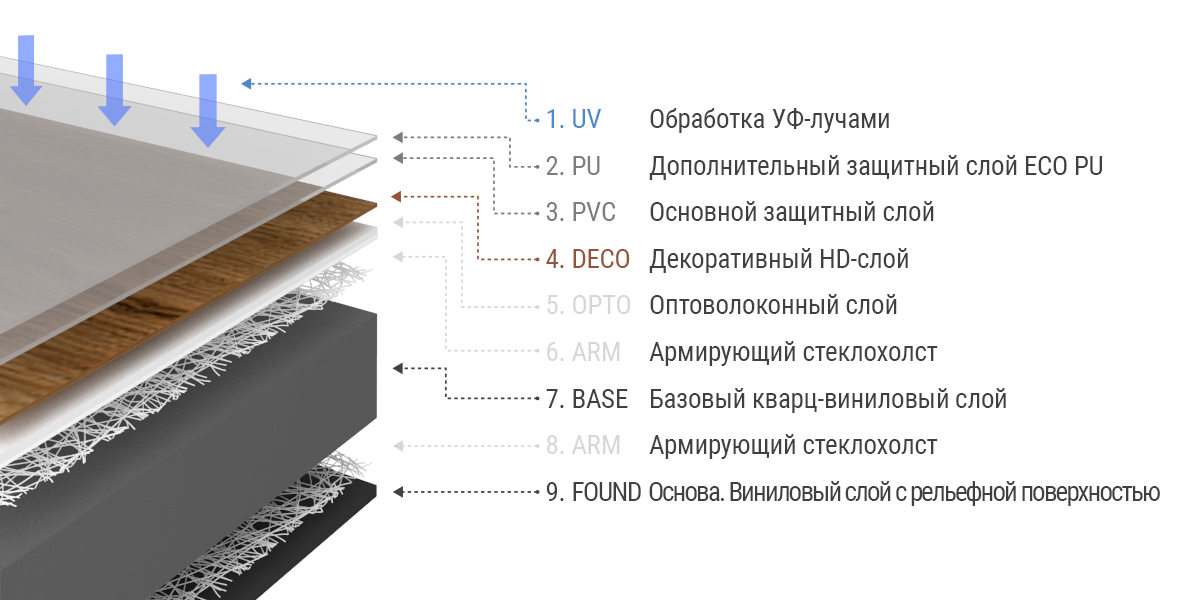
Three top layers protect the coating from abrasion. Decorative and fiber optic layers give an absolute resemblance to natural materials.
The base layer and reinforcing fiberglass are responsible for strength, noise absorption, and stability of geometric dimensions. The base of the LVT coating is a vinyl layer with a textured surface that protects against possible negative influences from the base: for example, from moisture released from the screed.
LVT coatings are produced for interlocking and adhesive installation types. The interlocking coating is thicker and can be assembled like a construction set. Its installation is easy to handle even without experience. The adhesive coating is thinner than the lock coating and requires experience and installation skills. A non-professional may choose the wrong type of glue or spatula, apply too thick or thin a layer of glue, or fit the tiles unevenly to each other.
Structure of SPC coatings:
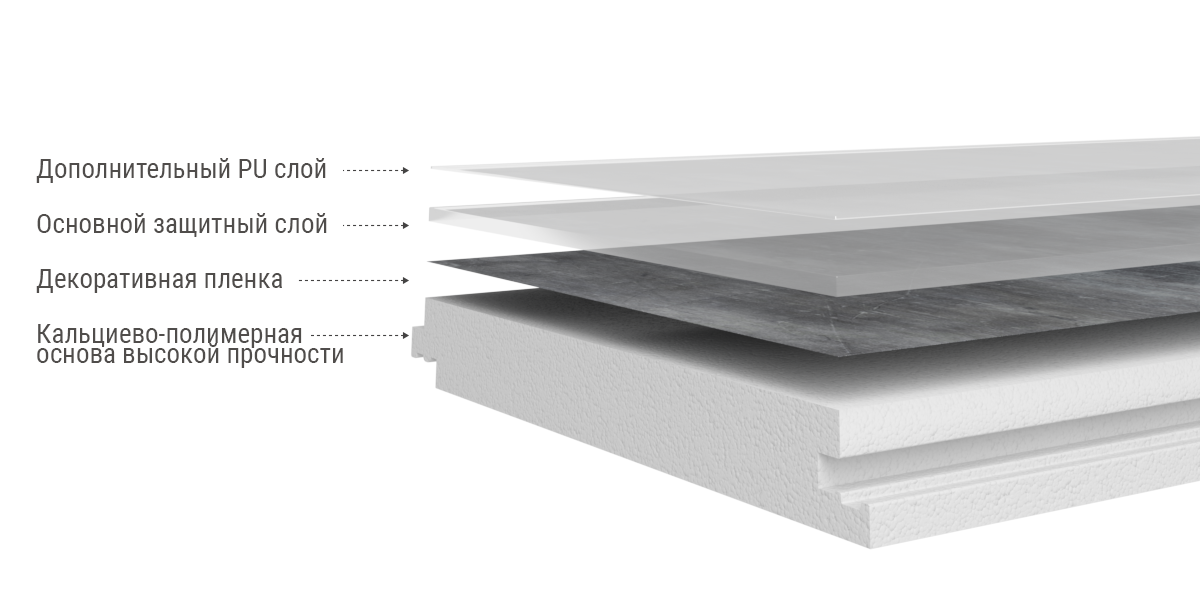
The basis of the material is a mineral-polymer plate. It is responsible for the strength and stability of the geometric dimensions of the coating. Locks are carved on the sides of the slab. SPC contains 67-78% mineral components, so the dies weigh more than LVT.
The decorative layer imitates the texture of natural materials, and two protective layers protect the coating from abrasion. In SPC coatings from some manufacturers you can find material with an additional layer - a built-in backing; you don't have to buy it separately.
SPC coatings are produced only for interlocking installation.