Vinyl Railing Durability vs Wood & Metal: Which Lasts Longer With Less Work?
Jun 16, 2026
Vinyl Railing Durability: How It Compares to Wood, Metal, and Other Materials

On This Page
- Vinyl vs Wood: The Rot, the Paint, and the Annual Ritual
- Vinyl vs Metal: Rust, Heat, and the Price of Strength
- What Maintenance Actually Looks Like Day to Day
- Indoor, Outdoor, and Everything Between
A railing has a simple job: keep people from falling. But doing that job year after year, through sun and rain and freezing winters, is harder than it sounds. Wood rots. Metal rusts. Paint peels. And the annual maintenance cycle that keeps a traditional railing safe and presentable adds up to a lot of weekends spent sanding, scraping, and repainting instead of enjoying the deck the railing was built for.
Vinyl railings entered the market as an answer to that exact frustration. The material is PVC-based, which means it does not absorb water, does not rust, and does not need painting-ever. This article compares vinyl railing durability against wood, metal, and other common materials in plain, practical terms. Not for engineers or architects. For the person who wants a railing that works, looks clean, and stays that way without a maintenance schedule. If you are starting from scratch, the PVC railing selection guide walks through what to look for when choosing deck and porch railings that will not wobble, fade, or rust over time.
I. Vinyl vs Wood: The Rot, the Paint, and the Annual Ritual
Wood is the traditional choice for railings, and it is easy to understand why. It looks warm and natural. It is widely available. It is what most people grew up with. But wood and weather are natural enemies, and the fight is exhausting to manage. Wood absorbs moisture from rain and humidity, which causes it to swell, crack, and eventually rot. Even pressure-treated lumber, designed to resist decay, will warp and split over time if it is not regularly sealed or painted. And that sealing and painting needs to happen every two to three years-more often in harsh climates.
Vinyl railings sidestep this cycle entirely. Because the material is non-porous, water does not penetrate the surface. There is nothing inside for mold or mildew to feed on. Insects that tunnel through wood-termites, carpenter ants-have no interest in vinyl. The color is not a surface coating that peels off; it runs all the way through the material, so a scratch does not expose a different-colored layer underneath. The trade-off is that vinyl cannot be stained to match a specific wood tone, the way real wood can. What it offers instead is a decade or more of looking the same without a single hour of maintenance. For a broader comparison that includes aluminum and iron, the PVC fence vs wood vs aluminum vs iron comparison breaks down the 20-year cost picture most buyers miss when comparing upfront prices alone.
II. Vinyl vs Metal: Rust, Heat, and the Price of Strength
Metal railings-steel, wrought iron, and aluminum-are strong. No one disputes that. A well-built iron railing feels solid in a way that vinyl does not quite match. But that strength comes with specific weaknesses that get worse the longer the railing stands outside. Steel and iron rust. The rust starts at joints and welds, creeps under the paint, and eventually flakes off in chunks. Aluminum does not rust, but it oxidizes into a dull white powdery film, and in coastal environments with salt in the air, aluminum corrodes faster than most buyers expect. Metal also conducts heat. A dark iron railing in full summer sun becomes painful to touch-something vinyl, which stays cooler and more neutral to the hand, avoids almost entirely.
Vinyl will never match the raw load-bearing strength of a welded steel railing. If the job calls for heavy structural reinforcement-a commercial guardrail, for example-metal still has the edge. But for the residential deck, porch, or balcony that most people are shopping for, vinyl's strength is more than adequate, and its resistance to the slow destruction that weather brings gives it a long-term durability advantage that initial strength ratings do not capture. For installations in salt-heavy coastal zones, the coastal PVC fence durability analysis covers the salt, UV, and wind factors that standard spec sheets overlook-and the same principles apply directly to railing.
Bottom line: Wood needs painting. Metal needs rust treatment. Vinyl needs a hose and a cloth. Over ten to fifteen years, those differences in maintenance effort compound into a significant cost gap that an upfront material price comparison does not capture.
III. What Maintenance Actually Looks Like Day to Day
If you have owned a wood railing for any length of time, you know the drill. Sand down the peeling spots. Prime the bare wood. Apply a coat of paint or stain. Wait for it to dry. Apply a second coat. Repeat every two to three years-more if you live somewhere with real winters. Over a decade, that is four or five complete refinishing cycles, and each one costs either time or money or both.
Vinyl railing maintenance, by comparison, is almost not worth calling maintenance. Dirt, pollen, and bird droppings wash off with mild soap and water. A garden hose and a soft cloth handle most cleaning jobs in minutes. Abrasive cleaners and harsh chemicals should be avoided because they can dull the surface over time, but ordinary household cleaning products are fine. The one thing worth doing once or twice a year is a quick visual check of the connections and fasteners. Vinyl expands and contracts slightly with temperature changes, and while the material itself will not loosen, the hardware that holds it can occasionally need a turn of a screwdriver. That is about as involved as it gets.

IV. Indoor, Outdoor, and Everything Between
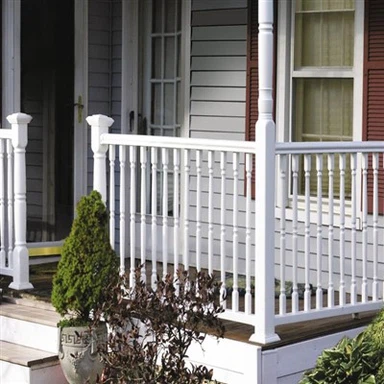
Vinyl railing is most commonly seen outdoors-on decks, porches, balconies, and staircases leading into a house. That is where its weather resistance matters most, and where the comparison to wood and metal is starkest. But vinyl works just as well indoors. The clean white finish fits naturally into contemporary interiors, and the material does not off-gas or release the volatile organic compounds that some treated wood products can. Staircase railings, loft balconies, and indoor mezzanine guards can all use the same vinyl railing systems designed for outdoor use, with no modification needed.
The one thing to know about outdoor vinyl railing in very hot climates: extreme direct sun on a dark-colored railing can cause the material to soften slightly and expand more than usual. This is normal and accounted for in the installation clearances, but it is worth mentioning. White railings reflect more heat and handle direct sun with less expansion-which is why white is and remains the most popular vinyl railing color by a wide margin. For the full picture on how to evaluate PVC fencing and railing before purchase, the 7 golden rules for choosing PVC fencing apply equally to railing selection and cover thickness, UV stabilizers, and hardware quality.
Quick Questions About Vinyl Railing Durability
Frequently Asked Questions About Vinyl Railing Durability and Care
Straight answers to the questions homeowners most often ask when comparing vinyl railing to other materials.
Q1: How long does a vinyl railing actually last?
A properly manufactured vinyl railing, installed correctly, should last 20 to 30 years or more in a typical residential setting. The PVC material does not rot, rust, or degrade from moisture, and the UV stabilizers in the formulation prevent the sun from breaking down the surface the way it does with untreated plastics. The color may fade very slightly over decades-just as everything fades in the sun-but the structural integrity of the railing remains intact far longer than wood or uncoated metal in the same environment.
Q2: Is vinyl railing strong enough to feel secure?
Yes. Vinyl railing systems are engineered with internal aluminum or steel reinforcements inside the hollow PVC profiles, especially in the top rail and posts. The PVC exterior provides the weatherproof surface and the clean look. The metal inside provides the structural strength. When properly installed and anchored, a vinyl railing meets the same residential building code load requirements as wood or metal railings. It will not feel flimsy or flexible if the reinforcement is correctly specified and fitted.
Q3: Can vinyl railing be used indoors?
Yes. Vinyl railing works indoors as well as outdoors. The same moisture resistance that protects it from rain also makes it suitable for humid indoor spaces like pool enclosures or sunrooms. The clean white finish suits modern interiors, and the material does not require the chemical treatments or sealants that some indoor wood railings need. The only difference between an indoor and outdoor installation is that indoor installations have no weather to worry about, which means the railing will last even longer with even less attention.
Q4: What is the most durable railing material overall?
There is no single winner because "durable" means different things. If durability means impact strength alone, metal wins. If durability means resistance to weather and corrosion, vinyl wins. If durability means looking good without maintenance, vinyl wins by a large margin. For most residential buyers, the practical definition of durability is "stays safe and looks clean without me having to work on it"-and by that definition, vinyl is the best all-around choice on the market today. Explore the PVC railing product range for styles, colors, and reinforcement options.
Find a Vinyl Railing That Stays Beautiful Without the Upkeep
White and neutral vinyl railing systems for decks, porches, balconies, and staircases. No painting. No rust. No rot. Samples and specification sheets available on request.
A Railing That Stays Out of Your Way
The best railing material is not the one with the highest strength rating on a datasheet. It is the one that does its job without demanding your attention. Vinyl hits that balance well: strong enough to meet code, weather-resistant enough to survive outdoors for decades, and maintenance-light enough that you spend your weekends on the deck rather than working on it. Wood has its charm. Metal has its strength. But for the person who wants to install a railing once and then stop thinking about it, vinyl is the material that gets out of the way and stays there.
Written by YUPSENI Team
With over 23 years of PVC extrusion experience, the YUPSENI product team manufactures vinyl railing, fencing, and profile systems engineered for long outdoor service with no painting, no rust treatment, and no rot repair. Every railing system ships with internal reinforcement and UV-stabilized PVC formulation verified at batch level.
© 2026 YUPSENI. The information in this article is provided for general comparison of railing material durability and maintenance characteristics and does not constitute a material specification or performance warranty. Actual product lifespan and performance vary with climate, installation quality, and usage conditions. Verify product specifications, load ratings, and code compliance with current data sheets before specifying for a particular project. YUPSENI is a trademark of YUPSENI Building Materials.