SPC Flooring Quality Control: What Happens When Production Charts Go Out of Control
Jun 18, 2026
What Happens When SPC Flooring Production Charts Go Out of Control
7 min read · June 18, 2026 · By YUPSENI Team

On This Page
- I. A Point Outside the Lines: What the Alarm Actually Means
- II. The First Hour After the Signal Triggers
- III. Why Raw Materials Shift Before the Machine Does
- IV. Dimensional Drift and the Problem of Catching It Late
- V. A Stable Process Proves Itself Over Months, Not Batches
There is a quiet irony in the fact that SPC flooring factories run on SPC charts. The same three letters stand for two different things: Stone Plastic Composite in the product and Statistical Process Control in the method used to make it. The charts track dimensions, densities, surface temperatures, and wear layer thicknesses as the planks come off the line. Most of the time, the data points cluster around the centerline and stay inside the upper and lower control limits. The line runs, the pallets stack, and the charts look like what a stable process is supposed to look like.
This article is about the moments when that stops being true. A data point crosses a control limit, or a run of seven points drifts steadily upward, or the range between consecutive measurements suddenly widens. The chart signals that something has changed, and the production team has to decide what to do. The decisions made in the minutes and hours after an out-of-control signal determine whether a few pallets get quarantined or an entire production day gets written off. Understanding the sequence matters for buyers because the difference between a factory that catches process drift early and a factory that ships first and inspects later shows up in the flooring that arrives at the warehouse. For a look at how process stability translates into product specifications, the rigid core vinyl flooring range includes technical datasheets with dimensional tolerances and wear layer specifications for every product line.
I. A Point Outside the Lines: What the Alarm Actually Means
A control chart is not a specification limit drawn on graph paper. It is a statistical boundary calculated from the process itself. The upper and lower control limits are typically set at three standard deviations above and below the process mean. In a normally distributed process, roughly 99.7 percent of all data points fall within those limits by random chance alone. So when a point lands outside them, the most reasonable explanation is not that a one-in-three-hundred random event just happened. It is that something changed the process. The machine temperature drifted. The raw material blend shifted. The operator adjusted a setting. The chart is not crying wolf. It is detecting a signal that the process is no longer the same process that generated the historical data.
Two types of out-of-control conditions trigger different responses. The first is a single point beyond the control limit. This typically points to a discrete event: a sudden machine malfunction, a batch of raw material with an out-of-spec property, or a measurement error. The investigation starts with the machine and works backward. The second is a pattern within the control limits that is statistically improbable in a stable process: a run of seven or more consecutive points all above or all below the centerline; a run of seven points all trending in the same direction; or a recurring cycle that repeats with each shift change or material reload. These patterns indicate a systematic shift, not a one-time event, and the corrective action targets the root cause of the shift rather than the specific point that triggered the alarm.
Not every signal is a defect. A process can be out of statistical control while still producing planks that fall within the customer's specification limits. The control limits describe what the process can do. The specification limits describe what the product must be. A process that is drifting but still within spec is producing acceptable product today and will produce reject product tomorrow if the drift continues. Catching the drift while the planks are still good is what separates process control from final inspection. One prevents defects. The other finds them after they exist.
II. The First Hour After the Signal Triggers
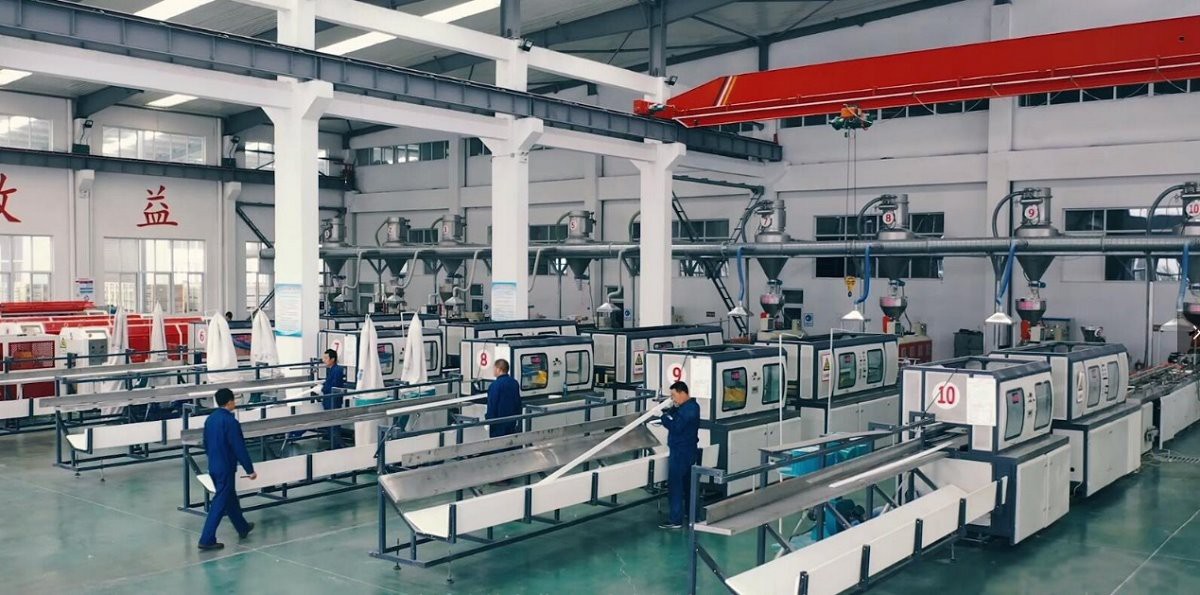
When a control chart goes out of control in an SPC flooring production line, the first action is containment. The operator marks the last known good product based on the time stamp of the last in-control measurement, and everything produced after that point is quarantined pending inspection. This is not a statement that the product is defective. It is an acknowledgement that the process that produced it was different from the validated process, and the difference needs to be understood before the product can be released. The quarantine is physical: pallets are moved to a hold area, labeled with the time window and the nature of the signal, and held until a quality engineer clears them.
The second action, happening in parallel, is a structured investigation that follows a standard sequence. The operator verifies the measurement first: was the gauge calibrated, was the sample taken at the correct point in the process, was the reading recorded correctly. A surprising number of signals resolve at this step, and the fix is to re-measure and update the chart. If the measurement is confirmed, the investigation moves to the machine. On an extrusion line producing rigid core flooring, the immediate suspects are barrel temperature drift, screw speed variation, calibration roller gap changes, and puller speed mismatch. Each of these has a known effect on the process, and the control chart pattern often indicates which one is the most likely cause. Temperature problems create gradual drifts. Screw speed problems create sudden shifts. Roller gap problems create range expansion where consecutive measurements scatter more widely than normal.
If the machine checks out, the investigation moves to the material. A new lot of PVC resin, a different shipment of calcium carbonate filler, or a plasticizer blend from a supplier whose process has shifted can all produce out-of-control signals on a machine that is running correctly. The material investigation involves pulling retention samples from the incoming material lot, checking the supplier's certificate of analysis against in-house test results, and running a trial with a known-good material batch to isolate whether the problem follows the material or stays with the machine. This step takes time, sometimes a full shift, because the results must be conclusive, not suggestive. An inconclusive material investigation that results in the machine being adjusted to compensate for a material problem creates a second problem downstream when the next material batch arrives on-spec and the adjusted machine now produces off-spec product in the opposite direction.
III. Why Raw Materials Shift Before the Machine Does
SPC flooring is a composite. The core layer is roughly 60 to 75 percent calcium carbonate filler bound in a PVC matrix with processing aids, stabilizers, and impact modifiers. The exact ratio determines the density, the stiffness, the thermal expansion coefficient, and the way the material flows through the extrusion die. A change of one percent in the filler loading changes the melt viscosity enough to alter the die exit dimensions by a measurable amount. A calcium carbonate shipment with a slightly different particle size distribution from the previous shipment changes how the filler packs in the polymer matrix, which changes the density of the finished plank even at the same filler loading percentage.
The best flooring factories test incoming raw materials against a specification that is tighter than the supplier's own certificate. A calcium carbonate lot that the supplier certifies as 98 percent passing a 325-mesh screen might meet the industry standard for filler grade but produce a process shift on an extrusion line that was dialed in for filler that was 99 percent passing. The specification is met. The process is disrupted anyway. The factory that catches this at incoming inspection never puts the material in the hopper. The factory that discovers it through a control chart signal after the material is already running has already produced product that needs to be quarantined and evaluated.
PVC resin lot-to-lot variation is less common but more damaging when it occurs. The K-value of PVC resin, a measure of molecular weight, affects melt strength and flow behavior. A resin lot with a K-value two points higher than the previous lot produces a hotter-running, slower-flowing melt that exits the die with different swelling characteristics. The plank that emerges is dimensionally different even though every machine setting is unchanged. The control chart detects the dimension shift. The investigation traces it back to the resin lot. The corrective action is either an incoming material specification that rejects the out-of-range lot or a machine parameter adjustment that compensates for the known shift. The better factories do both: reject material that falls outside the validated range, and record the adjustment recipe for the range that passes but is different from the historical average.
IV. Dimensional Drift and the Problem of Catching It Late
Of all the out-of-control signals that appear on SPC flooring production charts, dimensional drift is the most expensive to correct after the fact and the easiest to miss before the control limit is breached. The reason is built into how rigid core flooring is used. A plank that is 0.3 millimeters wider than specification does not look wrong on the production line. It looks identical to the plank next to it. The width error reveals itself only at installation, when the click-lock joints on twenty planks across a room accumulate the excess dimension and the last row no longer fits. By the time the installer reports the problem, the production run that produced it may be weeks in the past and the product may already be installed in dozens of other projects.
Length and width dimensions on SPC planks are controlled by the calibration stage after the extrusion die. The hot sheet passes through a series of sizing rollers that set the final thickness and width before the embossing roller applies the surface texture and the cooling section locks in the dimensions. If the puller speed drifts relative to the calibration roller speed, the sheet is either stretched or compressed slightly before cooling, and the final plank dimension shifts. A puller speed change of less than one percent can shift plank width by enough to generate an out-of-control signal. The problem is that the shift is small enough per plank that the operator does not see it by eye. Only the chart sees it, and only if the measurement frequency is high enough to catch it before the production run ends.
The inspection frequency question is therefore not about how often the factory checks for defects in general. It is about how many planks go through the line between dimensional checks, and whether that interval is short enough to contain a drift event within a quantity that can be economically quarantined and reworked. A factory that measures dimensional accuracy once per shift can produce several thousand planks between measurements. A drift that starts ten minutes after the measurement will not be detected for nearly eight hours. The containment volume is an entire shift's output. A factory that measures once per hour contains the same drift to roughly one-eighth of that volume. The difference shows up in the factory's cost structure and, for the buyer, in the probability that a dimensionally marginal batch reaches the warehouse. For product lines where dimensional stability is a documented specification, the SPC flooring catalog includes tolerance data per product grade.
| Inspection Frequency | Planks Between Checks | Containment Volume | Risk Profile |
|---|---|---|---|
| Every 30 minutes | ~300–500 | Small, manageable quarantine | Low |
| Once per shift | ~3,000–5,000 | Full shift output at risk | High |
| Continuous (in-line laser) | Every plank | Immediate rejection of single planks | Minimal |
The relationship between inspection frequency and containment volume. The difference between 30-minute checks and per-shift checks translates to roughly ten times the inventory at risk.
V. A Stable Process Proves Itself Over Months, Not Batches
The purpose of SPC charting is not to catch bad product. It is to prove the process is capable of never producing bad product in the first place. A process that runs within control limits for a single batch is not stable. It is lucky. A process that runs within control limits across a hundred batches, spanning multiple raw material lots, multiple operator shifts, and seasonal temperature changes in the factory, is stable in the sense that matters. The charts for such a process show points clustering tightly around the centerline with no systematic patterns, no shift-change cycles, and no seasonal drift. The process capability index, typically expressed as Cpk, is above 1.33, meaning the distance from the process mean to the nearest specification limit is at least four standard deviations. The process is not just producing good product. It is doing so with enough margin that even a moderate process shift will not put product outside the specification limit before the control chart catches it.
This distinction matters for buyers who are comparing suppliers. A factory can provide a certificate of analysis for a single production batch that shows every measurement within specification. That certificate tells you the batch was inspected. It does not tell you whether the process that produced it is capable of repeating that result on the next batch, or whether the batch you received came from a production run where the first half of the shift was quarantined after those measurements were taken. A factory that shares its SPC chart data over time is sharing evidence of process stability. The individual data points matter less than the absence of patterns that indicate systematic variation. The absence of out-of-control signals is the headline. The narrow spread of in-control data is the story underneath it.
A stable process is also predictable in a way that matters for procurement planning. Lead times from a stable process are reliable because the line output per shift is consistent. Reject rates are low and known, so the factory does not need to overproduce to cover anticipated quality losses. The product that arrives at the customer's warehouse performs consistently because the density, the click-lock geometry, and the wear layer thickness are the same from batch to batch. All of this flows from the SPC charts that sit on the production office wall. The buyer never sees them. The buyer lives with the consequences of whether the factory acts on them.
Common Questions About SPC Flooring Quality Control
Frequently Asked Questions About Production Process Control in SPC Flooring Manufacturing
Practical answers on how quality is measured, maintained, and restored during rigid core flooring production.
Q1: How can a buyer tell if a factory uses real SPC process control?
Ask for control chart data across multiple production batches, not just a certificate of analysis for a single batch. A factory running genuine statistical process control can produce charts showing the process mean, control limits, and individual data points over time for key parameters: plank thickness, width, click-lock geometry, and wear layer thickness. If the response is a certificate showing the current batch is within specification limits, that is inspection, not process control. Inspection tells you the product was checked. Process control tells you the process is capable of staying within limits without needing to check every plank. The second is more valuable, and the documentation is different.
Q2: What is the most common cause of out-of-control signals on an SPC flooring line?
Raw material variation, specifically calcium carbonate particle size distribution and PVC resin K-value shifts between lots, causes more out-of-control signals than machine malfunctions. The extrusion process is sensitive to melt viscosity, and melt viscosity changes when the filler loading, filler particle size, or resin molecular weight changes. A factory that does not test incoming raw materials against its own internal specification sees these shifts first on the control chart, after the material is already running. A factory that tests at incoming inspection catches the shift before the material enters the hopper. The difference in containment volume between those two approaches is typically a full shift of production.
Q3: What happens to quarantined product after an out-of-control signal?
Quarantined product is subjected to 100 percent inspection for the parameter that triggered the signal, plus a broader inspection of other parameters to confirm that only the flagged dimension or property was affected. Product that falls within specification after this inspection is released for shipment. Product that falls outside specification is either reworked, if the defect is correctable through re-processing, or scrapped, if it is not. The percentage of quarantined product that is ultimately scrapped depends on how quickly the signal was caught. A dimensional drift caught within 30 minutes might produce zero scrap because the planks are still within the specification window even though the process is statistically out of control. A drift caught at the end of an eight-hour shift might produce several hundred square meters of out-of-spec product that cannot be economically recovered.
Q4: Does a factory with ISO 9001 certification automatically have good process control?
ISO 9001 requires a documented quality management system and evidence of process monitoring, but it does not prescribe specific statistical methods, minimum process capability indices, or inspection frequencies. Two factories with ISO 9001 certification can have significantly different approaches to process control. One may use full SPC charting with real-time data collection and formal out-of-control action plans. Another may use periodic sampling with pass-fail inspection against specification limits, which satisfies the standard's documentation requirement but does not provide the process stability data that SPC charting generates. The certification confirms the system exists. The chart data confirms the system works.
Q5: How does temperature fluctuation affect SPC flooring production stability?
Temperature affects SPC flooring production at two points: the extrusion barrel and the calibration and cooling stage. Barrel temperature changes alter melt viscosity and die exit swelling, which shifts plank dimensions. Calibration and cooling temperature changes alter how the hot sheet locks into its final dimensions. Factories in regions with large seasonal temperature swings must adjust process parameters to compensate for ambient conditions, and these adjustments can show up on control charts as seasonal patterns. A factory with good process control accounts for ambient temperature in its control limit calculations so that the seasonal shift is understood as normal variation rather than treated as an out-of-control signal each time the weather changes. The product itself, once manufactured, handles temperature fluctuations well in service, but the production process is sensitive to them in the moment. For more on how the finished product performs under temperature cycling, see the technical specifications.
SPC Flooring From a Factory Where the Charts Stay in Control
Rigid core vinyl flooring manufactured under full statistical process control with inspection data traceable to production batch and time stamp. Standard and custom specifications available. Technical datasheets include dimensional tolerance and wear layer data.
The Charts You Never See Determine the Floor You Walk On
SPC process control charts are internal factory documents. They sit on clipboards in the production office and on monitors above the extrusion line. The buyer never sees them in the course of a normal purchasing transaction. What the buyer sees is the product that arrives, and by then the story of whether the process was in control during the production run has already been written. A plank with a click-lock joint that fits cleanly into its neighbor came from a line where the dimensional control chart was centered and stable. A pallet where every plank installs without gapping or peaking came from a run where the thickness chart showed minimal variation. A floor that looks the same in the hallway as it does in the sunlit living room came from a process where the wear layer thickness and the print film registration were both under control simultaneously.
The question most buyers ask about quality is whether the product is good. The question behind that question, the one that statistical process control answers, is whether the process that produced it is capable of being good repeatedly, across batches, across shifts, across seasons. A factory that can answer that question with control chart data is not just selling flooring. It is selling the evidence that the flooring will be the same the next time, and the time after that.
YUPSENI Team
23 years in PVC and SPC flooring manufacturing and supply chain. We produce rigid core vinyl flooring under ISO 9001 and ISO 14001 certified quality management systems with full statistical process control across all production lines. Every product ships with batch-traceable quality documentation. More about YUPSENI
© 2026 YUPSENI. All rights reserved. The information in this article is for general informational purposes only and does not constitute professional quality engineering or procurement advice. Statistical process control methods, inspection frequencies, and quality management system requirements vary by manufacturer, product line, and region. Always request current quality documentation, third-party test reports, and process capability data for the specific product under consideration.