

Coastal PVC Fence Durability: Salt, UV & Wind Failures Spec Sheets Miss
May 29, 2026
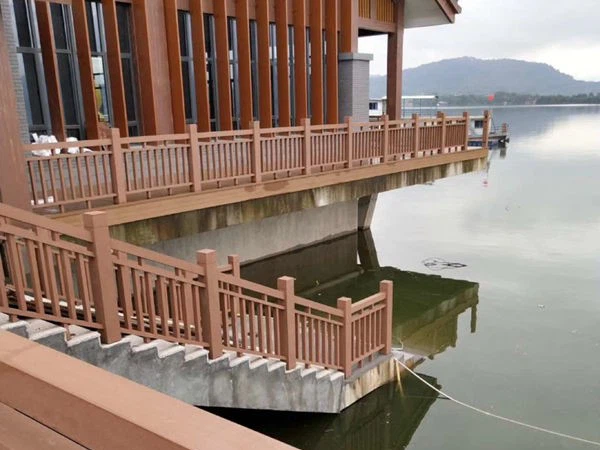
A post insert is the difference between a fence that weathers a coastline and one the coastline eventually owns.
On This Page
- I. Post-mortem on a post
- II. Salt is not the enemy it was sold as
- III. What UV actually eats - and the thickness it needs
- IV. What the coast does to steel that a spec sheet won't admit
- V. The insert question nobody likes asking
- VI. Wind
- VII. A five-minute contractor check that filters out three-quarters of the market
A PVC fence that sits in a subdivision in Ohio will probably look the same in 2036 as it did in 2026. The technical term for this is unremarkable performance, and it is exactly what a homeowner pays for. A PVC fence three hundred meters from a coastline in the Gulf or the Arabian Sea or the South China Sea faces a different physics, and the difference is not something the warranty department likes discussing because the variables multiply fast and the callbacks are expensive.
The coastal fence problem is not inherently a vinyl problem. It is a system problem. Every component in a PVC fence-the profile, the rails, the post, the screws, the insert, the post cap, the concrete footing-is exposed to a cocktail of salt aerosol, thermal cycling, and UV radiation that these components were not necessarily tested for together. A profile that handles salt spray in a laboratory salt-fog chamber might fail in the field because the screws holding it are corroding from the inside, and the corrosion product expands, and the profile cracks not because it was attacked by salt but because it was attacked by its own fasteners.
Most fence specifications do not talk about this path. They talk about a profile's thickness, or a UV inhibitor package, or a wind-load rating. Alone, each number is honest. Together, they describe a fence that does not exist in the conditions the contractor is actually installing into. This article is about the gap between those numbers and a coastline. It is for the contractor who has had to explain to a client in a beachfront villa why a two-year-old PVC fence is showing rust stains, or why the gate post has started to lean east-not because the post broke, but because the insert inside it did.
I. Post-mortem on a Post
A PVC fence post fails in one of two ways. It snaps at the base, or it leans. There is no third failure mode. The first mode is usually wind, or an impact, or a vehicle. The second mode is almost always the insert. A contractor digging out a leaning post in a coastal installation will find, nine times out of ten, that the PVC profile is structurally intact and the metal stiffener inside it has been reduced to flakes. The post was not holding up the fence. The insert was. And the insert is gone.
The reason nobody notices the insert during specification is that the insert is not part of the fence supplier's product. It is sourced locally. It is a length of galvanized steel tube or aluminum extrusion that the installer drops into the post before backfilling. The PVC post cap goes on top. The insert disappears from the record. Its material grade, coating type, coating thickness, and end-seal treatment are not on the fence quotation, not on the fabrication drawing, and not discussed in the warranty terms. The most structurally critical component in the entire fence assembly is a subcontractor's procurement decision made in a hardware store.
In a coastal environment, this decision matters enormously. Standard galvanized steel with a zinc coating of 30 microns will survive inland for decades. In a salt-spray zone-defined loosely as anywhere within five kilometers of a breaking surf, but practically as anywhere the wind carries salt aerosol-that same coating loses 3 to 5 microns per year. The arithmetic is not subtle. A 30-micron coating on a post insert might last six to ten years before the base steel is exposed. A 50-micron hot-dip galvanized coating stretches that to maybe fifteen. A stainless steel insert, grade 304 or better, functionally eliminates the corrosion clock. The price difference between the three options, per post, is maybe eight to twenty dollars. Across a fence with forty posts, the difference is the cost of one callback. Two callbacks, if the gate post is included.
II. Salt Is Not the Enemy It Was Sold As
The PVC part of a PVC fence is chemically indifferent to salt. Sodium chloride does not plasticize PVC. It does not depolymerize it. It does not react with the calcium carbonate filler that makes up a fraction of the profile. Salt sits on the surface, dries into a white film, and gets rinsed off by the next rain shower or the next wave of sprinkler spray. The material underneath is unchanged. This has been true since rigid PVC profiles entered the building products market in the 1970s, and it is true now.
The problem the industry has with salt is not about salt. It is about what salt enables, and what the rest of the fence system does in response. Three things happen, and only one of them is directly a salt problem.
Thing one: salt aerosol is hygroscopic. It pulls moisture out of the air and holds it against the surface. Wherever a mild steel fastener makes contact with the PVC profile, that moisture sits at the interface at a concentration that inland air never achieves. The fastener corrodes. The corrosion product-iron oxide, voluminous and expansive-exerts pressure on the PVC. PVC at a screw hole is already the weakest point in the profile because the cross-section has been interrupted. Add expansive rust pressure from the inside, and the hole becomes a crack, and the crack propagates along the rail. The rail did not fail. The screw did. But the failure registers as a PVC failure because the PVC is what the owner sees.
Thing two: coastal wind carries fine sand and salt crystals at velocities that inland wind does not. Over hundreds of storm cycles, this acts as a low-grade abrasive blast on the fence surface. The PVC's gloss layer-the outermost 20 to 50 microns of the profile where the UV inhibitors are concentrated-erodes faster than the manufacturer's weathering data predicts, because the weathering data was generated by UV exposure alone, not by UV plus airborne particulate. The profile does not discolor. It chalks. The surface goes matte, then slightly rough to the touch, then visibly pitted. The color underneath is still white. The surface is losing its protective layer at a rate the warranty did not anticipate.
Thing three: the thermal load on a coastal fence is different from an inland fence not because the air temperature is higher, but because the reflected radiation from sand, water, and adjacent concrete surfaces adds a component that weather stations do not measure. A PVC fence post in direct sun on a 35°C day might see a surface temperature of 55°C or more. If the post is dark-colored, which coastal installations almost never are in practice but sometimes are in architect specifications, the surface temperature can push past 65°C. At these temperatures, the modulus of PVC drops measurably. The post is softer. The same wind load that a stiff post at 30°C would shrug off now produces a deflection that the insert has to resist. If the insert is also hot, and is steel, it has expanded slightly and its fit inside the PVC post might be looser than it was at installation. The combination-softer PVC, looser insert, sustained wind-is what turns a post that was straight in the morning into a post that is leaning by sunset.
None of these failure paths require salt to attack PVC. They require a system-level understanding of what a coastal environment does to the interfaces between materials, which is a more subtle problem and one that spec sheets address component by component rather than as an assembly. For a deeper look at how PVC components handle sustained UV and thermal stress specifically in the profile itself-not the fasteners, not the insert-the manufacturer vetting methodology in our article on how to choose a PVC fence covers what thickness, co-extrusion layer, and color stability data separate a coastal-capable profile from an inland-only one.
III. What UV Actually Eats - and the Thickness It Needs
Titanium dioxide is the standard UV inhibitor in rigid PVC. It absorbs UV photons and dissipates the energy as heat. It works. Every PVC fence manufacturer uses it. The variable is how much of it is in the capstock, how thick the capstock is, and whether the capstock is the only layer carrying the TiO₂ load or whether the substrate underneath has been compounded with stabilizers that provide a secondary line of defense once the capstock inevitably thins.
The thinning is inevitable because outdoor PVC weathers from the surface inward. The erosion rate in a temperate climate is somewhere around 5 to 10 microns per year on a vertical surface that gets direct afternoon sun. In a coastal tropical setting-the kind that stretches from Chennai to Mombasa to Cartagena-abrasive wind-driven particulate can accelerate that to 15 microns per year or more. A capstock that is 200 microns thick deteriorates to half its original UV-blocking capacity in roughly seven years. A capstock that is 100 microns thick crosses the same threshold in three or four. After that, the substrate underneath starts taking direct UV, and if that substrate was formulated without its own stabilizer package, the degradation accelerates sharply.
Contractors who open up a ten-year-old coastal fence for repair occasionally find a profile that looks fine on the outside and is chalky and brittle on the inside, particularly near the top rail where reflected UV from the ground and direct UV from the sky converge. The profile had a capstock. The capstock did its job. The job just ended sooner than the manufacturer's accelerated weathering chamber predicted, because the chamber did not include airborne salt and sand, and it ran at a constant humidity that did not replicate the wet-dry cycling of a tropical coast.
The practical question a contractor can ask before ordering is not "does this fence have UV inhibitors." Every fence says yes. The question is "how thick is your capstock, and what is the TiO₂ loading, and do you have weathering data for a coastal exposure site or only for an inland test facility." Suppliers who have coastal data will send it. Suppliers who do not will send inland data and hope the specifier does not notice the test location. For the broader landscape of what separates a PVC fence that holds up across decades from one that fades and chalks, the material breakdown in our comparison of PVC versus wood, aluminum, and iron fencing covers the twenty-year cost picture that includes UV-related maintenance cycles.

The capstock thickness visible in cross-section determines how many years of direct sun and wind-driven salt a profile will absorb before the substrate takes over.
IV. What the Coast Does to Steel That a Spec Sheet Won't Admit
Fastener failure in a coastal fence begins at the head. A screw driven into a PVC rail through a pre-drilled hole creates an interface where three materials meet: the PVC profile, the steel screw shank, and the head of the screw that sits proud or flush on the rail surface. Salt-laden moisture wicks into that interface by capillary action. The screw head is the most aerated part of the assembly because it is directly exposed to the atmosphere. It becomes the cathode in a galvanic couple, and the shank-less aerated, buried inside the PVC-becomes the anode. The shank corrodes preferentially. The head looks fine. The rust is happening out of sight, inside the rail, until the shank cross-section has reduced enough that it shears under wind load. The rail falls. The screw head is still shiny.
This is electrochemical corrosion 101. It is not exotic. It is fully predictable given the geometry of a screwed PVC fence rail. The fact that it still accounts for a large share of coastal fence failures two decades into the product category's existence says less about the materials and more about the supply chain's disincentive to talk about it. A fence manufacturer sells PVC. It does not sell screws. The screw is specified by the installer. The manufacturer's warranty covers the profile, not the fasteners. The system has been designed, structurally, to separate responsibility for the most corrosion-vulnerable component from the entity that would be held responsible if the system were considered as a whole.
The material fix is grade 316 stainless steel fasteners, or at minimum grade 304 with a passivation treatment. The cost delta against zinc-plated carbon steel screws on a typical residential fence is perhaps forty or fifty dollars total. The labor to replace a rusted screw that has snapped inside a rail, mid-span, five years after installation, is more than the entire fastener budget for the original job. Contractors who work the same coastline for years learn this quickly. The ones who learn it the hard way carry two sets of screws in the truck: the zinc-plated box for inland jobs, and the stainless box for anything within sight of salt water.
V. The Insert Question Nobody Likes Asking
A PVC post is hollow. A PVC post subjected to lateral wind load will deflect beyond its allowable limit unless it is reinforced internally. The reinforcement is a metal tube-typically square steel or rectangular aluminum-sized to slide inside the post cavity with just enough clearance to allow installation. The clearance is part of the problem.
If the clearance is too tight, the insert binds during insertion and the installer is tempted to hammer it, which can crack a PVC post at the top edge. If the clearance is too loose, the post under wind load rocks against the insert and the point contact creates a wear zone on the inside of the PVC wall. Over thousands of load cycles, that wear zone thins. Then it cracks. Neither failure is a material defect in the PVC or the insert. Both are tolerance problems in an assembly where two components from different supply chains are expected to fit together perfectly.
In a coastal setting, the clearance also acts as a drainage path. Water that enters the post from the top-through a poorly sealed post cap, or through a hairline crack at a screw penetration near the top rail-runs down the inside of the PVC post. It pools at the base of the insert, where the insert sits in the concrete footing. If the insert is carbon steel, even galvanized carbon steel, the base becomes a corrosion cell. The zinc coating sacrifices itself first. When it is gone, the steel corrodes, and the corrosion product expands. The expansion cracks the concrete from the inside. The post is now leaning not because the post failed, but because its footing has been slowly destroyed by water that entered through a gap measured in millimeters at the top of the assembly.
A stainless steel insert with a welded base plate and a properly sealed post cap eliminates this path. The insert does not corrode. The water that enters the post drains harmlessly to the bottom and evaporates. The concrete footing stays intact. The difference in material cost is trivial relative to the cost of excavating and replacing a footing that has been cracked by internal rust expansion. For installations where the fence serves animal containment or property perimeter functions that cannot afford a single compromised post, the animal containment fencing analysis extends this logic to the loads and impacts that differentiate a boundary marker from a working fence.
VI. Wind
Wind does not respect a spec sheet. It delivers pressure, gust energy, sustained loading, and debris impact in combinations that testing standards simplify for reproducibility. The standard wind-load test for a fence panel applies a uniform static pressure. Real wind is not uniform and not static. A gust front hits one section of fence harder than the adjacent section. The rail that spans between two posts sees a torsional moment that the static test does not replicate. The post sees a bending moment that peaks and reverses direction within seconds.
PVC is viscoelastic. Under sustained load, it creeps. Under cyclic load, it can fatigue. The fatigue threshold for rigid PVC at the stress levels a coastal fence sees during a tropical storm is not a number that most fence manufacturers publish, because most fence manufacturers do not test for fatigue. They test for static wind load, and they publish a wind rating, and the rating is honest under the test conditions it was generated under. A contractor installing in a typhoon zone needs to know that the rating was generated under a different condition than the one the fence will actually experience.
The practical mitigation is post spacing. A fence rated for 120 km/h winds at 2.4-meter post centers will handle significantly more at 1.8-meter centers. The shorter span reduces the lever arm on each post and the bending moment on each rail. The material cost increases by roughly a third because there are more posts and more concrete. The structural margin increases by more than a third because the relationship between span and bending stress is nonlinear. For a beachfront property in a cyclone corridor, the narrower spacing is the cheapest insurance available against an event that will either happen or not happen, and if it happens, will test every post simultaneously.
Post embedment depth matters here too. In sandy coastal soil, which has lower bearing capacity than the clay soils assumed in standard footing depth tables, a post needs to go deeper. A rule of thumb that circulates among contractors who work these sites: one-third of the above-ground post height embedded below ground, with a minimum of 900 mm, and a concrete footing diameter of at least 300 mm for a standard residential post. The numbers shift for taller fences, for privacy screens that catch more wind, and for sites where the water table sits within a meter of the surface and can liquefy the soil around the footing during prolonged heavy rain. None of this is proprietary. It is simply the difference between a fence that was designed for the wind conditions it will face and one that was designed for a wind zone three categories milder on a map.
VII. A Five-Minute Contractor Check That Filters Out Three-Quarters of the Market
Most fence suppliers answer a coastal durability inquiry with a version of "our fences are UV-resistant and weatherproof." The statement is true and useless. It is true of every PVC fence on the market. It does not distinguish between a fence that will look the same in fifteen years and one that will be leaning and chalky in five.
The questions worth asking in a supplier call take about five minutes and the answers filter the market quickly.
Ask for the capstock thickness in microns, not in marketing language. If the answer is a range, ask for the minimum. If the answer is "it varies by product line," ask for the specific product line being quoted. A number below 150 microns is not disqualifying, but it means the fence will need inspection and possible capstock touch-up within a decade in a high-exposure coastal site. A number above 200 microns means the manufacturer has thought about this problem and priced the material accordingly.
Ask what grade of stainless steel the manufacturer recommends for fasteners in salt-spray environments. If the answer is "our fasteners are corrosion-resistant," the supplier is not listening to the question. If the answer is "316 for within 500 meters of the coast, 304 for 500 meters to 2 kilometers," the supplier knows the coastline and has thought about zoning. This is the answer from someone who has handled a coastal warranty claim.
Ask whether the fence has been tested for wind load at the post spacings being quoted for the project. If the test was done at 2.4-meter centers and the project specifies 1.8-meter centers, ask whether the rating can be interpolated or whether the manufacturer will stand behind the narrower spacing with a written statement. A supplier who hesitates on this question is concerned about something they are not saying. A supplier who sends an email within the hour with an engineering note is treating coastal specification as a routine part of the business.
Ask whether the insert is part of the fence system warranty or whether it is considered a site-supplied item. If the insert is excluded from the warranty, the post's structural integrity is excluded from the warranty, because the post depends on the insert. This is a gap in the contractual language that almost no homeowner notices and almost every contractor eventually has to explain. For a wider view on how to assess whether a PVC fence supplier's claims hold up across the full fence assembly-not just the PVC parts-the methodology in our PVC privacy fencing guide applies the same system-level scrutiny to installations where a fence cannot afford to fail.
Frequently Asked Questions About Coastal PVC Fence Specifications
Answers to the specification questions that contractors in coastal markets raise before ordering, based on what happens after the fence has been standing for several seasons.
Q1: Does salt spray actually damage the PVC itself?
A: No. Rigid PVC is chemically inert to sodium chloride. The damage path that looks like PVC damage usually originates in a steel component-a fastener, an insert, a screw-that corrodes and then physically damages the PVC from the inside through expansive rust pressure. The fence fails at the PVC, but the cause is the steel. Replacing the PVC without addressing the fastener specification will produce the same failure again.
Q2: What is the minimum capstock thickness for a coastal fence?
A: There is no single answer, but contractors who work tropical coastlines tend to specify 150 microns minimum and prefer 200 microns or above. The extra 50 microns of UV-loaded capstock roughly doubles the number of years before the substrate begins taking direct UV exposure, which is the point at which weathering accelerates. The cost difference is measured in cents per kilogram of compound and is rarely what drives the quoted price.
Q3: Galvanized or stainless steel for the post insert?
A: Stainless steel, grade 304 minimum, with the base plate welded and the top capped to prevent water ingress. Galvanized insert failure is the number one reason a coastal PVC fence post begins to lean within its first decade. The zinc coating sacrifices itself, the base steel corrodes, the rust expands, and the concrete footing cracks from the inside. Stainless avoids the mechanism entirely.
Q4: Does wind rating testing reflect real coastal conditions?
A: Only partially. Standard wind-load tests apply uniform static pressure. Coastal wind is gusty, cyclical, and carries abrasive particulate. A fence that passes a static test at a given post spacing will survive a higher wind speed if the post spacing is reduced, because the relationship between span and bending stress is not linear. For cyclone-prone zones, reducing post centers from 2.4 meters to 1.8 meters provides a disproportionate increase in structural margin for a modest increase in material cost.
Q5: Are dark-colored PVC fences viable in hot coastal climates?
A: Dark profiles absorb more solar radiation and reach higher surface temperatures-potentially 65°C or above in direct tropical sun. At these temperatures, the flexural modulus of PVC drops measurably. The post becomes softer and deflects more under wind load. If the insert fit is loose, the combination of a softer post and a loose insert under sustained wind can produce a lean that a white post would not develop. Dark fences in hot coastal settings need either reduced post spacing or an insert with tighter internal clearance to compensate for the thermal softening effect.
Q6: Can an existing coastal fence be retrofitted for better durability?
A: Partially. Fasteners can be replaced with stainless steel, though extracting corroded screws without damaging the rail is delicate work. Post inserts cannot be replaced without removing the post from the footing, which is effectively a new installation. Post caps can be replaced and sealed. The most cost-effective retrofit is usually a fastener upgrade combined with regular inspection of post cap seals and footing conditions. If the capstock is already heavily chalked, no retrofit will restore the UV protection that has been lost.
Spec a PVC fence that survives the coast, not one the coast eventually gets to keep
Our fencing profiles ship with capstock thickness documentation, coastal weathering data from exposure sites, and fastener and insert recommendations specific to salt-spray distance zones. Contact us with your site coordinates, wind zone, and post spacing preference. We will return a specification that covers the PVC, the insert grade, and the fastener material in a single document-not three documents from three suppliers that leave the interfaces to chance.
What the Coast Is Testing
A coastline is not testing whether a PVC fence is good. It is testing whether every decision that was made between the extrusion line and the final screw was made with the assumption that the fence would spend its life in a salt-laden, UV-saturated, wind-battered environment, or whether it was made with the assumption that the fence would stand in a suburb and the spec sheet would cover everything the installer needed to know.
The suburb assumption works for most fences. It does not work for coastal fences, because the interfaces that are irrelevant inland-the screw-to-rail interface, the insert-to-post interface, the post-to-footing interface-become the primary failure paths when salt, moisture, heat, and wind combine at intensities that inland test data was never designed to represent. A contractor who has seen a post insert reduced to rust flakes cannot unsee it. The image stays, and it reshapes the questions asked on the next job.
A fence that holds a coastline for a decade is not made of different PVC. It is made of the same PVC, with a thicker capstock, attached with better fasteners, supported by a stainless insert, embedded in a deeper footing, and assembled with an awareness that the system will be tested at every joint before the warranty period is half over. None of this is secret. It is simply the difference between a fence that was specified for its environment and one that was specified for its price.
YUPSENI Team
Twenty-three years manufacturing PVC fence profiles, railing systems, and extruded building products. Our coastal-grade fencing specifications include capstock thickness documentation, fastener compatibility data, and insert recommendations developed from installations across salt-spray zones in over 40 countries. Browse PVC fencing products or about our manufacturing standards.
The information in this article is for general informational and educational purposes only. Coastal environment classifications, wind zone ratings, material specifications, and installation methods must be verified against local building codes, site-specific engineering assessments, and the manufacturer's technical documentation for the specific product lot. No content here constitutes a guarantee of performance in any particular environment. Product images are for illustrative purposes. All trademarks belong to their respective owners. © 2026 YUPSENI. All rights reserved.


