Vinyl Deck Railing Kit Guide: What's in the Box vs What the Inspector Checks | YUPSENI
Jul 01, 2026
~7 min read · July 1, 2026 · By YUPSENI Team
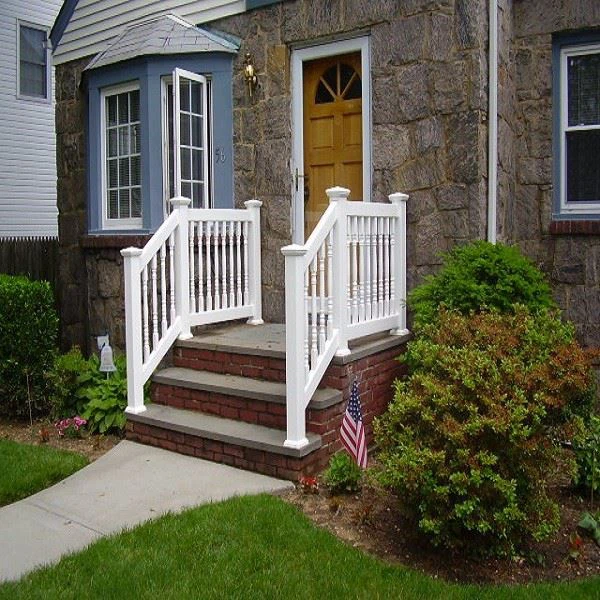
A fully assembled vinyl deck railing system with square balusters, top and bottom rails, post sleeves, and decorative post caps. The white PVC surface is factory-finished and UV-stabilized. What matters is not visible in this photo: the aluminum reinforcement inside the rails that determines whether the railing deflects under lateral load or stays rigid enough to satisfy the building inspector's push test.
A deck railing has exactly one job that matters to the building department: it must stop a person from falling through or over it. Everything else - the color, the profile, the post cap design - is secondary. The code is not interested in aesthetics. The code is interested in whether a four-inch sphere can pass between your balusters, whether the top rail deflects less than the maximum allowable under a 200-pound concentrated load, and whether the assembly as a whole resists the forces that act on a guardrail when a party guest leans against it holding a drink.
A vinyl deck railing kit arrives in boxes. The white PVC components look clean. The homeowner or contractor opens the instructions and starts assembling. The question that separates a railing that passes final inspection from one that earns a red tag is not visible in the box. It is inside the rails - a length of aluminum that the PVC is extruded around, and that the marketing copy on the box may or may not mention. YUPSENI vinyl deck railing kits are manufactured with aluminum-reinforced top and bottom rails as standard. This article explains why that matters, what the code requires, and where most railing installations develop problems that no one notices until the railing moves under hand pressure.
On This Page
- I. The Box Arrives. Then You Read What the Kit Expects You to Supply.
- II. Aluminum Inside PVC: the Structural Secret Hidden in the Rail Cross-Section
- III. Why a Four-Inch Ball Decides Your Baluster Spacing
- IV. Where the Post Meets the Deck: the Joint Nobody Inspects Until Something Wobbles
- V. PVC Railings on a Wood Deck: the Part That Survives the Structure It's Bolted To
I. The Box Arrives. Then You Read What the Kit Expects You to Supply.
A vinyl deck railing kit is marketed as a complete system. The box contains top rails, bottom rails, balusters, post sleeves, post caps, brackets, and a bag of screws. The instruction sheet shows an exploded diagram of a beautiful white railing with evenly spaced balusters and a reassuringly thick top rail. What the diagram does not show is the wooden post inside each PVC sleeve, the concrete footing beneath that post, the lag bolts connecting post to rim joist, or the aluminum reinforcement insert that the manufacturer assumes you know to check for.
The term "kit" does a specific kind of damage to expectations. It implies completeness. A vinyl deck railing kit is more accurately described as a railing cladding and infill system. It provides the visible surface - the white PVC that people see from the yard - and the balusters that fill the space between rails. It does not provide the structural core. That core is a pressure-treated wood or structural aluminum post, sized to code, set in concrete or bolted through the deck frame. The kit covers the post. It does not replace it. Buyers who assume otherwise discover this when the first post sleeve slides over a post that does not exist yet.
Here is what a typical kit includes, and what it does not. Included: top rail profile with routed bottom channel to accept balusters, bottom rail profile with corresponding channel, square or turned balusters in a quantity matched to the rail length, post sleeves sized to slip over a nominal 4×4 wood post, post caps, mounting brackets for rail-to-post connection, and stainless steel or coated fasteners. Not included: the structural posts themselves, post-base connectors or standoffs, concrete for footings, blocking for stair applications, and - in some budget kits - the aluminum reinforcement for top and bottom rails. That last omission is the one that matters most. Browse PVC railing kits and verify the reinforcement specification before ordering.
One question that saves a reorder: Ask the supplier whether the top and bottom rails include aluminum reinforcement inserts. If the answer is "they are optional" or "the PVC alone is structural," ask for the span tables and the deflection test data. A PVC rail spanning 6 feet between posts, unreinforced, will deflect noticeably under body weight on a warm day. The building inspector will notice. The customer leaning against it will definitely notice.
II. Aluminum Inside PVC: the Structural Secret Hidden in the Rail Cross-Section
PVC is rigid. Rigid enough to hold its shape as a baluster, a post sleeve, or a trim board. It is not rigid enough to span six or eight feet between posts as a horizontal guardrail and resist the 200-pound concentrated load that the International Residential Code requires without exceeding the deflection limit. This is not a material defect. It is physics. Thermoplastics have a lower flexural modulus than aluminum or steel. The solution, adopted by every serious vinyl railing manufacturer, is to co-extrude the PVC rail profile around an aluminum insert - a rectangular or C-channel section that carries the structural load while the PVC provides the weather-resistant skin, the color, and the profile geometry.
The aluminum insert does three things that determine whether the railing passes inspection. First, it limits deflection under load - typically to L/240 or better, meaning a 72-inch span deflects no more than 0.3 inches under the design load. Second, it prevents creep sag, the gradual permanent deformation that unreinforced PVC develops under constant load and thermal cycling, particularly on south-facing decks where rail surface temperatures can exceed 60°C in summer. Third, it provides a rigid substrate for the bracket screws that connect rail to post - screws driven into PVC alone will strip and loosen within seasonal cycles. Screws driven through PVC into aluminum hold.
The aluminum is hidden. You cannot see it from the outside. The rail looks identical whether it contains a 1.2 mm wall aluminum C-channel or is hollow PVC. The way to verify it at the point of specification is to ask for the reinforcement detail: wall thickness, alloy grade, whether the insert is continuous for the full length of the rail or only at bracket mounting points. A continuous insert indicates a manufacturer that understands the railing is a structural assembly. An insert only at the ends indicates a manufacturer that understands the railing must pass the bracket pull-out test and nothing else. Read the complete PVC railing selection guide covering reinforcement, post spacing, and code compliance for deck and porch applications.

Vinyl deck railing components showing the detailed profile geometry of top rail, bottom rail, and balusters. The rail cross-section reveals the aluminum reinforcement channel - the structural element that handles the code-required 200-pound concentrated load while the PVC skin provides weather resistance and finished appearance.
III. Why a Four-Inch Ball Decides Your Baluster Spacing
The most famous rule in deck railing code is the four-inch sphere rule: a sphere four inches in diameter must not be able to pass through any opening in the guardrail. The rule exists because a child's head is roughly four inches wide at the temples, and a child who can fit their head through an opening can fit their body through it. This rule determines baluster spacing. For a square baluster that is 0.75 inches wide, the clear space between balusters must be no more than 3.875 inches at the narrowest point. The math changes with every baluster profile - turned balusters with wider mid-sections reduce the allowable center-to-center spacing. The kit manufacturer has done this math. The installer must not deviate from it by spreading balusters to use fewer pieces.
Guarding height is the second code requirement that catches installers. For residential decks more than 30 inches above grade, the top of the guardrail must be a minimum of 36 inches above the deck surface. Some jurisdictions require 42 inches. A vinyl deck railing kit with standard-height balusters and rails is designed to meet the 36-inch requirement when installed according to the manufacturer's layout. Using a shorter post or mounting the bottom rail closer to the deck surface can bring the finished top rail height below code minimum. The inspector carries a tape measure. The kit does not mention this because the kit assumes the installer knows.
The third requirement is the least discussed: the guardrail must resist a 50-pound-per-linear-foot uniform load applied horizontally at the top rail, in addition to the 200-pound concentrated load. This is the test that exposes weak post-to-deck connections. A vinyl railing system where the post is properly anchored - through-bolted to the rim joist with two 1/2-inch galvanized bolts, or set in a concrete footing - will pass. A system where the post is toe-nailed to the deck board will not. The railing manufacturer is not responsible for the post connection. But the failure looks like a railing failure, and the homeowner will blame the railing, not the framing. PVC fence and railing installation guide: the step-by-step system that prevents expensive callbacks applies the same post-anchoring principles to railing installations.
IV. Where the Post Meets the Deck: the Joint Nobody Inspects Until Something Wobbles
Water pools at the base of a deck railing post. Rain runs down the post sleeve, hits the deck surface, and sits there - held by surface tension against the PVC-deck junction. If the structural post inside the sleeve is wood, and if the post base is not elevated above the deck surface with a stainless steel standoff connector, the end grain of that post absorbs water every time it rains. Over years, the wood rots at the most critical structural point: the connection between post and deck frame. The PVC sleeve hides the rot perfectly. The railing looks pristine from the outside. The post inside has the structural integrity of a wet cardboard tube. A person leans against the railing. The post snaps at the base. The fall height from a deck is high enough to cause serious injury. The railing company gets blamed. The cause was a missing 35-cent standoff connector that allows water to drain away instead of wicking into the post end grain.
There are three post-mounting methods for deck railings, and each has a different failure mode. Surface-mount posts bolt to the deck surface through a metal base plate. The base plate concentrates the load on the deck board, and if the deck board is not blocked from beneath directly under the post, the board flexes and the post leans. Fascia-mount posts bolt to the rim joist through the side of the post. This is the strongest connection when done correctly with through-bolts, but requires access to the joist - not always possible on an existing deck. Through-deck posts extend through the deck surface and bolt to the joist below; this hides the connection but creates a penetration in the deck board that must be flashed to prevent water entry into the framing. Coastal PVC fence durability: salt, UV, and wind failures covers the corrosion-resistant fastener specifications that also apply to railing installations within 5 miles of salt water.

Vinyl deck railing post with sleeve, cap, and rail brackets. The post sleeve covers a structural wood or aluminum core. The detail that determines whether this assembly is still rigid after five years is at the base - a stainless standoff that elevates the post above the deck surface, creating an air gap for drainage and preventing the end grain of a wood post from sitting in standing water after every rain.
V. PVC Railings on a Wood Deck: the Part That Survives the Structure It's Bolted To
A pressure-treated wood deck in a climate with freeze-thaw cycles lasts roughly 15 to 20 years before boards need replacement. The railing attached to that deck, if it is a vinyl deck railing kit from a manufacturer that uses UV-stabilized compound and aluminum reinforcement, will look and function essentially the same on year 20 as it did on year one. The deck will be replaced. The railing will be unbolted, set aside, and bolted back onto the new deck. This is the economics of PVC railing that a per-linear-foot material cost comparison with wood misses entirely. PVC vs wood vs aluminum: the 20-year cost breakdown applies the same lifecycle arithmetic to fencing, and the numbers translate directly to railing.
| After 10 Years of Exposure | Wood Railing (Painted) | Vinyl Railing Kit (Reinforced PVC) | Aluminum Railing (Powder-Coated) |
|---|---|---|---|
| Surface condition | Paint peeling; mildew at post bases; splintering at hand contact points | Unchanged; wash with mild detergent restores original appearance | Powder coat intact but chalking slightly; minor oxidation at cut ends |
| Structural rigidity | Reduced; fastener holes elongated from wood shrinkage | Unchanged; aluminum reinforcement maintains original span rating | Unchanged; metal-to-metal connections still tight |
| Maintenance required | Sand, prime, repaint every 3-4 years; replace rotted posts as needed | Annual wash; inspect post-base drainage gap for debris | Annual wash; touch up scratches to prevent white oxidation spots |
| Replacement likelihood at 15 years | High - rot at post bases and rail joint failure | Low - remove and reinstall on new deck if deck is replaced | Medium - fasteners may corrode in coastal environments |
One material behavior that separates exterior-grade vinyl railing from budget alternatives is thermal stability under direct sun. Dark-colored railing components absorb more solar radiation, reach higher surface temperatures, and expand more than white or light-colored components. A white vinyl deck railing kit - the most common color for good reason - reflects the majority of solar energy and stays closer to ambient air temperature. This matters for two reasons: thermal expansion is lower, reducing the stress on bracket connections and miter joints; and the PVC compound degrades slower, because UV stabilizers in the formulation are consumed at a rate proportional to the surface temperature. A white railing in Phoenix lasts longer than a dark brown railing in Phoenix, even if both are "UV-stabilized." The physics of heat absorption does not care about marketing claims. Verify reinforcement specifications and color options for vinyl deck railing kits before placing an order.
Questions Contractors and Homeowners Ask Before Ordering
Frequently Asked Questions About Vinyl Deck Railing Kits
The questions builders, deck contractors, and homeowners ask when comparing vinyl railing systems.
Q1: Are the structural posts included in the kit?
A: Most vinyl deck railing kits include post sleeves - the PVC cover that slides over a structural post - but do not include the structural post itself. The structural post is typically a pressure-treated 4×4 wood post or a 2.5-inch square aluminum post, sourced locally by the installer. The sleeve provides the finished appearance and weather protection. Some premium kits offer an aluminum post-and-sleeve as a single integrated component. Verify what is included before ordering. YUPSENI can supply matching aluminum structural posts as an optional add-on to the railing kit. Confirm included components with our sales team.
Q2: What is the maximum span between posts for a vinyl railing?
A: For aluminum-reinforced vinyl railing, the typical maximum post spacing is 6 feet on center for residential applications and 4 feet on center for commercial applications where higher load requirements apply. Unreinforced vinyl railing should not span more than 4 feet between posts, and even then, deflection under load may be noticeable. The manufacturer provides span tables based on the specific rail profile and reinforcement specification. Do not exceed the manufacturer's maximum span, even if "it feels solid" during installation. Deflection increases with temperature, and a railing that feels rigid in cool weather may flex noticeably on a hot afternoon.
Q3: Can vinyl railing be installed on stairs?
A: Yes. Most vinyl railing kit systems include stair railing components - typically angled rail sections that accept balusters at the stair pitch, plus stair-specific brackets that allow the rail to follow the angle of the stair stringer while keeping balusters vertical. Stair installation is more complex than level-deck installation because the post height calculations change, the rail sections must be cut to match the stair angle, and the four-inch sphere rule applies differently in the triangular opening between the stair tread, the bottom rail, and the first baluster. Many code inspectors check stair railing geometry more carefully than level railing geometry. Use the manufacturer's stair installation guide, not general deck-building intuition.
Q4: How does the installed cost compare to wood or aluminum railing?
A: On a material-cost-only basis, pressure-treated wood railing is the least expensive option, vinyl railing kits are in the middle, and powder-coated aluminum railing is the most expensive. However, when labor for installation and maintenance is included over a 15-year life, the ranking changes. Wood railing requires repainting every three to four years and post replacement as rot develops; the cumulative labor cost exceeds the material cost within the first decade. Vinyl railing requires essentially no maintenance beyond annual cleaning, and its installed cost over 15 years is typically lower than wood and comparable to or less than aluminum, depending on the specific kit and post configuration. For DIY installations, a vinyl railing kit is the most accessible option because it requires standard carpentry tools and no welding or specialized metal-cutting equipment. See the 20-year cost comparison methodology applied across materials.
Q5: Will the white color turn yellow or fade in the sun?
A: Exterior-grade vinyl railing formulated with sufficient titanium dioxide and UV stabilizer additives will not yellow or chalk significantly over a 20-year service life. The key qualifier is "exterior-grade." Interior-grade PVC profiles - sometimes used in budget railing kits - lack the UV stabilizer package required for outdoor exposure and will discolor within two to three years. White is the most UV-stable color because it reflects the most solar radiation. Darker colors absorb more heat, experience higher surface temperatures, and can exhibit visible fading sooner, though the material remains structurally sound. Ask your supplier for accelerated weathering test data (ASTM G154 or equivalent) that confirms color stability for the specific color you are ordering. The test data exists for properly formulated products. If the supplier cannot provide it, the compound may not be exterior-grade.
Q6: Can the railing be painted a different color later?
A: Yes, but with an important limitation. Vinyl railing can be painted with 100% acrylic latex paint formulated for exterior PVC. The surface must be cleaned and lightly scuffed for adhesion. The critical constraint is color: paint with a light reflective value (LRV) of 55 or higher is recommended. Dark paint colors absorb more solar radiation and can raise the PVC surface temperature above the material's designed service temperature, causing thermal expansion beyond what the installation's fastener slots can accommodate. If a dark color is required, consult the manufacturer for heat-tolerant compound options. Factory-white railing does not need to be painted for protection; the UV stabilization is built into the PVC compound, not applied as a coating.
A Railing That Outlasts the Deck Is Not an Expense. It's an Heirloom.
YUPSENI vinyl deck railing kits include aluminum-reinforced top and bottom rails, UV-stabilized white PVC throughout, and stainless hardware. Square and turned baluster options. Custom lengths, colors, and post configurations available for volume orders. Manufactured in Shandong, China, shipped to 60+ countries.
The Inspector Checks the Railing Once. Gravity Checks It Every Day.
A deck railing is the only building component that people intentionally lean against with their full body weight, dozens of times a year, for the entire life of the structure. Every other guardrail in a house - stair balustrades, loft railings - gets touched. Deck railings get leaned on. The person leaning is often holding a drink, looking at a sunset, and not thinking about structural engineering. The railing must be thinking about it for them.
A vinyl deck railing kit from a manufacturer that puts aluminum inside the rails, UV stabilizers in the compound, and a clear span table in the documentation will perform that job for as long as the house stands. The kit that cuts cost by omitting the reinforcement, skimping on the stabilizers, or printing a span table that assumes the railing will never see a hot afternoon will perform it for a few years. The difference in price between the two is a fraction of the cost of defending a personal injury lawsuit. Choose the railing kit like the lawyer who will depose you about it is already on retainer. Because if the railing fails, someone will ask who specified it, who bought it, and whether anyone checked what was inside the white PVC.
YUPSENI Team
23 years in PVC building material manufacturing and supply chain. PVC railing, fencing, trim boards, foam boards, SPC flooring, and wall panels - extruded, fabricated, and shipped from Shandong, China. We help importers, distributors, deck builders, and contractors across 60+ countries source vinyl railing systems that pass inspection the first time. More about YUPSENI
Disclaimer: The information in this article is for general informational purposes only and does not constitute professional building, engineering, or code compliance advice. Building codes, structural requirements, and material specifications vary by jurisdiction. Always consult local building authorities, a licensed structural engineer or qualified contractor, and the manufacturer's current technical documentation before specifying or installing railing systems. Product specifications are subject to change; request current datasheets and span tables before procurement and installation.