SPC Flooring: Price, Soundproofing, And Underfloor Heating — Three Questions That Should Be Asked In The Opposite Order
May 27, 2026

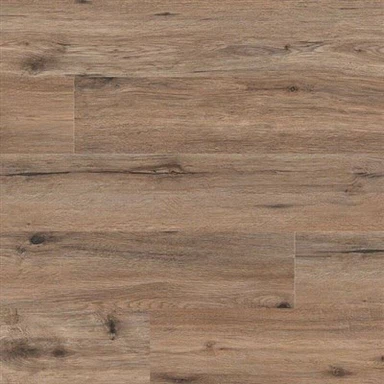
A living room with SPC flooring installed wall to wall. The buyer who chose this floor probably started by comparing prices per square foot. The questions about sound transmission and underfloor heating compatibility typically arrived later, after the samples had already been ordered. The sequence matters, because a floor that is cheap and quiet but incompatible with the heating system already roughed into the slab is not actually cheap.
On This Page
Most flooring buyers approach the decision in the wrong sequence. They start with the price per square foot, narrow the field to what fits the budget, then check whether the surviving options happen to work with the subfloor and the heating system already in place. A better sequence runs in reverse: eliminate every material that cannot handle the thermal and acoustic conditions of the room, and only then compare prices among the candidates that remain. SPC stone composite flooring survives this filtering process in ways that laminate, engineered wood, and ceramic tile often do not, but the reasons are distributed across three separate questions that most buyers research in isolation from each other.
The three questions that follow are the ones that buyers ask after the samples have arrived and the installer has walked the job site. Price. Sound. Underfloor heating. Each one is familiar. The connection between them is less familiar, and it is the connection that determines whether a floor performs as expected across all three dimensions simultaneously rather than trading one for another. Rigid core SPC flooring with a stone-polymer composite backbone sits at the intersection of these three constraints, and understanding why requires looking at each question individually before stepping back to see how they interact.
I. What That $3-to-$10 Spread Actually Separates
SPC flooring spans a material-cost range from roughly two dollars per square foot at the entry level to ten dollars or more at the premium end, with the broad middle occupying the four-to-six-dollar band. The difference between the low and high ends of that range is not cosmetic. It is structural, and it shows up in three places that a buyer can verify before placing an order.
The wear layer thickness is the first and most visible differentiator. Entry-level SPC typically carries a wear layer of 0.2 to 0.3 millimeters, measured in mils in the North American market at roughly 8 to 12 mil. This is adequate for bedrooms and low-traffic residential spaces. Mid-range products move to 0.3 to 0.5 millimeters, or 12 to 20 mil, which handles hallway traffic, kitchen spills, and pet claws without showing wear patterns within the first three years. Premium SPC flooring pushes the wear layer to 0.5 millimeters and above, or 20 mil and up, at which point the product competes with commercial-grade vinyl in terms of surface durability. The wear layer is transparent urethane or aluminum oxide, and its job is to absorb the abrasion that would otherwise reach the printed decorative film beneath it. Once the wear layer is penetrated, the floor's appearance degrades and cannot be restored.
The core thickness, typically ranging from 3.2 millimeters at the thin end to 8 millimeters or more at the thick end, determines two things simultaneously: impact resistance and sound transmission. A thicker core absorbs more impact energy before transferring it to the subfloor. The plank also feels more solid underfoot and is less likely to develop flex at the click-lock joints under heavy furniture loads. The price increment from thin-core to thick-core SPC is real, but so is the performance difference in a room with a rolling office chair or a large dining table.
The third cost driver is the quality of the decorative layer and the embossing registration. Budget SPC uses lower-resolution photographic films with embossing that does not precisely align with the wood-grain or stone pattern. The result is a floor that looks acceptable from standing height but reveals its artificial origin on close inspection. Premium products use high-definition printing with registered embossing, where the surface texture follows the grain lines of the photographed wood species. The visual difference narrows as the price rises, and for buyers who are replacing real hardwood with SPC, the premium tier is where the deception becomes convincing.
Installation labor adds between one and three dollars per square foot for professional installation, though the click-lock system on most SPC products makes the material accessible to DIY installation in a way that tile and hardwood are not. A detailed SPC installation walkthrough covering subfloor preparation, expansion-gap requirements, and the step sequence that prevents end-joint gapping is worth reviewing before committing to self-installation, because the mistakes that create callbacks are concentrated in the first and last rows where the click-lock engagement is least intuitive.
The total installed cost for SPC flooring lands between three and thirteen dollars per square foot across the full range of material grades and labor scenarios. The number that matters for budget planning is not the low end of that range. It is the intersection of the performance tier the room requires and the square footage the room contains.
II. The Thump Test That Deserves More Attention Than It Gets

A cross-section of an SPC plank with attached IXPE underlayment. The foam layer on the bottom is what absorbs impact noise before it reaches the subfloor. The limestone-and-PVC core above it provides the mass that blocks airborne sound transmission. The two mechanisms work together, and removing either one cuts the acoustic performance in half.
Flooring showrooms are quiet places. The buyer taps a sample against a display board, nods at the solid feel, and moves on. The problem is that the acoustic performance of a floor is not a property of the sample in isolation. It is a property of the floor assembly: the plank, the underlayment, the subfloor, and the ceiling cavity below. A 4-millimeter SPC plank installed directly on concrete transmits footfall impact into the slab with almost no attenuation. The same plank installed over a 2-millimeter attached foam underlayment cuts impact sound transmission by roughly 18 to 22 decibels, measured in IIC ratings. The difference is the difference between a downstairs neighbor who never hears footsteps and one who can identify which family member is walking across the kitchen by the rhythm of their gait.
The core composition of SPC flooring contributes to sound dampening through mass. The limestone-PVC composite is denser than the HDF core of laminate flooring and significantly denser than the plywood core of engineered wood. Higher density means higher impedance to sound-wave transmission. This is why a thinner SPC plank can outperform a thicker laminate plank on impact-sound metrics. The mass does the work. The attached underlayment provides a decoupling layer that prevents the rigid core from vibrating directly against the subfloor, which is the mechanism by which footfall noise becomes airborne sound in the room below.
For multi-story buildings, condominiums, and apartments, the acoustic specification deserves as much attention as the wear-layer thickness. The two ratings to check are IIC, which measures impact sound transmission and is the relevant number for footfall noise, and STC, which measures airborne sound transmission and is the relevant number for conversation and television noise traveling between floors. An IIC rating of 50 or above is generally considered adequate for residential multi-family construction. An IIC of 60 or above is the target for premium acoustic performance. SPC flooring with a quality attached underlayment typically falls in the 50 to 65 IIC range depending on the subfloor type and whether an additional acoustic underlayment is installed beneath the planks.
Thicker SPC planks, those in the 6-millimeter range and above, provide measurably better sound insulation than their 4-millimeter counterparts. The added mass and the thicker attached underlayment combine to reduce both impact and airborne transmission. The improvement is not linear. The jump from 4 to 6 millimeters produces a larger acoustic gain than the jump from 6 to 8 millimeters, because the critical variable is whether the underlayment is thick enough to decouple the core from the subfloor, not whether the core itself is incrementally thicker. Once adequate decoupling is achieved, additional core thickness provides diminishing acoustic returns.
III. Running Warm Water Under a Stone-Plastic Floor
SPC flooring is one of the few rigid flooring materials that pairs naturally with underfloor heating, and the reason is thermal rather than structural. The limestone-PVC core has a thermal conductivity roughly an order of magnitude higher than the HDF core of laminate flooring. Heat moves through stone and plastic faster than it moves through compressed wood fiber. A hydronic or electric underfloor heating system beneath an SPC floor delivers warmth to the room with a shorter lag time and a lower required water temperature than the same system beneath laminate or engineered wood. The floor does not insulate the heating system from the room. It conducts the heat upward.
The temperature ceiling for SPC flooring over underfloor heating is typically set by the manufacturer at 85 degrees Fahrenheit, or approximately 29 degrees Celsius, measured at the surface of the subfloor. This is not a conservative suggestion. It is a material limit. Exceeding it risks softening the PVC component of the core, which can cause the click-lock joints to lose engagement under foot traffic and the planks to develop permanent deformation at the edges. The limit is generous enough for residential comfort. A floor surface temperature of 80 to 82 degrees Fahrenheit feels warm under bare feet without being hot, and it keeps a room at a comfortable ambient temperature without auxiliary heating in all but the coldest climates.
The installation protocol for SPC over underfloor heating includes a preheating step that many DIY installers skip because it is not mentioned on the box. A newly installed underfloor heating system, particularly a hydronic system embedded in a fresh concrete slab, contains residual moisture that must be driven off before the flooring is laid. The system should be brought to operating temperature gradually over several days, held there for 48 to 72 hours to allow the slab to dry, and then cooled gradually before installation begins. Skipping this step traps moisture beneath the planks, and trapped moisture beneath a waterproof floor has nowhere to go except into the subfloor, where it can cause adhesive failure, mold growth, or slab degradation over time.
The floating installation method used for SPC flooring, where the planks are clicked together and rest on the subfloor without adhesive, is inherently compatible with underfloor heating because it allows the floor to expand and contract as a single unit. The expansion gap around the perimeter, typically a quarter to three-eighths of an inch, accommodates the thermal movement that occurs when the heating system cycles on and off. A technical guide to SPC flooring over underfloor heating covering thermal resistance values, compatibility thresholds, and the installation sequence that prevents thermal-shock joint failure provides the detailed thermal-resistance data and installation sequencing that short-form product pages omit.
Frequently Asked Questions About SPC Flooring Pricing, Sound, and Heating
Quick answers to the practical questions buyers ask after comparing SPC flooring samples.
Q1: Is cheaper SPC flooring a false economy?
A: Not always, but the line between value and false economy is drawn at the wear layer. Entry-level SPC at two to three dollars per square foot with a 0.2-millimeter wear layer is adequate for a guest bedroom that sees foot traffic ten times a year. The same product installed in a kitchen with pets and children will show wear within eighteen to twenty-four months, and the cost of replacing it will exceed the savings from buying the cheaper product. The wear layer is the component that absorbs abrasion. Once it is gone, the floor is gone. Spending an extra dollar per square foot to move from an 8-mil to a 20-mil wear layer is one of the highest-return investments in a flooring budget, because it extends the service life of the entire floor assembly by a multiple of the incremental cost.
Q2: Does SPC flooring need an additional underlayment for soundproofing?
A: Most SPC products include an attached underlayment, typically IXPE or cork, that provides baseline impact-sound reduction. In single-family homes on grade-level concrete slabs, the attached underlayment is usually sufficient. For upper-story installations, condominiums, and rooms above finished basements, an additional acoustic underlayment roll installed beneath the planks can add 10 to 15 points to the IIC rating. The additional layer is a relatively small material cost, typically under a dollar per square foot, and it is far easier to install before the floor goes down than to retrofit after the downstairs neighbor has started complaining.
Q3: Can all SPC flooring be used with underfloor heating?
A: Most SPC flooring is rated for underfloor heating, but the rating must be verified on the specific product's technical data sheet rather than assumed. The key specification is the maximum allowable surface temperature, typically 85 degrees Fahrenheit. Products with a higher PVC content in the core formulation may have a lower temperature tolerance. Products with a thicker core, particularly those above 6 millimeters, may require a longer heat-up time but are otherwise compatible. The product warranty often includes specific language about underfloor heating compliance, including required installation protocols and temperature monitoring, and deviating from those requirements will void the warranty.
Q4: How does SPC flooring cost compare to laminate and engineered wood over a ten-year period?
A: The upfront material cost of SPC flooring sits between laminate at the low end and engineered wood at the high end. Over a ten-year period, the total-cost gap widens in SPC's favor when moisture exposure is factored in. Laminate that gets wet must be replaced. Engineered wood that gets wet may delaminate. SPC survives the same exposure without structural change. A single flooding event in a kitchen or bathroom can erase the upfront savings of choosing laminate over SPC, because the laminate floor is a total loss while the SPC floor can be lifted, dried, and reinstalled. For rooms with plumbing fixtures, the ten-year cost comparison is not a straight-line extrapolation of the per-square-foot material price.
A Floor That Answers All Three Questions at Once
SPC stone composite flooring delivers the wear-layer durability, impact-sound attenuation, and underfloor-heating thermal conductivity that the three most common post-purchase questions demand. The same rigid core that keeps the price competitive with mid-range laminate also blocks footfall noise and conducts heat efficiently.
The Questions That Outlive the Installation
The price per square foot is the number that opens the conversation. It is not the number that closes it. The questions that determine whether a floor is still performing as expected five years after installation are about sound and heat, not about the invoice total. A floor that transmits every footstep into the room below is a floor that generates complaints. A floor that insulates the heating system from the room is a floor that generates higher energy bills. A floor that fails at both while costing less upfront is not a bargain. It is a deferred cost with interest.
The buyer who researches all three questions before ordering samples is buying a floor assembly, not a stack of planks. The plank is the visible component. The underlayment, the subfloor condition, the heating system compatibility, and the installation protocol are the components that determine whether the plank performs. SPC flooring earns its position in the market not because it is the cheapest rigid flooring option. It earns it because it is the one that crosses the most intersections of price, acoustic performance, and thermal conductivity without asking the buyer to sacrifice one for the others. The sacrifices that remain are in the wear-layer spec and the installation labor, and both are under the buyer's control.
With over 23 years of experience in rigid PVC and SPC flooring manufacturing, our team supplies residential and commercial projects with flooring systems engineered for the thermal, acoustic, and durability conditions that real installations encounter. The pricing, sound-insulation, and underfloor-heating guidance in this article is based on product testing data, installer feedback, and the material properties that separate specification-grade flooring from commodity stock. Explore SPC flooring options by wear layer and core specification or learn more about our manufacturing and quality systems.
© 2026 YUPSENI. All rights reserved. The pricing ranges, acoustic performance estimates, and underfloor-heating compatibility guidance in this article are based on general industry data, product specifications current as of May 2026, and field experience. Actual product performance varies by manufacturer, installation quality, subfloor conditions, and environmental factors. Prices are approximate and subject to regional variation. Always verify product specifications, warranty terms, and heating-system compatibility with the manufacturer before installation.