

PVC Trim Fixing: Screws vs Adhesive and Which One Holds | YUPSENI
Nov 24, 2026
Screws or Glue? The Joint Decides, Not the Habit Behind It
A screw and a bead of adhesive are not two ways to do the same thing. They apply different forces to the same profile.
On This Page
Two installers, the same profile, the same wall. One fixes it with screws at close intervals, the other beds it in adhesive. Six months later, one of them has a crack running from a screw hole, and the other has a length of trim that has let go at one end. Both men are experienced. Both are confident. The difference is not skill but a decision that was made without thinking about what the material does when it warms up and cools down. The profile is not a static object, and the fixing has to account for that.
A screw and a bead of adhesive are not interchangeable. They apply different forces.
I. Two Fasteners, Two Philosophies
A screw is a point load. It pulls the profile against the substrate at one location, and the material has to carry that concentrated force through its thickness. An adhesive is a distributed load. It spreads the same holding force across the whole footprint of the joint, so no single point carries more than its share. The two methods do the same job in opposite ways, and each has a failure mode that follows directly from its nature: a screw fails at the hole, an adhesive fails at the edge where the bond begins to peel.
| Property | Screw | Adhesive |
|---|---|---|
| Strength | High, local | Moderate, continuous |
| Movement | Restricts | Allows |
| Surface prep | Minimal | Critical |
| Removable | Yes | No |
| Failure mode | Crack at hole | Peel from edge |
Most installations use one or the other because that is the habit of the trade, not because the joint was analysed. Installers who came up in carpentry reach for the screw gun. Installers who came up in finishing reach for the tube. Both approaches work most of the time, which is why the habit survives, and both fail in specific conditions that the habit does not anticipate. The question worth asking is not which method is better but which force the joint will experience.
One locks. One bonds. Neither listens.
II. What Screws Do to a Moving Material
PVC expands and contracts more than most building materials, and a long profile can move noticeably between a cold morning and a warm afternoon. When a screw passes through the profile and into the substrate, it pins the material at that point. The rest of the profile still wants to move, and the material between the fixed points has to absorb the difference by deforming. Over time, that deformation concentrates at the screw holes, and the result is a crack radiating from the fixing or a visible bulge between fixings.
The standard remedy is to make the hole larger than the screw, so the profile can slide as it moves. A clearance hole turns the screw from a clamp into a guide: it holds the profile against the wall but allows it to travel. This is the same principle used in fixing timber cladding and aluminium trim, and it is routinely omitted on PVC because the material looks rigid. It is not rigid. It is stiff, which is a different thing.
Screws are still the right choice in many situations, particularly where the fixing has to carry load, where the profile may need to be removed, or where the substrate is uneven and needs to be pulled straight. The mistake is not using screws. The mistake is using them without a clearance hole and assuming the material will stay where it was put. It will not. It will move, and the screw will hold it, and something has to give.
The screw did not fail. The material moved and the screw refused.
III. When Adhesive Fails Quietly
Adhesive fails differently, and the difference is that it usually fails without warning. A screw that is overloaded cracks visibly. An adhesive that is poorly bonded holds for a while, then lets go along one edge, and the profile hangs until someone notices. The cause is almost always at the interface rather than in the adhesive itself: dust, moisture, oil, or a surface that was never designed to accept a bond. PVC is smooth and often has a release agent on the surface from manufacturing, which is why some adhesives require a primer or a light abrasion before they will hold.
Temperature matters as much as cleanliness. Adhesive applied to a cold surface cures slowly and may never develop its full strength. Adhesive applied in direct sun can skin over before the profile is positioned, leaving a bond that looks closed but is not. And adhesive applied to a damp wall will trap moisture behind the profile, which is a problem in its own right. None of these failures is visible on the day of installation, which is why adhesive work needs to be specified rather than improvised.
The choice of adhesive compounds the problem. Solvent cements are designed to weld PVC to PVC, not to bond PVC to masonry or plaster. Construction adhesives vary in flexibility, and a rigid adhesive on a moving profile creates the same stress concentration that a tight screw does. The right adhesive for the joint is the one that matches both surfaces and the movement the profile will experience.
The bond did not break. It was never made.
IV. Why the Best Joint Uses Both
The most reliable fixing is not a choice between the two methods but a combination of them, and the reason is that each compensates for the other's weakness. The screw carries the load and holds the profile in position while the adhesive cures. The adhesive seals the joint, spreads the stress, and takes over the long-term holding once it has set. Together they produce a joint that is mechanically secure and chemically sealed, which is what exterior trim actually needs.
The sequence matters. The adhesive goes on first, the profile is positioned, and the screws are driven through clearance holes to hold it while the adhesive sets. The screw heads are then covered, plugged, or finished so that the fixing disappears. This is the standard method for exterior trim and cladding, and it is the method that survives both thermal movement and weather. Using screws alone leaves the joint open to water. Using adhesive alone leaves it vulnerable to peel and to the movement it cannot restrain.
This also explains why concealed fixing systems exist. A clip or a channel holds the profile mechanically without a visible fastener, and the profile can move within the clip. Those systems are the industrial version of the same idea: mechanical restraint plus movement allowance plus a sealed joint. The principle is the same whether it is a screw and a bead of adhesive or a stainless clip and a gasket. The joint needs both holding and giving.
The screw held it. The adhesive sealed it. Neither could do both.
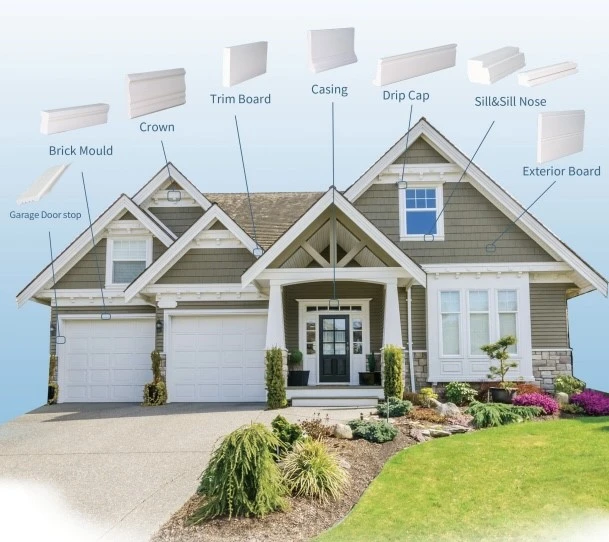
One fastener restrains. The other seals. A good joint needs both jobs done.
V. Specify the Fixing, Not the Habit
The buyer who has followed the argument knows that the fixing is a specification decision, not an installer preference. The joint will experience movement, load, and weather, and the fixing has to be chosen for those conditions. A few lines in the specification prevent most of the failures described here.
State clearance holes. If screws are used, the hole should be larger than the screw so the profile can move. This is the single most common omission.
Name the adhesive and the preparation. "Construction adhesive" is not a specification. The product, the primer, and the surface condition should all be stated.
Decide whether the joint is permanent. Adhesive is not removable. If access may be needed, the fixing should be mechanical or a clip system.
The habit was fast. The specification was right.
Screws restrain and adhesive seals, and each fails where the other compensates. Specify clearance holes, name the adhesive and its preparation, and decide whether the joint must remain removable.
The Fastener Is a Design Decision
Most fixing failures are not the fault of the screw or the adhesive. They are the result of a decision made by habit, applied to a material that behaves differently from the one the habit was formed on. PVC is stiff enough to look stable and mobile enough to crack when it is held too firmly, and the fixing has to respect both properties. The same profile can last decades or fail in a season depending on a hole that was drilled to the wrong size.
The comparison with timber trim is instructive here, because timber moves too and the trades that fix it have learned to allow for it. The lesson transfers directly. A joint that is allowed to move will stay closed. A joint that is held rigid will open somewhere else.
The screw and the adhesive were both correct. The joint needed both of them.
Profiles that hold and move
Fixing methods matched to the material, the load, and the movement the joint will see.
Request a Quotation Browse MouldingsFrequently Asked Questions About Fixing PVC Profiles
Answers to the questions that come up when the trim starts to crack or let go.
Q1: Should PVC trim be screwed or glued?
A: Often both. Screws hold the profile while the adhesive cures, and the adhesive seals the joint and spreads the load. The choice depends on load, exposure, and whether the joint must stay removable.
Q2: Why do screw holes crack in PVC trim?
A: Because the hole is the same size as the screw. PVC moves with temperature, and a tight hole pins it. A clearance hole lets the profile slide and removes the stress that causes the crack.
Q3: Why does adhesive fail on PVC trim?
A: Usually because of the surface, not the adhesive. Dust, moisture, oil, or a release agent on new PVC prevents a bond. Some products need a primer or light abrasion first.
Q4: Can I use both screws and adhesive?
A: Yes, and it is the standard method for exterior trim. The adhesive goes on first, the screws hold the profile through clearance holes while it cures, and the heads are finished afterwards.
Q5: How do I specify the fixing for PVC profiles?
A: State the screw type and clearance hole size, name the adhesive and any primer, and say whether the joint must remain removable. Those three items cover most of the risk.
YUPSENI Team
23 years in PVC building material manufacturing and supply chain. We help importers, distributors, and project buyers source SPC flooring, PVC foam boards, wall panels, and fencing that pass compliance the first time. More about YUPSENI
© 2026 YUPSENI. All rights reserved. The information in this article is for general informational purposes only and does not constitute professional advice. Product specifications may vary by region and production batch. Always request current datasheets before making procurement decisions.


