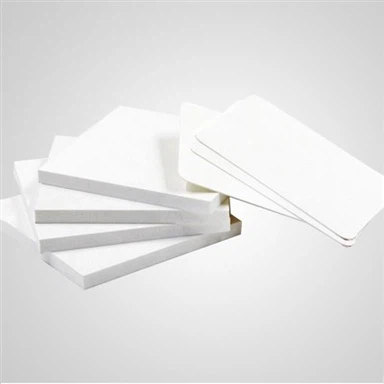
PVC Surface Hardness and Scratch Resistance: Three Properties, Not One
Oct 07, 2026
PVC Surface Hardness and Scratch Resistance - Three Properties Buyers Keep Confusing
12 min read
By YUPSENI Team
Hardness, toughness and wear resistance are three separate properties. A specification that names only one of them protects against only one kind of damage.
On This Page
A buyer asks whether a surface scratches easily. The answer comes back that it does not. Both parties consider the question answered, and neither has any idea what was just agreed.
Scratch resistance sounds like one property. It is at least three, measured by different tests, affected by different formulation choices, and traded against each other. A material can perform well on one and badly on another, which is why two products can both be described as scratch resistant and behave completely differently in the same room.
This article separates the properties, explains what each test observes, and sets out what can actually be written into a specification and checked on arrival. A related surface question, how a board ages outdoors, is covered in our piece on PVC board weathering.
I. Three Properties, One Word
The first thing to separate is the vocabulary, because the confusion in this subject is largely linguistic.
| Property | What it describes | Typical damage it prevents |
|---|---|---|
| Hardness | Resistance to a point pressing into the surface. | Indentation marks from furniture feet, high heels or a dropped object. |
| Scratch resistance | Resistance to a point drawn across the surface. | Fine lines from dragging something, cleaning marks, swirl patterns. |
| Wear resistance | Resistance to gradual material removal by sliding contact over an area. | Loss of pattern or gloss in a walking route, dulling of a traffic lane. |
Hardness is not the same as toughness
Glass is harder than PVC and would win any scratch test between them, because it resists being scored. It is also brittle, so a dropped object shatters it while the same impact leaves a dent in the softer material. Hardness resists penetration; toughness absorbs impact. They usually move in opposite directions.
A fourth property belongs alongside these and is often merged into them. Impact resistance describes how a material behaves when struck, and it is the property that determines whether a surface chips or dents. A surface that has been made harder to resist scratching is usually more prone to chipping, which is the subject of section three.
One further distinction matters for the products in this range. A solid section and a foamed section behave differently under the same test, because a cellular core absorbs and distributes load in a way a solid one does not. The difference between the surface and the core of a board is covered in our guide to skin and core in PVC foam board.
II. What Each Test Actually Measures
Each of the three properties has a test, and each test has limits that determine what its result can be used for.
| Test | What it does | What the result is really telling you |
|---|---|---|
| Pencil hardness | A pencil of a defined grade is pushed across the surface at a set angle and load. The result is reported as a pencil grade on a scale running from very soft to very hard. | Resistance to a point under a small controlled load. Useful for comparison, and heavily dependent on the operator and the pencils used. |
| Stylus scratch | A hard point is drawn across the surface with increasing load until damage begins, and the load at onset is recorded. | The load at which scratching starts. More reproducible than pencil testing and less widely quoted in datasheets. |
| Indentation hardness | A calibrated indentor is pressed into the surface and the depth of penetration is measured. | Resistance to a static point load. The relevant property for furniture and foot traffic, and rarely quoted for sheet products. |
| Abrasion testing | Rotating abrasive wheels run against the surface under a defined load, and the material lost is weighed, or the cycles to wear through a layer are counted. | Wear resistance. This is the test behind wear layer specifications on flooring, and it is not a hardness measurement at all. |
| Impact testing | A weight is dropped onto the surface, or a striker is driven into it. | Toughness. Determines whether a surface dents or cracks, which is the property that hardness improvements usually damage. |
A pencil grade on its own is ambiguous
The published standards differ in which direction they report the result. One convention names the hardest pencil that leaves no mark, another names the softest pencil that does, and the two produce different grades for the same surface. A datasheet quoting a pencil grade without naming the standard and the load is quoting a number that cannot be compared with anything.

A point test, a drawn test and an abrasion test answer three different questions about the same surface.
The practical implication is that a single figure cannot describe a surface. Where a datasheet offers one number labelled hardness, it has chosen one of the properties and stayed silent about the others, and the two it has left out are often the ones that determine how the product behaves in use.
III. The Trade-Off Behind a Harder Surface
In a PVC compound the properties move against each other, and it is not possible to improve one without paying for it somewhere else.
| Change to the compound | Effect on the surface | What it costs |
|---|---|---|
| Increase filler content | Stiffer and harder, more resistant to indentation. | Lower impact strength. The surface chips more readily and cracks propagate further. |
| Increase impact modifier | Tougher, better able to absorb a strike without cracking. | Softer surface, so more prone to fine scratching and indentation. |
| Increase density | Denser skin, harder surface, better screw and fixing retention. | More material per sheet and higher weight, which carries through to freight. |
| Add a surface coating | A separate layer with its own hardness and wear properties. | Additional process step, and the coating becomes a failure point if it delaminates. |
A harder surface fails differently, not less
This is the point most often missed. Making a surface harder does not eliminate damage; it changes the damage from a mark that can be lived with into a chip that cannot. A soft surface that deforms and recovers looks the same afterwards. A hard surface that cracks has a permanent defect, and edge chips are one of the few damage types that cannot be hidden or repaired on site.
The direction of the trade-off means the question is not how hard a surface can be made but where on the curve the application sits. A floor in a busy commercial entrance needs wear resistance above all. A wall panel that will be wiped clean needs scratch and chemical resistance. A board that will be handled and cut on site needs toughness, because it will be dropped.
Density deserves a note here because it appears in both directions. A higher density board has a denser skin, which reads as a harder surface, and it also has a more uniform core, which improves impact behaviour. For foam board, density is the closest thing to a single lever that improves several properties at once, which is why it dominates specification discussions. Its limits are discussed in our piece on why density is not strength.
Where the Complaints Actually Come From
When a buyer reports that a surface scratches, they are usually describing one of five distinct failures, and the remedy differs for each.
Fine surface marks from cleaning. A soft cloth and a mild cleaner will not do this, but an abrasive pad or a gritty cloth will. The marks are shallow, diffuse and largely cosmetic, and the cause is the method rather than the material.
Indentation from a point load. A chair leg, a heel or a dropped object. No material is removed and nothing is scratched; the surface has been pressed and has not fully recovered. This is a hardness and recovery problem, and it is the cause most often misreported as scratching.
Gouging from a dragged load. A deep line with displaced material along its edges, produced by sliding something heavy. This is a toughness problem rather than a hardness one, and a harder surface will usually gouge worse because it cannot deform out of the way.
Loss of pattern or gloss in a traffic route. Gradual and cumulative, appearing over months rather than in a moment. This is abrasion, and the determining factor is the thickness and quality of the surface layer rather than the hardness beneath it.
Chipping at edges and corners. A brittle fracture, often during transport or installation rather than in use. Frequently an early warning that the compound has been pushed too far toward stiffness.
Establish which failure is being reported before specifying anything
A complaint of scratching that is actually indentation will not be solved by a harder surface, and a request for a harder surface in response to gouging will make the problem worse. The first useful step is a photograph with a scale beside the mark, showing whether material has been removed or displaced, and how deep it goes.
The practical value of the distinction is that four of these five failures are addressed by process and maintenance rather than by material selection. Protective pads on furniture feet, a specified cleaning method and felt glides under movable items between them prevent the majority of surface complaints, at no cost and with no change to the specification.
The Flooring Case
Flooring is where surface performance is specified most precisely, and it is also where the most confusion exists, because two different families of product use two different systems.
Laminate flooring is rated on a scale running from domestic light use up to heavy commercial, and those ratings derive from a combination of abrasion, impact and other tests applied to a laminate structure. The rating is a property of the whole assembly of decorative paper and resin layers, and it is meaningful for that product family.
Those ratings are not defined for rigid core and vinyl plank flooring
Rigid core and luxury vinyl plank products are covered by different standards, and the laminate rating scale does not apply to them. Yet the laminate ratings appear on vinyl datasheets constantly, because buyers recognise them and ask for them. When a supplier offers a laminate rating on a vinyl plank, the number is being borrowed, and the question of what standard it was actually measured against is left unanswered.
For rigid core and vinyl plank the primary surface specification is the wear layer, which is a physical thickness of transparent material bonded over the decorative layer. It is measured in millimetres or in thousandths of an inch, and it is the number that determines how long the pattern survives foot traffic.
| Wear layer as commonly quoted | Approximate thickness | Typical intended use |
|---|---|---|
| Six mil | About fifteen hundredths of a millimetre | Light domestic use in rooms with low traffic. |
| Twelve mil | About three tenths of a millimetre | General domestic and light commercial use. |
| Twenty mil | About half a millimetre | Heavier domestic and commercial use. |
| Twenty-eight mil | About seven tenths of a millimetre | Heavy commercial use and public circulation areas. |
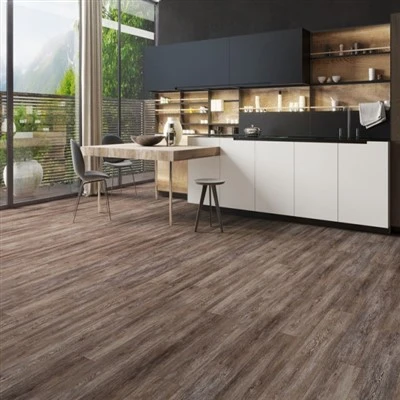
On a flooring plank the durability of the pattern is set by the thickness of the transparent layer above it, which is a dimension rather than a hardness claim.
The advantage of a wear layer specification over a hardness claim is that it is a physical measurement. It can be quoted in millimetres, it can be verified by examining a cross section, and it does not depend on operator technique or on which convention a laboratory follows.
What the wear layer does not control is indentation. A thick wear layer protects the pattern from being worn away, and does nothing to prevent a heavily loaded point from leaving a mark in the core beneath. That remains a question about the core material and its density, which is why two planks with identical wear layers can behave very differently under a piano leg. Where a damaged plank can be replaced rather than the whole floor, that is covered in our piece on repairing scratches and dents in rigid core flooring.
Writing It Into the Specification
A surface specification that can be checked has four parts, and a claim without them is a description rather than a requirement.
The property, named specifically. Hardness, scratch resistance, wear resistance and impact resistance are four requirements, not one, and specifying whichever of them the application needs is better than specifying all four.
The test method, by name, including the load or the wheel type where the standard allows a choice. A result quoted without the method cannot be reproduced by anyone else.
The acceptance value, expressed in the units the method produces, with the direction of the scale stated where the standard allows two conventions.
For any cosmetic criterion, the viewing condition. The light level, distance and angle at which a mark counts, and the size below which it does not.
Wear layer thickness is the easiest requirement to write and the easiest to check
Where the product has a wear layer, specifying its thickness in millimetres removes almost all of the ambiguity in the subject. It is a dimension rather than a performance claim, it does not depend on a test convention, and it can be verified from a sample without specialist equipment. For flooring in particular, it is a more useful line in a specification than any hardness figure.
The selection guidance for foam board surface characteristics sits alongside this, in our piece on the indicators that matter when selecting PVC foam board, which places surface behaviour in the context of the other properties a buyer has to balance.
What a Buyer Can Verify
Very little of this can be confirmed in a warehouse, and it is worth being clear about which parts can.
Verifiable on arrival
Wear layer thickness, from a cross section of a sample examined with a magnifier. Overall thickness and flatness, using the methods described in our guide to dimensional tolerance. Visual condition, against a stated viewing criterion. Chipping and edge damage, which is a handling outcome rather than a material one and can be seen immediately.
Not verifiable on arrival
Hardness, scratch resistance and abrasion resistance, all of which require laboratory equipment and controlled conditions. These can only be taken on the strength of a test report, which is why the report has to name the method, the load and the standard rather than state a grade.
The field test that does work is comparative
A scratch made with the same coin, at the same angle, with the same pressure, across two samples placed side by side will reliably tell you which of the two is more resistant. It will not tell you whether either meets a specification, and it will not produce a number that can go into a report. Used as a shortlisting method between candidate suppliers it is genuinely useful; used as an acceptance test it is not.

A comparison between two samples under identical conditions is informative. The same test on one sample in isolation is not.
The most productive approach is to combine the two. Use a comparative field test to narrow the field, then require a test report from the surviving suppliers, and check that the report names a method that matches the property the application actually needs.
The wider pattern mirrors every other subject in this group. A performance claim is only a specification when it names what was measured, how it was measured and what value counts as acceptable. Surface hardness is the clearest case of it, because the same word covers three different measurements and the choice between them determines which kind of damage the product will resist.
The short version
Hardness, scratch resistance and wear resistance are three properties measured by three tests, and a surface can perform well on one and badly on another. Hardness and toughness trade against each other, so making a surface harder converts a mark that can be lived with into a chip that cannot. Most complaints described as scratching are actually indentation, gouging, abrasion or chipping, and only one of those is improved by a harder surface. On rigid core and vinyl plank flooring the laminate rating scale does not apply, and the meaningful specification is the wear layer thickness, which is a dimension that can be verified rather than a hardness claim that cannot. A specification needs the property, the method, the acceptance value and, for cosmetic criteria, the viewing condition. Comparative field testing is useful for shortlisting and worthless as a compliance check.
Frequently Asked Questions
Surface Performance Questions
Common questions from importers, distributors and specifiers.
Is hardness the same as scratch resistance?
No. Hardness is resistance to a point pressing in, measured by indentation or pencil testing. Scratch resistance is resistance to a point being drawn across the surface. Wear resistance is resistance to gradual removal over an area. Three properties, three tests, and a surface can be strong on one and weak on another.
Glass is harder than PVC but scratches are still a problem. Why?
Because glass is hard and brittle. It resists being scored, which is what hardness measures, and it shatters under impact, which hardness does not measure. PVC is softer and tougher, so it dents where glass would break. For most building applications toughness matters more than hardness, and improving one usually costs the other.
Should I ask for a harder surface?
Only after establishing what the damage actually is. A harder surface will resist indentation and will not prevent gouging, and it will make chipping worse. Where the complaint is indentation, hardness is the right lever. Where it is gouging or edge chipping, asking for more hardness will make the situation worse rather than better.
Can I use the laminate wear rating on a rigid core plank?
No. That rating scale is defined for laminate structures and does not apply to rigid core or vinyl plank products, which are covered by different standards. The ratings appear on vinyl datasheets because buyers recognise them, but a borrowed number does not tell you what was measured. For these products the wear layer thickness in millimetres is the specification that matters.
What wear layer do I need?
It depends on traffic. A light domestic room and a public circulation area need very different thicknesses, and the ranges commonly quoted run from around fifteen hundredths of a millimetre for light domestic use up to around seven tenths for heavy commercial. The important point is that this is a measurable dimension rather than a performance claim, so it can be specified and later verified.
Why do two suppliers quote different pencil hardness results for similar boards?
Because the result depends on the operator, the pencils used, the load applied and, most importantly, which convention the standard follows for reporting. One convention names the hardest pencil that leaves no mark and another names the softest that does, so the same surface can be given two different grades. A pencil figure without the standard and the load cannot be compared with anything.
Is a coin scratch test worth doing?
As a comparison, yes. The same coin, angle and pressure applied to two samples side by side reliably identifies which is more resistant, which is useful when shortlisting suppliers. It will not tell you whether either meets a specification or produce a number that can go into a report, so it should not be used as an acceptance test.
What prevents the most surface complaints?
Protective pads on furniture feet, felt glides under movable items and a defined cleaning method, which together address indentation, gouging and cleaning marks at no cost. A considerable share of surface complaints are caused by how the material is used rather than how it was made, and none of those three measures requires a change to the specification.
Tell Us What the Surface Has to Survive
Describe the traffic, the cleaning method and the loads involved, and we will confirm which surface property the specification needs and what evidence we can provide against it.
Request a Quotation View the Flooring RangeYUPSENI Team
23 years in PVC building material manufacturing and supply chain. We help importers, distributors, and project buyers source foam board, sheet, wall panels, flooring and fencing that pass compliance the first time. More about YUPSENI
© 2026 YUPSENI. All rights reserved. The information in this article is for general informational purposes only and does not constitute professional advice. Surface performance requirements, test methods and applicable standards vary by product category, application and market. Confirm current values and the relevant standard with your supplier before specifying.