PVC Foam Board vs Plywood — Moisture, Weight & Real Cost Comparison
Aug 21, 2026
PVC Foam Board vs Plywood: What Carpenters Learn After the First Wet Season
Read time: 8 minutes | By: YUPSENI Team
On This Page
- I. Two Sheets, One Table Saw, Two Different Futures
- II. The Weight Lesson That Changes Every Installation
- III. The Surface: Where Plywood Needs Paint and PVC Stays Finished
- IV. Cost per Year, Not Cost per Sheet
- V. When Plywood Still Wins
- VI. Cutting, Routing, and the Tools That Do Both
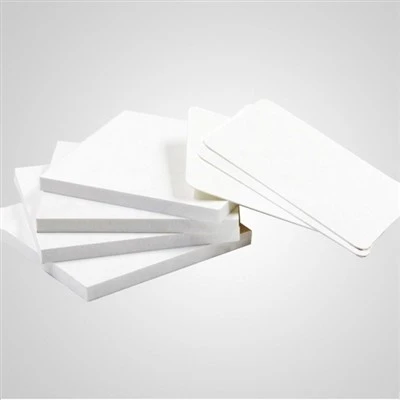
An expanded PVC foam board: the sheet that ignores the humidity that warps plywood.
Carpenters and sign makers grew up on plywood. It is cheap, familiar, and strong along its face. Then a cabinet shop builds a bathroom vanity, a sign shop installs letters on an exterior wall, or a display fabricator ships panels to a humid market, and the plywood sheet teaches a lesson in moisture that no grain direction could prevent.
This guide compares PVC foam board and plywood on the factors that decide real projects: weight, moisture behaviour, surface finish, long-term cost, and the honest jobs where plywood remains the better answer.
I. Two Sheets, One Table Saw, Two Different Futures
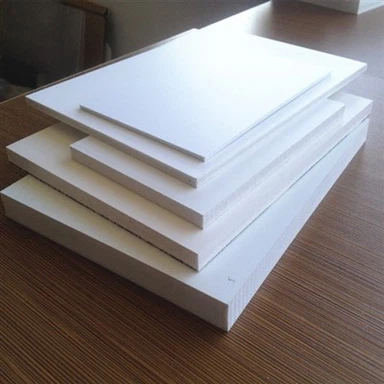
Walk into a workshop and the two sheets sit side by side on the rack. The plywood is layered wood veneer glued crosswise, stiff, heavy, and familiar. The PVC foam board is a closed-cell polymer sheet, light, white, and smooth. Both cut cleanly. Both take screws. Both look flat on the rack. The difference reveals itself over time, and the reveal is always about moisture.
Plywood is wood. Wood absorbs water from humid air, swells, warps, and provides a food source for mold. The veneers are glued, and the glue line is where delamination starts when moisture works in from a cut edge. The same sheet that sat perfectly flat in a dry workshop will cup, twist, or grow black edges in a humid garage, a bathroom, or a shipping container crossing a tropical ocean. No grade of plywood is immune. Marine-grade plywood resists longer and costs dramatically more, and even it is not waterproof, only water-resistant.
PVC foam board removes the whole category of moisture problems, because the material has no wood, no glue line, and no hunger for water.
II. The Weight Lesson That Changes Every Installation
Hold one sheet of each and the difference is immediate. A 4x8 sheet of 12 mm plywood weighs around 20 kilograms. The same size sheet of 10 mm PVC foam board weighs roughly a third of that. The weight gap is not a minor convenience. It changes who can carry the sheet, how many sheets fit on a van, how heavy the final installation is, and how much the freight costs across a border or an ocean.
For sign installers, the lighter sheet means one person handles the panel that used to need two. For cabinet shops, the lighter material keeps the assembled unit manageable on site. For importers, the weight saving shows up directly in the shipping cost per square metre, which is one reason PVC foam board has become the default sign substrate in markets where freight matters. The density options are covered in the density grade guide, and the four selection indicators explain how to read the density numbers.
III. The Surface: Where Plywood Needs Paint and PVC Stays Finished
Plywood's surface is a story of preparation. The raw sheet has a grain, a texture, and, on the cheaper grades, knots and patches. A finished plywood product needs sanding, priming, and at least one coat of paint or laminate, and the edge needs filling or banding, because the veneer layers are visible at every cut. The preparation is labour, and labour is cost.
PVC foam board arrives finished. The surface is smooth, white, and consistent, ready for vinyl film, UV printing, paint, or direct application without a primer. The edge is the same material as the face, so a cut edge looks clean without banding. For sign makers, this is the difference between a production step and no production step. A printed PVC panel goes from the printer to the wall; a printed plywood panel goes from the printer to the spray booth to the wall. The printing substrate guide shows how the surface behaves under ink.

A UV-printed PVC sheet: the surface takes ink directly, with no primer, no grain, and no edge banding.
For the material choices in sign work specifically, the substrate comparison places PVC against acrylic, aluminium composite, and corrugated plastic on the factors that sign shops actually weigh.
IV. Cost per Year, Not Cost per Sheet
The first price comparison looks bad for PVC foam board. A sheet costs more than the equivalent plywood, and a purchasing manager comparing invoices will see the gap immediately. The comparison that matters follows the sheet through its life, and the life is where the gap closes.
A plywood panel destined for an outdoor sign or a humid interior needs paint, edge sealing, and periodic repainting or re-laminating. A PVC panel needs none of it. A plywood cabinet in a bathroom swells at the kickboard within a few years and needs replacement. A PVC cabinet in the same room wipes down and keeps its geometry. The sign shop that prints a plywood board and paints it twice in its service life has spent the price difference many times over.
The long-term cost argument has a material twist: a foam board with a tough skin outperforms a cheaper soft-faced board over the same period. The Celuka versus free-foam guide explains why the surface layer decides how the sheet ages.
V. When Plywood Still Wins
The honest section, because a guide that tells a carpenter to abandon plywood entirely is a guide that has never built anything. Plywood holds real advantages that PVC foam board cannot match.
Structurally, plywood wins where strength matters. A shelf bearing a load, a workbench top, a structural panel, or a subfloor wants the stiffness and screw-holding strength that wood veneers provide. PVC foam board is not a structural material. It is a decorative and sign substrate with beautiful properties, and expecting it to carry loads is a mistake that ends with a sagging shelf.
Plywood also wins on price in dry, protected environments. A wardrobe interior, a workshop wall, or a temporary jig does not need moisture resistance, and the cheaper sheet does the job without complaint. The decision is not which material is better. The decision is which material fits the room. The WPC versus PVC comparison adds a third option for projects that want a wood-flavoured middle ground.
VI. Cutting, Routing, and the Tools That Do Both
The shop that already works plywood can cut PVC foam board with the same machines, which removes the last barrier to switching. A table saw, a panel saw, a CNC router, and a jigsaw all handle the material cleanly. The differences are small and practical: a sharp blade with a high tooth count gives a cleaner edge, and PVC generates a static dust that clings to machines, so a quick vacuum pass keeps the work area clear.
Routing is where PVC surprises new users. The material routes cleanly and holds a crisp edge profile, which makes it popular for dimensional lettering, mouldings, and decorative panels. The routed edge needs no sealing because the material is homogeneous through its thickness, unlike plywood, where a routed edge exposes bare veneer and demands primer and paint before it can face moisture. The tools and finishes guide covers the full workflow, from blade choice to edge finishing.
For a workshop evaluating the switch, the practical route is a single project: build one cabinet, print one sign, or install one panel set in a humid room, and let the material prove the difference on the workbench. The PVC foam board overview covers the available thicknesses and densities, and our sales team can send samples for the test.
Frequently Asked Questions
Frequently Asked Questions About PVC Foam Board vs Plywood
Common questions from carpenters, sign makers, and fabricators weighing PVC foam board against plywood.
Q1: Can PVC foam board be screwed like plywood?
Yes, with a small adjustment in technique. PVC foam board accepts screws and holds them well across its thickness, but the sheet is lighter and softer than plywood, so the screw should be driven without over-torquing. For panels that take repeated loads, a screw with a wider thread and a larger head spreads the hold better than a standard wood screw. Where the joint carries real weight, a threaded insert or a through-bolt with a washer is the right approach rather than relying on the sheet alone.
Q2: Does PVC foam board break or crack like plywood can?
The two materials fail differently. Plywood can splinter at the edges and delaminate along its glue lines when the edge is cut poorly or moisture gets in. PVC foam board does not splinter or delaminate, but it dents and scratches more readily than plywood on impact, and a thin sheet can flex. The practical answer is to choose the density and thickness for the application: a denser skin board resists impact, and a thicker sheet resists flex. Neither material is indestructible; each just fails in its own way.
Q3: Can I use PVC foam board for load-bearing shelves?
Not in the way plywood can. PVC foam board is not a structural material. A short, lightly loaded shelf can work, but a shelf carrying books, tools, or any real weight should stay with plywood or another structural panel. The material's strengths are moisture resistance, surface finish, and weight, not bending strength. Use PVC for cabinet carcases, doors, decorative panels, and signage, and use plywood where the shelf has to carry the load.
Q4: How does PVC foam board hold up outdoors compared with plywood?
In direct outdoor exposure, the foam board resists moisture completely but needs protection from long-term sunlight. Bare PVC foam board exposed to continuous UV will chalk and degrade on the surface; the material can be painted with an exterior-grade paint or finished with a UV-resistant film to protect it. Plywood outdoors requires paint and edge sealing as standard, and it still absorbs moisture through small failures in the finish. The practical comparison is that foam board fails only if the UV protection fails, while plywood fails when any point of the finish system fails, which is more common.
Q5: Which is cheaper when you count the full job?
Plywood wins on the material invoice. PVC foam board wins on the finished, installed, maintained cost. The gap comes from finishing labour and service life. A plywood sign needs edge sealing, priming, and painting, and the paint system gets redone over time. A PVC sign prints or applies directly and never needs repainting for moisture reasons. The same logic runs through cabinet work and interior panels. For a one-off job in a dry room where the plywood is not painted, plywood is cheaper. For a product that has to look good in a humid room or outdoors, the PVC cost per year is regularly the lower number.
Test the Sheet Before You Rethink the Rack
Request samples across the density range, route them, print them, and leave them in the damp corner of the workshop for a month. The material will make the argument.
Request Free SamplesYUPSENI Team
23 years in PVC building material manufacturing and supply chain. We make expanded PVC foam board in densities and skin types that match real shop workflows, and we send samples before we send invoices. More about YUPSENI
© 2026 YUPSENI. All rights reserved. The information in this article is for general informational purposes only and does not constitute professional engineering or material selection advice. Performance characteristics, densities, and recommended applications vary by product line and production batch. Always request current datasheets and test samples before making procurement decisions.