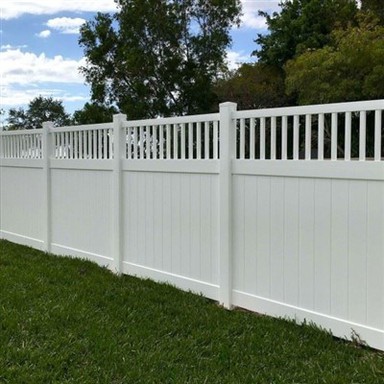
How has the perception of the white picket fence changed in modern society?
Jun 26, 2024
What materials are traditionally used to construct a "white picket fence"?
PVC faux marble sheets are synthetic materials designed to mimic the appearance of natural marble. They are typically composed of polyvinyl chloride (PVC), a type of plastic, combined with additives and pigments to create the desired texture, color, and veining characteristic of marble. Here's an overview of their manufacturing process:
Material Composition: PVC resin serves as the primary base material. To this base, additives such as plasticizers, stabilizers, and pigments are mixed to achieve the desired properties and appearance.
Extrusion or Calendering: The blended PVC mixture is then processed through either extrusion or calendering processes.
Extrusion: In extrusion, the PVC compound is forced through a die to create sheets of uniform thickness and texture.
Calendering: Alternatively, calendering involves passing the PVC mixture between rollers to form sheets with smooth surfaces and consistent thickness.
Surface Treatment: After forming the sheets, various surface treatments can be applied:
Printing: High-resolution printing techniques are used to replicate the natural patterns and colors of marble.
Embossing: Texture rollers or plates are used to emboss realistic veins and textures onto the surface of the sheets.
Coating: Protective coatings may be applied to enhance durability and provide specific finishes such as glossy or matte.
Cutting and Packaging: Once the sheets are processed, they are cut to size according to customer specifications and packaged for distribution.
How does the presence of a "white picket fence" influence property values?
PVC faux marble sheets are synthetic materials designed to mimic the appearance of natural marble. They are typically composed of polyvinyl chloride (PVC), a type of plastic, combined with additives and pigments to create the desired texture, color, and veining characteristic of marble. Here's an overview of their manufacturing process:
Material Composition: PVC resin serves as the primary base material. To this base, additives such as plasticizers, stabilizers, and pigments are mixed to achieve the desired properties and appearance.
Extrusion or Calendering: The blended PVC mixture is then processed through either extrusion or calendering processes.
Extrusion: In extrusion, the PVC compound is forced through a die to create sheets of uniform thickness and texture.
Calendering: Alternatively, calendering involves passing the PVC mixture between rollers to form sheets with smooth surfaces and consistent thickness.
Surface Treatment: After forming the sheets, various surface treatments can be applied:
Printing: High-resolution printing techniques are used to replicate the natural patterns and colors of marble.
Embossing: Texture rollers or plates are used to emboss realistic veins and textures onto the surface of the sheets.
Coating: Protective coatings may be applied to enhance durability and provide specific finishes such as glossy or matte.
Cutting and Packaging: Once the sheets are processed, they are cut to size according to customer specifications and packaged for distribution.
What role does the "white picket fence" play in popular media and literature?
PVC faux marble sheets are synthetic materials designed to mimic the appearance of natural marble. They are typically composed of polyvinyl chloride (PVC), a type of plastic, combined with additives and pigments to create the desired texture, color, and veining characteristic of marble. Here's an overview of their manufacturing process:
Material Composition: PVC resin serves as the primary base material. To this base, additives such as plasticizers, stabilizers, and pigments are mixed to achieve the desired properties and appearance.
Extrusion or Calendering: The blended PVC mixture is then processed through either extrusion or calendering processes.
Extrusion: In extrusion, the PVC compound is forced through a die to create sheets of uniform thickness and texture.
Calendering: Alternatively, calendering involves passing the PVC mixture between rollers to form sheets with smooth surfaces and consistent thickness.
Surface Treatment: After forming the sheets, various surface treatments can be applied:
Printing: High-resolution printing techniques are used to replicate the natural patterns and colors of marble.
Embossing: Texture rollers or plates are used to emboss realistic veins and textures onto the surface of the sheets.
Coating: Protective coatings may be applied to enhance durability and provide specific finishes such as glossy or matte.
Cutting and Packaging: Once the sheets are processed, they are cut to size according to customer specifications and packaged for distribution.