Custom PVC Foam Board OEM — Cut-to-Size to Custom Color, MOQ & Lead Time Explained
Aug 13, 2026
Custom PVC Foam Board OEM: What Actually Changes When You Ask for a Custom Board
Read time: 8 minutes | By: YUPSENI Team
On This Page
- I. The Two Kinds of Custom, and Why Buyers Confuse Them
- II. Cut-to-Size: The Cheap End of the Ladder
- III. What Does a Custom Density Run Actually Buy You?
- IV. The Pantone Card Meets the Extruder
- V. The Micro-Ingredients That Change the Job
- VI. When the Board Needs a Surface It Was Not Born With
- VII. From Inquiry to Container: One Custom Order End to End
A buyer asks for a custom PVC foam board and usually means one of two very different things. Sometimes the request is small: cut the sheets to a size, drill the holes, route the edges. Sometimes it is large: produce a density that sits between the standard grades, in a colour that matches the brand's logo, with a flame-retardant additive the datasheet does not list.
Both requests are called custom. They sit on opposite ends of a ladder, and the step between them is a full extrusion run. This article maps that ladder, what each rung costs in minimum order quantity and lead time, and how one custom order travels from inquiry to container. The full OEM workflow across all product lines is covered in the OEM process guide. This guide focuses on what is specific to foam board.

Expanded PVC foam board sheets at the production base, ready for the customization steps that follow extrusion.
I. The Two Kinds of Custom, and Why Buyers Confuse Them
The ladder has two sections. The bottom half is post-production processing: taking a standard extruded sheet and cutting, routing, drilling, or finishing it to the buyer's specification. The board itself is off-the-shelf. The processing is what gets tailored, and the minimum order can start from a single master sheet.
The top half is production-line customisation: changing the formulation, the density, the colour, or the additive package so that the extruded board itself is different from the stock product. This is where the minimum order quantity stops being a commercial choice and becomes a physical constraint. You cannot extrude ten sheets of a custom density. The dosing system, the barrel, and the calibration were set up for a production run, and a production run means a tonne, not a pallet.
Buyers confuse the two because quote requests rarely distinguish them. A request for custom size sits beside a request for custom density, both filed under custom, until the quotation arrives and the difference shows up as two zeros on the minimum order line. The table below lays out the rungs and what each one demands.
| Customisation Rung | What Changes | Typical MOQ | Lead Time Impact |
|---|---|---|---|
| Cut-to-size, routing, drilling | Sheet dimensions and edge/drill configuration | From a few sheets | A few days added |
| Edge treatment, sanding | Surface and edge finish | From a few sheets | A few days added |
| Protective film, branded packaging | Surface protection and carton/logo printing | Small batch | A week added |
| Lamination, printable surface | Bonded film or treated face | Small to medium batch | One to two weeks added |
| Custom thickness | Non-standard gauge from the line | Full production run | Sample plus two to four weeks |
| Custom density | Resin-to-filler ratio and foaming | Full production batch | Sample plus three to four weeks |
| Custom colour | Masterbatch formulation | Full production batch | Sample plus three to five weeks |
| Custom additives (UV, FR, antibacterial) | Additive package in the mix | Full production batch | Sample plus three to six weeks with lab testing |
The pattern the table makes visible: as soon as the change happens inside the barrel rather than after it, the minimum rises from sheets to batches. That single line is the best early filter for whether a custom request is cheap or expensive.
II. Cut-to-Size: The Cheap End of the Ladder
Stock PVC foam board arrives in standard formats, commonly 1,220 by 2,440 millimetres or 1,560 by 3,050 millimetres, and a buyer who works in a different dimension pays a saw or a router to close the gap. This is customisation in its most affordable form.
A panel saw cuts square. A CNC router cuts shape: rounded corners, notches, slots, cut-outs for switch plates or hinges. Drilling and countersinking add fastener holes with the precision a manual workshop would charge more for. Edge treatments range from a clean square cut to a chamfer or a routed profile, and the cost of the edge work is often the difference between a board that looks like a raw sheet and one that looks like a finished component.
The tolerance to expect depends on the method. A CNC route at a program speed that is not rushed holds plus or minus half a millimetre on most sheet dimensions. A high-speed production feed opens that band. A buyer whose part must seat into a channel should state the tolerance on the drawing, not assume it from the process. The factory that knows the tolerance in advance can choose the machine and the speed to match it. The factory that learns the tolerance from a rejection has already shipped the wrong part.
The point of cut-to-size is that the material remains stock and only the geometry changes. Zero formulation risk. The density and grade guide defines the stock material. This rung simply cuts it to order.
III. What Does a Custom Density Run Actually Buy You?
Density is the variable that moves PVC foam board between markets: a lightweight sheet for temporary signage, a mid-weight sheet for cabinetry, a heavy sheet for mounting and fabricating. Standard grades cluster at familiar points on that scale. A custom density is a grade between the clusters, and producing it means rebalancing the resin-to-filler ratio and the foaming profile until the extruded sheet settles on the requested number.
The reason the minimum order jumps to a full batch is not that the factory is being difficult. The reason is the line itself. A twin-screw extruder running a custom formulation has a stabilisation period: early boards drift until the dosing and temperature settle, and those early boards are scrap. The longer the run, the smaller the scrap percentage. A short run is mostly scrap, which is why the economics make sense only above a minimum throughput.
What a custom density buys, in exchange for that minimum, is tuning. A buyer who wants a sheet at the exact point where stiffness, weight, and cost balance for one specific application gets a board that no stock grade delivers. The trade-off is tolerance: every density claim carries a band, and a custom grade should be specified with its acceptable band written down, not left to the supplier's interpretation. A board asked for at 0.52 grams per cubic centimetre will not land at 0.52 on every sheet. It will land inside a range, and the buyer who writes that range into the contract before production has removed the most common source of dispute after it.
Verification happens in the laboratory, where a sample from each custom run goes onto the balance and the result is recorded against the batch number. The buyer who receives that record with the shipment can trace a sheet back to its production data. The buyer who receives only the invoice cannot. The white sheet density guide walks through the grade structure in more detail.
IV. The Pantone Card Meets the Extruder
Colour is the custom request with the longest correction loop. A buyer sends a Pantone reference or a brand colour card. The factory's lab turns that reference into a masterbatch formula, runs a small test plaque, and ships the plaque back for approval. The buyer signs off, or asks for the colour to shift half a shade warmer. Each correction costs days, and the days are the reason custom colour lead times stretch toward five weeks.
The mechanical truth behind colour is that it lives in the dosing system. Masterbatch is metered into the resin at the hopper, and the colour of the finished board is set by how precisely that metering holds across the run. A formulation that matches the Pantone card on the test plaque still has to survive the full batch without drifting, and drift is the enemy. Temperature swings, feedstock variation, and pigment dispersion each nudge the colour a little, and a little is visible when a wall of panels is installed.
For a buyer whose colour matters, three habits protect the order. Send a physical colour chip, not a screen reference: monitors lie and so do printed brochures. Agree a colour tolerance in measurable terms before the production run, rather than after the first container opens. And order enough for the whole project in one batch, because matching a second batch to the first is harder than holding the first batch steady. Colour consistency exists inside a run. Between runs it is a negotiation.
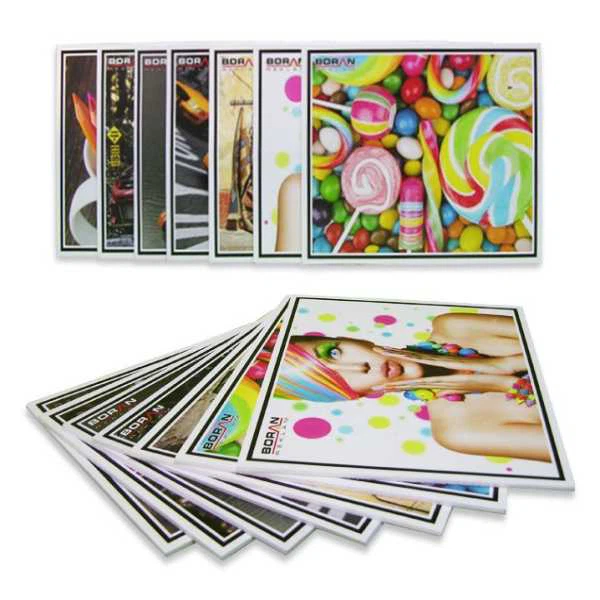
A custom PVC foam board used for UV printing, showing the smooth surface that follows a controlled extrusion run.
The same rung covers UV-stable pigments for outdoor work. Standard colours fade under sustained sunlight; a pigment system designed for exterior exposure costs more and endures. A buyer specifying a custom colour for an outdoor sign should tell the factory where the sign will live, not just which colour it should be. The digital advertising board guide covers print and outdoor performance in depth.
V. The Micro-Ingredients That Change the Job
Additives are the quiet customisations. A board that is flame-retardant, antibacterial, UV-stabilised, or anti-static carries an additive package loaded into the mix at extrusion, and every one of those packages changes how the board performs in a specific environment. They also change the test report, because a claim without a certificate is not a claim a buyer can use.
Flame-retardant board serves interior projects where building codes demand a tested fire performance. The additive changes the burn behaviour of the polymer; the test confirms it against the standard the jurisdiction requires. Antibacterial board goes into medical and food-contact environments, where the additive is selected for its resistibility and the certificate proves the surface culture test was passed. Anti-static board appears in electronics cleanrooms. UV-stabilised board is the default for anything installed outdoors, and it is the one additive most buyers should request as a matter of course for exterior work.
The distinction that matters at this rung is between a permanent formulation and a post-added coating. A lot of so-called antibacterial or fire-treatments on PVC are surface applications that wash off or wear away. A board whose additive is compounded into the material keeps that property through the thickness. When a buyer asks for a treated board, the follow-up question is precise: is the additive in the melt, or on the surface? The answer determines whether the property survives the first cleaning cycle. The extrusion variables guide explains how additives enter the process.
One caution at this rung: additives travel with the certificate, not with the brochure.
A buyer ordering flame-retardant board for a commercial interior needs the test report that matches the specific production run, issued by a recognised laboratory, against the specific standard the local code names. The request for that certificate should go into the purchase order. A factory that sells treated boards issues certificates as a matter of routine. A factory that hesitates is telling the buyer something.
VI. When the Board Needs a Surface It Was Not Born With
The skin of a PVC foam board is set on the line: a smooth, dense Celuka surface or a softer free-foam face. Everything beyond that baseline is a finishing operation, and this is where the ladder becomes interesting for brands, because the moat is a supplier who can run surfaces in-house rather than farming them out.
Sanding and matte finishing take the gloss off a Celuka face and turn it into a surface that takes paint or print with better key. Embossing presses a texture into the sheet for visual effect or slip resistance. Lamination bonds a film-white, coloured, metallised, or pre-printable-onto the face to give the board a look it could not achieve as raw polymer. Each of these operations leaves the core material unchanged and the minimum order in the small-to-medium band.
Then comes the brand. A protective PE film printed with the buyer's logo, applied over the surface, turns a commodity sheet into a private-label product without touching the board inside. Branded cartons and labels complete the effect. This rung is how distributors and chains buy stock board and sell it as their own line, and it costs far less than a custom formulation because nothing about the extrusion changes. The board is standard. The identity is custom.

Laminated PVC foam board sheets, a common custom surface finish for branded signage and display work.
The Celuka versus free-foam choice underneath all of this is the first decision a custom buyer should make, and the surface skin comparison covers it. A buyer who specs a laminate over the wrong base skin has paid for a finish but not solved the underlying surface problem.
VII. From Inquiry to Container: One Custom Order End to End
A custom order runs the same track as a standard one, with extra verification stops. The sequence below is the common path for a mid-ladder request: a custom thickness or colour with post-production processing on top.
1. Specification. The buyer sends dimensions, density, colour reference, additive requirements, surface finish, and packaging details. The more complete the spec, the tighter the quote.
2. Feasibility and quotation. The factory confirms which rungs are possible, states the minimum order for each, and prices the combination. This is where the ladder table above becomes a real number.
3. Pre-production sample. A test plaque or a short trial run produces a physical reference. For colour, this is the colour chip. For density and additive work, this is the sample that goes to the laboratory.
4. Approval. The buyer signs the sample. The signed sample becomes the contractual reference for every later comparison. Keep a sealed copy.
5. Production and in-process control. The line runs with the approved formulation, and the laboratory checks density, colour, and the specified properties during the run rather than after it.
6. Pre-shipment inspection. A third-party inspection compares the finished goods against the signed sample and the specification, not against the supplier's own description.
7. Packaging and documents. Protective film, branded cartons if requested, and the batch certificate that traces the production data. The full document package clears customs at the other end.
The two decisions that most determine whether the order succeeds happen early. The first is how precisely the specification is written before the deposit moves. The second is whether the signed sample is treated as a contract or as a souvenir. The general OEM guide linked at the top expands on this entire workflow across all product categories, from signed sample to container. For a specific custom PVC foam board inquiry with the rungs mapped to a real quotation, contact our sales team.
Frequently Asked Questions
Frequently Asked Questions About Custom PVC Foam Board OEM
Common questions from buyers planning a custom PVC foam board order, from cut-to-size to full formulation runs.
Q1: What is the minimum order for a custom colour?
A full production batch, because the masterbatch must be formulated, tested on a plaque, approved, and then run through the line. The batch minimum depends on the extrusion line and the colour, and it is usually measured in tonnes rather than sheets. A buyer who cannot meet that minimum has two options: ask whether an existing custom colour comes close enough, or buy a standard colour and achieve the brand match through lamination or printed film, which stays on the low end of the ladder.
Q2: Can I combine several customisation rungs in one order?
Yes, and combining rungs is common: a custom density in a standard white, cut to size and packaged under a private label is a routine multi-rung order. The rule of thumb is that the highest rung sets the minimum order and the lead time. A full custom formulation with cut-to-size on top is still a full custom formulation first. The quotation should list each rung separately so the buyer sees which part of the price belongs to which change.
Q3: How long does a custom OEM order take?
The ladder table is the honest answer: processing-only custom work adds days, while any formulation change adds the sample-and-approval loop plus a production run, typically three to six weeks before shipping. The loop is what stretches: a colour correction that takes two rounds of approval costs two extra weeks all on its own. The fastest custom orders are the ones where the buyer's first specification and first sample sign-off are both correct, because every correction adds a fresh loop.
Q4: Will a custom colour fade differently outdoors than a standard one?
Fade resistance is set by the pigment system, not by whether the colour is custom. A custom colour matched with interior-grade pigments will fade outdoors. The same colour matched with UV-stable pigments will hold. This is a separate decision from the colour itself, and it is the reason the buyer should state the end environment at the specification stage. An outdoor custom colour costs more because the pigment package costs more, and asking for outdoor-rated colour after the interior quote has been issued means re-quoting the whole rung.
Q5: How is a custom density verified in the finished sheets?
Each production run is verified in the factory's laboratory: a sample is weighed, measured, and the density computed and recorded against the batch number. The buyer should receive that batch record with the shipment, and the density band should already be written into the contract. The honest number on a custom density is a range, not a single point, and the buyer who specifies the acceptable range before production has a verifiable standard. The buyer who asks for the density after delivery can only compare the sheets against a number that was never written down.
Q6: Can my logo go on the protective film, the carton, or both?
Both, at different costs. Logo-printed protective film turns each individual sheet into a branded product and suits distributors who sell sheet by sheet. Branded cartons and shipping labels brand the packaging for bulk buyers. Film printing carries a setup charge that amortises across the volume, which is why small runs of printed film look expensive per sheet. The practical advice is to start with branded cartons for the first order and add printed film when the volume justifies spreading the setup cost.
Map Your Custom Board to a Real Quotation
Tell us the density, colour, surface, and packaging you need. We will quote each rung separately so you see exactly where the cost and the time sit.
Request a Custom OEM QuoteYUPSENI Team
23 years in PVC building material manufacturing and supply chain. We run custom foam board orders from cut-to-size to full formulation, with batch records and laboratory verification on every production run. More about YUPSENI
© 2026 YUPSENI. All rights reserved. The information in this article is for general informational purposes only and does not constitute professional advice. Minimum order quantities, lead times, and customisation feasibility vary by production line and specification. Always request a current quotation and datasheet before making procurement decisions.