Wholesale PVC Foam Board Crafts — Sourcing Guide for Importers | YUPSENI
Sep 04, 2026
Wholesale PVC Foam Board Crafts: The Sourcing Guide That Separates Clean Cuts From Rework
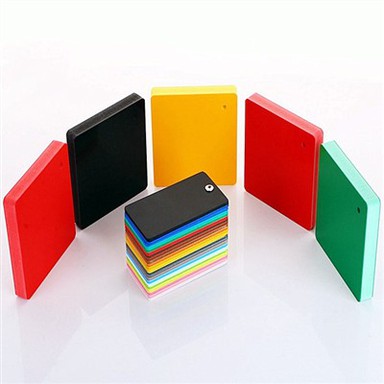
A smooth expanded PVC foam board sheet - the same substrate craft brands buy by the pallet.
On This Page
- I. Why Craft Makers Insist on a Board Nobody Calls a "Board"
- II. Density Grades That Change Everything at the Cutting Table
- III. The Skin and the Ink: Why a Reprint Costs More Than a New Sheet
- IV. Color, Film, and Humidity - Hidden Variables Inside Every Wholesale Carton
- V. What a Craft Importer Must Verify Before the First Container
- VI. A Simple Way to Test a Supplier (Without Relying on Their Word)
- FAQ: Sourcing Wholesale PVC Foam Board for Crafts
Ask a craft brand owner what they fear most about a wholesale PVC foam board order, and most will not say price. They will say the word rework. A sheet that cuts rough, prints muddy, or delaminates at the edges is not a bargain - it is a second production run you never planned for.
The market treats these boards as interchangeable. The factory does not. This guide walks the differences that decide whether your craft products come out clean on the first pass, and which parameters deserve your attention before you wire a deposit.
I. Why Craft Makers Insist on a Board Nobody Calls a "Board"
Hand it to a sign maker and they call it substrate. Hand it to a model builder and they call it foam sheet. Neither name is wrong, but both conceal the reason craftsmen prefer it over MDF or acrylic: the density is uniform in every direction.
That uniformity matters when you route a logo or glue a hinge. Wood has grain. Acrylic has stress lines. A good PVC foam board has neither, so the tool path you program is the result you get. The catch is that uniformity is a manufacturing output, not a guarantee.

Consistent cell structure is why a UV-printed foam board keeps detail that paper never could.
A single sample tells you almost nothing. Density can vary across a batch, across a pallet, even across a single sheet's width. The shop that checks only the corners of one panel is the shop that discovers the problem in the middle of the second container.
II. Density Grades That Change Everything at the Cutting Table
Density is the single number most buyers skip. For crafts it is the one that should not be skipped.
A low-density sheet (around 0.45 g/cm³) is light and easy to cut, but its soft core crumbles along routed edges and holds screws poorly. A mid-density board (0.55–0.65) is the workhorse for signs and display crafts. High-density sheet (0.70+ from a Celuka process) gives a hard, closed skin that takes fine detail and a clean routed edge - at a higher price per sheet.
| Density | Cut Edge | Screw Hold | Best for |
|---|---|---|---|
| ~0.45 g/cm³ | Soft, slight fuzz | Weak | Displays, lightweight models |
| ~0.55–0.65 g/cm³ | Clean with sharp tool | Good | Signs, craft kits, packaging |
| ~0.70+ g/cm³ | Hard, crisp | Strong | Premium crafts, mechanical parts |
One mistake repeats across the industry: ordering a single density for every product. The board that shines for a wall-cutout letter is the same board that crumbles for a small hinge block. Match the grade to the task, not to the cheapest allowance.
Densities are comparative; always confirm the factory's measured value on the actual sheet you receive.

A laminated film surface is what lets a soft-core board still deliver a crisp print.
III. The Skin and the Ink: Why a Reprint Costs More Than a New Sheet
Two manufacturing routes produce boards that look identical but behave differently. Free-foam creates an open cell structure throughout. Celuka presses the outer layer into a dense skin while leaving the core foamed. That skin is what your printer touches.
A free-foam board absorbs ink unevenly and fuzzes at cut edges. A Celuka board's skin holds sharp line work, takes UV ink without bleeding, and gives a routed edge that needs almost no sanding. For crafts that get printed and sold, the difference between a crisp logo and a smeared one is often the process, not the printer.
If rework is the fear, this is where it lives. The printer can tune ink for days; it cannot fix a substrate with no skin.
Quick check: run a fingernail across the sheet edge and the face. If the face feels hard and the edge slightly denser, you are likely looking at a Celuka skin. If everything feels equally soft, it is free-foam.

A denser surface skin is what keeps ink from soaking in - and keeps your logo sharp.
The deeper comparison between Celuka and free-foam deserves its own read; we break down the surface skin difference separately. For a planner, remember this: if your project is print-heavy or routed to a fine edge, pay for the skin.
IV. Color, Film, and Humidity - Hidden Variables Inside Every Wholesale Carton
Most wholesale boards ship white. White is not one color. It is a range, and the range moves with the batch of titanium dioxide and the temperature of the extruder.
When a craft brand prints a full-colour decal, a slightly yellow sheet shows through as a warm cast. When the second container arrives with a cooler white, the same decal looks different and the customer notices. Consistent whiteness is a factory discipline - and it is the first thing abandoned when a mill is chasing output.
Humidity is quieter than color but more destructive. PVC is hygroscopic; a board stored in a damp warehouse swells slightly and can bow in the container. A bowed sheet wrecks a routing job and a lamination step. Moisture content at the factory gate is worth asking about, even though no one asks.

Even a "cabinet-grade" sheet is only as stable as the moisture it was stored in.
V. What a Craft Importer Must Verify Before the First Container
Here is the checklist that survives contact with a real order. It is not exhaustive, but it catches the failures that generically cost the most.
First, the physical form. Confirm exact sheet size, thickness tolerance, and squareness. Crafts are unforgiving - a sheet that is 5 mm out of square produces ten wasted cut pieces and one angry customer.
Second, the surface. Ask which side is the print face and whether the film is laminated or direct-printed. For crafts that get UV-printed, this decision changes the whole workflow.
Third, the packaging. Boards interleaved without separating paper scratch each other. Wrapped pallet corners save you from the dented-sheet claim you will fight about later.
Fourth, and least discussed: the batch record. A serious factory can tell you the date, shift, and line for a given pallet. That traceability is your lever if a defect escapes.
VI. A Simple Way to Test a Supplier (Without Relying on Their Word)
Ask for a sample - then test the sample like you would test a full order. Cut it, route it, print on it, and glue to it. Do not just look at it.
The sample test that separates a real mill from a trader is consistency. Cut a single sheet into four strips and measure each: thickness, density, and width. A genuine manufacturer holds these within a narrow band. A trader resells whatever the mill shipped last week, and the numbers wander.
A visible sign the supplier is a factory: they can name the density value on the sheet's own label and explain how it was measured.
Then verify the production reality. A sheet's extrusion variables - line speed, temperature, blowing agent - decide whether it prints clean or delaminates, and you can probe these without asking for a tour.
Finally, the honest comparison. A board is a tool; the right one depends on the job. Our substrate comparison shows how PVC foam board sits against acrylic and ACM for craft use.
Source a Board You Can Trust on the First Pass
Get density-matched sheets, batch-traceable production, and export-ready packaging from a 23-line factory.
Contact YUPSENI Browse Board GradesFrequently Asked Questions About Wholesale PVC Foam Board for Crafts
Quick answers to the questions craft importers ask most.
Q1: What density should I choose for printed craft signs?
A: For UV or screen printing, a mid-density board with a Celuka skin gives the cleanest result. It holds sharp line work and resists ink creep. If the project is large and light, a lower density with a laminated film can save cost while keeping the print face crisp.
Q2: How can I tell if a board will delaminate at the edges?
A: Delamination usually starts at the cut edge. Test by routing a small sample and inspecting the cut face for any separation between the skin and core. Consistency of that edge across several samples is a far better predictor than a single pristine panel.
Q3: What is a realistic minimum order quantity for wholesale craft board?
A: It depends on the grade and your market. Standard sheet sizes and common densities ship more freely; custom thickness, color, or film usually raises the MOQ. Always confirm the MOQ and per-sheet price together, because a lower MOQ can hide a bad per-sheet rate.
Q4: Why do two identical-looking sheets cost different prices?
A: The price difference usually hides density, thickness tolerance, and surface process. A denser sheet with a closed skin is more expensive to produce but wastes less material on rework. Compare the finished cost per good part, not the per-sheet sticker.
Q5: Do I need to worry about humidity for export shipping?
A: Yes. PVC absorbs moisture over a long sea route. Specify dry, well-wrapped pallets and, where possible, a supplier that tracks and reports moisture content. This prevents bowing and swelling that turn a clean order into rework once it lands.
VII. Where to Start
The market sells boards by the tonne. Crafts sell by the finished piece. That gap is where sourcing mistakes live.
Start with the questions that matter to your specific product - density, surface, tolerance, moisture - and let the answers drive the purchase. If the factory dodges the moisture question or refuses a density value, treat that as the loudest warning you will get before the container.
When you are ready to match a grade to a project, our four-key indicator guide walks the same decision from the material side, and we are happy to help you spec an order that passes inspection the first time.
YUPSENI Team
23 years in PVC building material manufacturing and supply chain. We help importers, distributors, and project buyers source SPC flooring, PVC foam boards, wall panels, and fencing that pass compliance the first time. More about YUPSENI
© 2026 YUPSENI. All rights reserved. The information in this article is for general informational purposes only and does not constitute professional advice. Product specifications may vary by region and production batch. Always request current datasheets before making procurement decisions.