Balcony Privacy Screens: What Actually Survives Wind, Sun & Rain | YUPSENI
Oct 02, 2023
Balcony Privacy Screens: The Material Survival Test Nobody Runs Until Winter
Read time: 5 minutes | By: YUPSENI Team
On This Page
- I. A Balcony Is Not a Backyard
- II. Fabric and Bamboo: Beautiful for Six Months
- III. Glass and Metal: The View Keeper, the Heat Trap
- IV. PVC Lattice and Solid Panels: The Material That Takes the Wind
A balcony is the worst possible place to install the wrong privacy screen. It is elevated, so wind hits it harder than at ground level. It is small, so the screen you choose dominates the entire visual footprint. And it is often the only outdoor space you have, so looking at a screen that has faded, cracked, or started to rot is not something you can ignore from another part of the yard. The balcony screen is right there, every time you open the door.
This guide ranks the common balcony privacy materials by what actually survives on a seventh-floor balcony facing west, not by what looks good in the product photo.
I. A Balcony Is Not a Backyard
Three forces work against a balcony privacy screen that barely register at ground level. Wind speed increases with height: the same breeze that rustles a hedge at lawn level is a steady lateral load ten floors up. The screen is also more exposed to UV because there are no trees or neighbouring buildings casting afternoon shade. And the mounting surface is usually a metal railing or a concrete parapet, not soil you can dig a post into. A screen that works in a garden can fail on a balcony within a single season because the attachment method was designed for a fence post, not a balcony rail.
The practical consequence: choose the material first based on wind tolerance and UV resistance, then decide on the style. Reversing that order is how most balcony screens fail.
II. Fabric and Bamboo: Beautiful for Six Months
Fabric privacy screens, outdoor curtains, and bamboo roll-ups are the most popular balcony solutions for one reason: they are cheap and they go up in ten minutes. They also share the same failure timeline. Fabric screens, even the ones labelled weather-resistant, lose their colour after one summer of direct sun and begin to fray at the grommets where they attach to the railing. Wind catches fabric like a sail, and the tie-downs that held at installation loosen with every gust cycle. Bamboo fares slightly better structurally but absorbs moisture from rain and morning dew, and on a balcony with no roof overhang, that moisture never fully dries. Within a year the bamboo darkens, and within two it begins to split.
The verdict: fabric and bamboo are seasonal solutions for balconies that get partial shade and light wind. On a fully exposed balcony, budget for replacement every 12 to 18 months.
III. Glass and Metal: The View Keeper, the Heat Trap
Glass panels and metal laser-cut screens address the durability problem that fabric and bamboo cannot solve. They do not fade, fray, or rot, and a properly mounted glass railing panel will last as long as the building. The catch is weight, wind, and heat. A tempered glass panel heavy enough to act as a balcony privacy screen needs a railing or parapet engineered to carry it; many apartment balcony railings are not. A solid metal screen on a west-facing balcony absorbs solar radiation all afternoon and radiates it back into a space that is already small and hot. And neither material does anything for privacy at night with the lights on inside unless the glass is frosted or the metal has very fine perforations.
The verdict: glass and metal are permanent, premium solutions for balconies where maintaining the view is the priority and the structure can handle the weight. For most residential balconies, the structural requirement alone removes them from the shortlist.
IV. PVC Lattice and Solid Panels: The Material That Takes the Wind
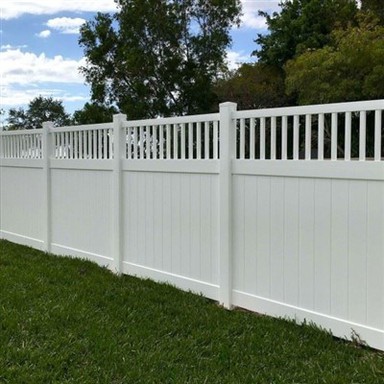
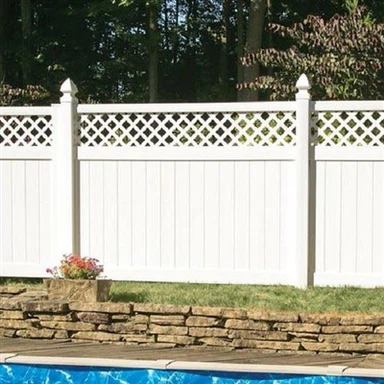
PVC privacy panels sit at the intersection the other materials miss: rigid enough to hold their shape in wind, light enough for a standard balcony railing to support, and UV-stabilised so the white stays white through multiple summers. A PVC lattice panel offers partial privacy with airflow, which matters on a balcony where trapping heat turns the space unusable. A solid vinyl privacy panel blocks sight lines completely and doubles as a windbreak, which on a high floor can be the difference between using the balcony in spring and avoiding it entirely.
One overlooked factor: a PVC panel can be cut to the exact width of the balcony opening with standard tools and mounted with stainless steel brackets to the existing railing or wall. No custom fabrication, no welding, no specialist installer. For the tenant or owner who wants a permanent screen that does not require a building permit or a structural engineer, that simplicity is the deciding factor. For the full range of configurations, our PVC fence selection guide covers panel styles, post spacing, and wind load considerations that apply equally to balcony installations.
Frequently Asked Questions
Frequently Asked Questions About Balcony Privacy Screens
Common questions from apartment residents and homeowners about choosing and installing balcony privacy screens.
Q1: Can I attach a privacy screen to my balcony railing without drilling?
A: Fabric and bamboo screens can be tied or strapped to railings without drilling, making them the most renter-friendly option. For rigid PVC or metal panels, stainless steel U-brackets can clamp to most standard railings without penetrating the metal, though this depends on railing shape and thickness. Always check your lease or building regulations before any attachment.
Q2: How much wind can a PVC privacy panel handle on a high floor?
A: A properly mounted PVC lattice or solid panel with secure bracket attachment handles typical balcony wind loads without issue. The key is that wind passes through lattice panels, reducing the sail effect. A solid panel needs firm mounting at both top and bottom edges to prevent flutter. For balconies above 10 floors, consult the panel's wind load rating and use a post-and-bracket system rather than cable ties.
Q3: Does a white PVC panel get dirty quickly on a balcony?
A: PVC panels develop a light surface dust layer like any outdoor surface, but the smooth, non-porous finish means dirt does not penetrate or stain. A wipe with a damp cloth or a rinse with a hose restores the surface in minutes. Unlike fabric or bamboo, there is no staining from trapped moisture and no fading that reveals the pattern beneath.
PVC Privacy Panels That Stay on the Balcony, Not in the Landfill
Solid and lattice panels in standard and custom sizes. UV-stabilised white finish, no painting, no replacing every spring. Free samples.
Browse PVC FencingYUPSENI Team
23 years in PVC building material manufacturing and supply chain. More about YUPSENI
© 2026 YUPSENI. All rights reserved. Originally published October 2023; updated July 2026. The information in this article is for general informational purposes only. Always check local building regulations and lease terms before installing any balcony attachment.