

PVC Paver Mould: Wall Thickness, Release & Cycle Life Explained
Jul 03, 2026
~7 min read · July 3, 2026 · By YUPSENI Team
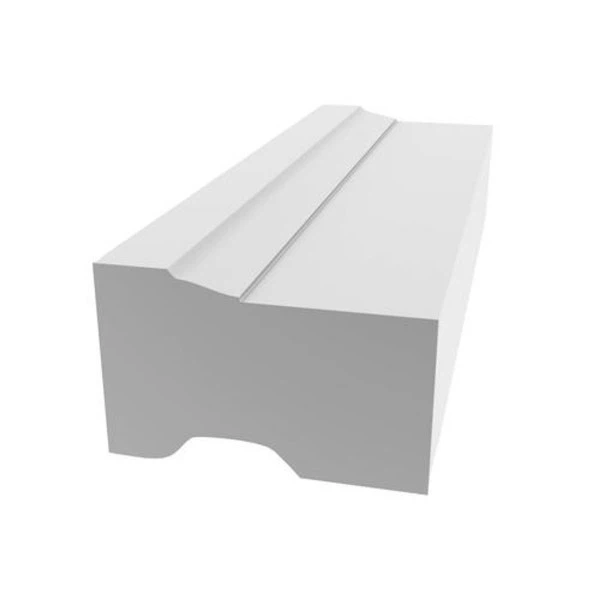
A PVC paver mould positioned for a concrete pour. What is visible is the cavity - the negative space that defines the paver's shape. What is invisible, and what determines whether this mould produces 50 identical pavers or 500, is the wall thickness behind the cavity face, the draft angle machined into every sidewall, and the release chemistry between the PVC surface and the curing concrete.
A concrete paver weighs between two and twenty kilograms. It is heavy, abrasive, and chemically aggressive during the first hours of curing when calcium hydroxide pushes the pH of the mix water above twelve. The mould that shapes this material is a few hundred grams of rigid PVC. It is asked to survive this encounter - the pour, the vibration, the curing heat, the demolding pull - hundreds or thousands of times before it finally cracks, tears, or loses enough dimensional accuracy to produce pavers that no longer interlock. That asymmetry - a few hundred grams of plastic controlling several tons of cumulative concrete output over its service life - is the central engineering challenge behind every PVC paver mould.
The best mould is not the one with the most elaborate cavity geometry or the most aggressive surface texture. It is the one that releases the cured paver with the least effort, the least damage to the mould, and the least dimensional variation from the first casting to the last. YUPSENI PVC paver moulds are vacuum-formed or injection-moulded from rigid PVC sheet or compound formulated for alkaline resistance and repeated flexural cycles. This article covers what determines mould life, how wall thickness and draft angle interact with concrete adhesion, and why two moulds made from the same PVC compound can have vastly different field performance.
On This Page
- I. PVC vs Polypropylene vs Rubber: Why the Mould Material Decides Who Wins the War Against Alkaline Concrete
- II. Wall Thickness Is Not a Spec. It Is a Casting-Cycle Counter.
- III. Draft Angle and the Physics of Why Concrete Sticks to PVC
- IV. Abrasion, Tear Propagation, and the Invisible Clock Inside Every Mould
- V. Cavity Geometry: When a Flat Paver Becomes a Branded Surface
I. PVC vs Polypropylene vs Rubber: Why the Mould Material Decides Who Wins the War Against Alkaline Concrete
Three materials dominate the paver mould market: rigid PVC, polypropylene, and polyurethane rubber. Each has a different relationship with wet concrete, and the choice determines everything about the casting workflow. Rigid PVC - the material behind YUPSENI paver moulds - occupies a specific middle ground. It is stiffer than rubber, so the mould holds its shape under the weight and vibration of a concrete pour without bulging or distorting the paver edges. It is more flexible than polypropylene in thin sections, so it bends enough during demolding to release the cured paver without cracking. And critically, its surface chemistry resists adhesion to curing concrete better than either polypropylene or rubber without requiring a release agent on every pour - though the best practice for maximum mould life is a thin release film applied every few cycles anyway.
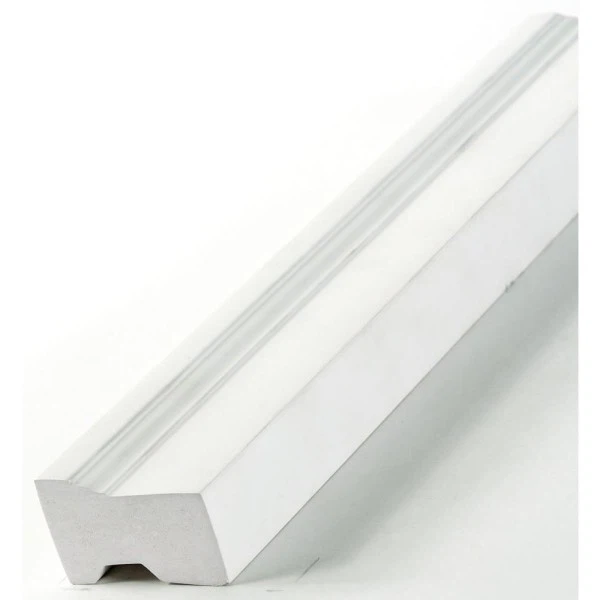
Detail of a PVC paver mould cavity. The inner surface finish - the micro-texture left by the forming process - is the interface where concrete meets plastic. A surface that is too smooth produces a glossy paver face but increases the risk of suction-lock during demolding. A surface with controlled micro-texture releases more easily but leaves a slightly matte finish on the paver surface. The balance is deliberate and varies by manufacturer.
| Property | Rigid PVC | Polypropylene | Polyurethane Rubber |
|---|---|---|---|
| Alkaline resistance | Excellent | Good | Moderate |
| Dimensional stability under pour weight | High | High | Low |
| Demolding flex | Controlled | Stiff - may need mechanical release | Excellent |
| Typical cycle life | 100 - 500+ cycles | 200 - 1000+ cycles | 50 - 200 cycles |
| Release agent required | Optional (extends life) | Recommended | Essential every pour |
II. Wall Thickness Is Not a Spec. It Is a Casting-Cycle Counter.
A PVC paver mould flexes every time it is demolded - the operator pulls or bends the mould to release the cured paver, and the mould walls deform and spring back. This is not damage. It is the intended mechanism. But repeated flex cycles concentrate stress at the corners of the cavity, where the material transitions from the flat base plane into the vertical sidewall. Every flex cycle creates microscopic stress concentrations at those corners. Over hundreds of cycles, those stress concentrations become micro-cracks. Over hundreds more, a micro-crack becomes a tear.
Wall thickness directly controls how many flex cycles the material can absorb before fatigue failure. A PVC mould with a wall thickness of 1.5 mm in the cavity sidewalls will develop corner tears significantly sooner than a mould with 2.5 mm walls - not because the material is different, but because thinner material experiences higher strain for the same degree of bending, and strain drives fatigue. The relationship is non-linear. Increasing wall thickness from 1.5 mm to 2.0 mm does not simply add 33 percent more life. It can double or triple the fatigue-limited cycle count, because the reduction in strain per cycle moves the material from a high-fatigue regime into a low-fatigue regime where micro-crack initiation is orders of magnitude slower.
This is the single most important question to ask a PVC paver mould supplier: "What is the cavity wall thickness, and how many cycles has this exact mould geometry been tested to in accelerated fatigue?" An answer measured in millimeters and validated by test data separates a production-grade mould from a sample-grade mould. Manufacturer vetting: how to verify factory capability before placing an order applies the same due-diligence framework to mould production as it does to PVC sheet and profile sourcing.
III. Draft Angle and the Physics of Why Concrete Sticks to PVC
A paver mould cavity has vertical or near-vertical sidewalls. Wet concrete fills the cavity, conforms to the sidewalls, and cures. As it cures, it shrinks. Portland cement concrete shrinks approximately 0.04 to 0.08 percent during initial set - a tiny number in absolute terms, but enough to create a mechanical lock against a perfectly vertical sidewall. The cured paver grips the mould because the concrete has microscopically expanded into every surface irregularity of the PVC and then shrunk onto those same irregularities like a wedge driven into a crack.
The engineering solution is the draft angle - a slight inward taper of the cavity sidewalls, typically 1 to 3 degrees from vertical, so that the cavity opening at the top of the mould is slightly wider than the cavity floor at the bottom. When the cured paver is lifted out of the mould, the draft angle immediately creates clearance between the paver side face and the mould wall. Without a draft angle, the paver must be pulled out against friction over the entire sidewall area, which requires more force, stresses the mould corners more intensely, and increases the probability of paver edge spalling or mould tearing. A mould with a properly designed draft angle releases the paver with a fraction of the force - and that reduction in demolding force translates directly into additional casting cycles before the mould fatigues. PVC moulding profiles for paver production are engineered with draft angles specific to the paver depth and concrete mix design.
IV. Abrasion, Tear Propagation, and the Invisible Clock Inside Every Mould
A PVC paver mould does not fail in a single event. It fails through an accumulation of damage mechanisms that operate at different speeds. The fastest is abrasive wear - the concrete mix, particularly if it contains angular coarse aggregate or colored oxide pigments, acts as a mild abrasive against the mould surface during pouring, vibration, and demolding. Over time, the mould surface loses its original smoothness, and the pavers begin to show a progressively rougher face texture. This is cosmetic wear, not structural failure. The mould is still producing pavers, but the pavers no longer have the same surface quality as the first hundred castings. For a landscaping or architectural paver where surface appearance is the primary specification, cosmetic wear defines the mould's useful life. For a utility paver where dimensional accuracy matters more than surface finish, structural integrity defines the life.
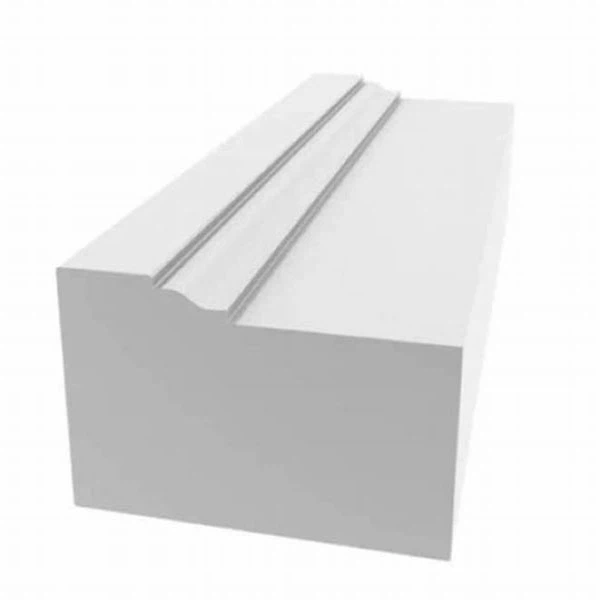
A cured concrete paver being released from a PVC mould. The clean edge definition and consistent surface finish across the paver face are the visible output of a mould that is still within its service life. The mould itself - the PVC form - is the invisible variable. Every paver that comes out looking like this was shaped by a mould whose wall thickness, draft angle, and surface chemistry were specified correctly.
The slower damage mechanism is tear propagation. A corner crack that forms at cycle 200 may not produce a visibly defective paver until cycle 350, when the crack has grown long enough to create a burr on the paver edge or a visible groove on the paver face. Between cycle 200 and cycle 350, the mould is producing pavers with sub-surface edge flaws that may not be detected by visual inspection but will manifest as chipping during transport and installation. This is the most dangerous period in a mould's lifecycle - it has passed the point of structural integrity but has not yet failed obviously enough to be removed from service. For critical applications where pavers must interlock with precise edge geometry, mould retirement should be based on cycle count rather than visible damage. A mould that has exceeded its rated cycle life should be downgraded to non-critical production or retired, even if it appears intact.
V. Cavity Geometry: When a Flat Paver Becomes a Branded Surface
The PVC paver mould is a negative space. The paver is the positive. Anything machined or formed into the mould cavity - a logo, a text inscription, a decorative texture, an interlocking geometry - becomes a permanent feature of every paver cast from that mould. This is the mould's hidden power: it is a reusable branding tool that costs once and prints every time. For a landscaping contractor producing their own pavers, a mould with the company logo recessed into the cavity floor produces branded pavers indistinguishable from unbranded pavers in every respect except the one that matters for future business - every installed paver is an advertisement.
The limitation is that cavity geometry complexity must be compatible with demolding. A logo or text that is recessed into the mould surface - producing a raised feature on the paver - is straightforward because the raised feature lifts out of the recess without resistance. A logo that is raised in the mould - producing a recessed feature on the paver - requires the paver material to release cleanly from around the raised feature, which is harder and may trap air bubbles or concrete residue in the corners of the raised element. For recessed-text branding, the depth of the recess should be no more than the draft angle allows for clean release, typically 1 to 2 mm for sharp-cornered characters and up to 3 mm for rounded features. Discuss your branding requirements at the mould design stage, not after the mould is tooled. Contact YUPSENI for custom cavity geometry and branding options.
Questions Paver Producers Ask Before Ordering Moulds
Frequently Asked Questions About PVC Paver Moulds
The questions concrete product manufacturers, landscaping contractors, and paver producers ask when evaluating PVC moulds for their production line.
Q1: How many castings can I expect from a PVC paver mould?
A: A quality PVC paver mould with a wall thickness of 2.0 mm or greater, cast with a standard concrete mix and demolded with reasonable care and periodic release agent application, should produce between 100 and 500 castings before cosmetic or structural degradation becomes noticeable. The wide range is because mould life depends on four interacting variables: wall thickness, concrete mix abrasiveness, demolding technique, and release agent frequency. A thin-walled mould with a coarse-aggregate mix and no release agent may fail at 50 cycles. A thick-walled mould with a fine-aggregate mix and a release agent applied every 5 to 10 cycles may exceed 500. The manufacturer should provide a cycle-life estimate based on your specific mix design and casting conditions. If the supplier cannot produce a number, assume the mould has not been tested for cycle life.
Q2: Do I need to use a release agent with PVC moulds?
A: PVC has naturally lower surface adhesion to cured concrete than polypropylene or metal. You can cast without a release agent, and the pavers will release - for a while. Without a release agent, micro-residues of cement paste accumulate on the mould surface with each casting. These residues progressively roughen the surface, increase demolding force, and accelerate abrasive wear. A thin film of mould release oil or water-based release agent applied every 5 to 10 cycles flushes these residues and maintains the original surface quality. The cost of the release agent per cycle is negligible. The cost of reduced mould life is not. Use release agent - not because PVC requires it chemically, but because the economics of cycle life demand it.
Q3: What paver shapes and sizes can PVC moulds produce?
A: PVC paver moulds can produce practically any shape that can be demolded from a cavity - square, rectangular, hexagonal, interlocking, and freeform organic shapes. The practical limits are set by the paver depth relative to the mould depth, the draft angle required for release, and the minimum radius at internal corners where stress concentrations are highest. Standard stocked moulds from YUPSENI cover the most common paver geometries for landscaping and construction applications. Custom moulds with specific dimensions, edge profiles, interlocking geometries, logos, and surface textures are produced to order. Contact YUPSENI with your paver design drawing for a custom mould consultation.
Q4: How are PVC moulds cleaned and stored between production runs?
A: After the final casting of a production run, clean the mould with water and a soft brush to remove cement residue before it fully hardens. Avoid metal scrapers, wire brushes, or abrasive pads - they score the PVC surface and create starting points for future tear propagation. For stubborn residue, soak the mould in a mild acid solution such as diluted vinegar or a commercial concrete dissolver formulated for plastic moulds, then rinse thoroughly. Store moulds flat, stacked with a sheet of cardboard or foam between each mould to prevent the weight of the stack from permanently deforming the bottom moulds. Store out of direct sunlight - PVC degrades under prolonged UV exposure, and a mould that spends six months in an outdoor storage yard between production runs will lose flexibility and crack resistance. Indoor storage, even in an unheated shed, preserves the PVC compound's mechanical properties indefinitely.
Q5: Can PVC moulds handle colored concrete and oxide pigments?
A: Yes. PVC is resistant to the iron oxide, chromium oxide, and carbon black pigments commonly used in decorative concrete. These pigments are inert particulates dispersed in the cement matrix - they do not chemically attack PVC. The practical concern with colored concrete is staining. Oxide pigments can leave a color residue on the mould surface that transfers to the next batch if the mould is not cleaned between mix color changes. If you run multiple colors through the same set of moulds, clean the moulds thoroughly between colors. For production lines that alternate colors frequently, it is more efficient to dedicate specific moulds to specific color families - one set for grays, one set for reds and browns - than to clean and risk cross-contamination between every batch.
Q6: What is the typical lead time for custom PVC paver moulds?
A: Custom PVC paver mould lead times depend on the complexity of the cavity geometry and whether a new forming tool is required. For moulds based on an existing cavity design with modifications to dimensions, logo, or surface texture, lead times are typically 2 to 4 weeks plus shipping. For moulds requiring a completely new forming tool, lead times extend to 4 to 8 weeks. Volume orders and repeat orders benefit from shorter turnaround because the tooling already exists. Always include lead time in your production planning - the cost of a mould is small relative to the cost of idle production capacity waiting for moulds to arrive. Request current lead times from YUPSENI based on your specific mould design.
The Paver You Sell Started in a Mould You Chose. Choose One That Outlasts Your Inventory.
YUPSENI PVC paver moulds: rigid PVC, 2.0 mm+ cavity wall thickness, engineered draft angles, custom cavity geometry including logos and surface textures. For concrete paver production in landscaping, construction, and architectural applications. Standard stocked shapes plus custom tooling. Manufactured in Shandong, China.
The Mould Is Not the Product. The Paver Is the Product. But the Mould Decides the Paver.
A PVC paver mould is one of the few industrial tools whose cost is measured in dollars and whose output is measured in tons. A single mould costing a few dollars produces pavers worth hundreds of dollars over its lifetime. The economics are so obviously favorable that the mould itself tends to be treated as a commodity - interchangeable, disposable, not worth engineering attention. This is a mistake. The mould wall thickness, the draft angle, the surface finish, and the release chemistry are the four variables that control whether the economics actually deliver what the arithmetic promises. A thin-walled mould without draft angle produces 50 pavers and tears. A properly specified mould produces 500 and retires gracefully.
Three things to verify with your mould supplier: cavity wall thickness and the cycle-life test data behind it; draft angle on every vertical surface, especially around logos and text embossing; and the recommended release agent and application frequency for your specific concrete mix. A supplier who answers all three sells a production tool. A supplier who answers "PVC is durable" sells a sample. The difference in price between those two moulds is small. The difference in output over the mould's lifetime is measured in pallets of pavers that did or did not get made.
YUPSENI Team
23 years in PVC building material manufacturing and supply chain. PVC moulding profiles, paver moulds, trim boards, fencing, railing, foam boards, SPC flooring, wall panels, and ceiling panels - extruded, fabricated, and shipped from Shandong, China. Helping paver producers, landscaping contractors, and construction material distributors across 60+ countries source PVC moulding products that perform. More about YUPSENI
Disclaimer: The information in this article is for general informational purposes only and does not constitute professional engineering, manufacturing, or concrete production advice. Mould performance, cycle life, and compatibility with specific concrete mix designs vary by material composition, casting conditions, demolding technique, release agent usage, and environmental factors. Always consult the manufacturer's current technical data sheets, request cycle-life test data for your specific mix design, and follow all safety protocols including proper ventilation when working with concrete and release agents. Product specifications are subject to change; request current datasheets before procurement.


