EN 13501 vs ASTM E84: Why 'Class A' and 'B-s1,d0' Are Not the Same Fire Rating | YUPSENI
Oct 13, 2026
Ceiling and wall panels are where fire classification is checked most often - and where the wrong certificate gets a project rejected.
On This Page
- I. Two Standards, Two Different Questions
- II. How EN 13501 Actually Grades a Product
- III. What ASTM E84 Measures in the Tunnel
- IV. Why "Class A" and "B-s1,d0" Are Not the Same Thing
- V. The Third System That Importers Keep Forgetting
- VI. Reading a Fire Certificate Without Getting Fooled
- FAQ: Common Fire Rating Questions
One quotation says Class A. Another says B1. A third says B-s1,d0. All three are trying to prove fire performance, and none of the three letters means quite what a buyer assumes. This is the quiet trap at the centre of a lot of failed tenders.
The problem is not dishonesty. It is that the world runs three separate fire classification systems, and each one asks a different question. Comparing their answers requires translation, not a lookup table.
I. Two Standards, Two Different Questions
EN 13501 asks how a product behaves when it is exposed to fire in a realistic corner arrangement, with heat building from below and the surface receiving radiant exposure. ASTM E84 asks how quickly flame travels along the exposed face of a specimen inside a tunnel. Those are not the same experiment, and they do not reward the same behaviour.
A material that resists a corner fire is not automatically the material that keeps flame from racing down a tunnel ceiling, and the reverse is equally true. The letter or number on the certificate belongs to the test that produced it.
II. How EN 13501 Actually Grades a Product
The European system uses a main class running from A1 down to F. A1 and A2 describe products that are effectively non-combustible. From B through E the material is increasingly able to contribute to a fire, and F simply means no performance has been determined. The scale is not a quality ranking; it is a measure of contribution.
Two suffixes carry extra weight. The smoke suffix runs from s1, the least smoke, to s3. The droplet suffix runs from d0, meaning no flaming droplets, to d2. A classification such as B-s1,d0 therefore reads as a whole sentence: moderate contribution to fire, minimal smoke, no falling flaming particles.
Flooring uses its own parallel scale, written with an fl subscript, so a floor product is graded A1fl through Ffl. Mixing the flooring scale with the wall scale is a common paperwork error.
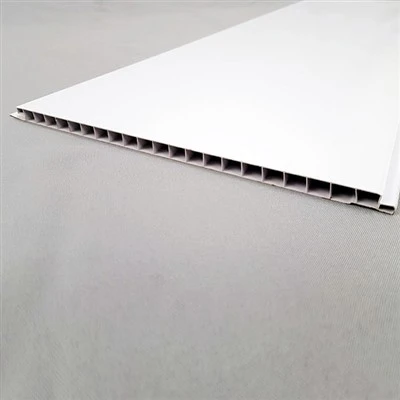
A full EN 13501 classification states a main class plus smoke and droplet performance.
III. What ASTM E84 Measures in the Tunnel
The American method is the tunnel test. A long horizontal specimen is mounted facing down, and a controlled flame is applied at one end while observers track how far and how fast the flame front travels. The test reports two indices rather than a letter.
The Flame Spread Index runs on a comparative scale where an inorganic cement board is set near zero and red oak is set at one hundred. The Smoke Developed Index tracks the optical density of the smoke produced over the same run. Both are indices, not physical units.
Those indices are then grouped into classes used by building codes. Class A caps the flame spread index at twenty-five. Class B extends to seventy-five, and Class C to two hundred. In each case the smoke index is reported separately, and a code may set its own smoke limit on top of the class.
IV. Why "Class A" and "B-s1,d0" Are Not the Same Thing
The two systems differ in geometry, exposure, and what they choose to measure. The tunnel test watches a flame front move along a flat surface. The European corner test watches a product burn in an arrangement closer to how a real room fire develops. One rewards low surface flame spread; the other rewards low overall heat contribution. That is why a sheet can score well in one and only moderately in the other.
There is a scope difference as well. The tunnel method is primarily a surface burning characteristic used for interior finish materials. The European classification is a reaction to fire property applied across construction products more broadly.
| Aspect | EN 13501-1 | ASTM E84 |
|---|---|---|
| Region | Europe | United States, Canada |
| Output | Class A1 to F, plus suffixes | Flame spread and smoke indices |
| Smoke metric | s1, s2, s3 | Smoke Developed Index |
| Flaming droplets | d0, d1, d2 | Not addressed |
| Typical notation | B-s1,d0 | Class A, FSI 25 max |
When a supplier prints a table claiming one system equals another, treat the table as a marketing summary rather than a technical fact. A genuine comparison is made from test data on the specific product, not from a universal conversion.
V. The Third System That Importers Keep Forgetting
If you are sourcing from China, there is a third language in the room. The Chinese standard classifies building materials as A1, A2, B1, B2, and B3, and its structure is closely aligned with the European approach, including smoke and droplet suffixes.
B1 is the grade most exporters quote, and it is the grade most often mistranslated. Some documents present B1 as "Class A" for the benefit of overseas buyers. That translation is convenient and misleading. B1 sits on the Chinese scale, and calling it Class A invites a comparison it was never designed to survive.
Ask a supplier for the standard number, not the nickname. B1, Class A, and B-s1,d0 come from three different documents, and only one of them is your project's requirement.
VI. Reading a Fire Certificate Without Getting Fooled
Start with the standard number and its edition. A report referencing an outdated edition may no longer satisfy a current code, and the difference is invisible unless you look for it.
Then check the laboratory and report number. A classification is issued against a specific test carried out by a recognised body, and it can be verified. Next, read the whole classification, not the headline letter - smoke and droplet results decide whether a product actually passes, and they are frequently the reason a submittal is rejected.
Finally, confirm what was tested. A fire rating applies to a defined construction, at a defined thickness, mounted in a defined way. A certificate for one thickness does not automatically cover another, and a rating for a panel on a specific substrate does not transfer to the same panel on a different one. Our overview of fire ratings in PVC building materials walks through the product side, and our certification guide covers how these documents are issued and verified.

A rating always belongs to a defined construction at a defined thickness, not to a product name.
Get the Fire Documentation Your Project Requires
Tell us the standard and class your code demands, and we will supply the classification and test report that matches it.
Request Test Reports Browse Ceiling BoardsFrequently Asked Questions About PVC Fire Ratings
Quick answers to the questions buyers ask most.
Q1: Is ASTM Class A the same as EN Class A1?
A: No. Class A in the American system is a grouping based on flame spread and smoke indices, while A1 in the European system describes an effectively non-combustible product judged by a different set of tests. The shared letter is a coincidence of naming.
Q2: What does B-s1,d0 actually mean?
A: It is a complete European classification. B is the main reaction to fire class, s1 means the lowest smoke production, and d0 means no flaming droplets or particles. All three parts should be quoted together.
Q3: How does rigid PVC perform in fire tests?
A: Rigid PVC carries a high proportion of chlorine in its structure, which makes it difficult to ignite and self-extinguishing once a flame source is removed. This is why unplasticized PVC profiles generally achieve respectable reaction to fire classifications, while smoke performance still needs to be confirmed for the specific product.
Q4: Is GB 8624 B1 the same as Class A?
A: No. B1 belongs to the Chinese classification scale, which is structured similarly to the European system. Describing it as Class A mixes two different standards and should not be accepted in a submittal without the underlying test data.
Q5: Why does a fire certificate mention a specific thickness?
A: Because a rating applies to a defined construction, not to a product name. A test on one thickness, mounted in one way, does not automatically extend to a different thickness or a different substrate. Always check that the tested construction matches what you intend to install.
YUPSENI Team
23 years in PVC building material manufacturing and supply chain. We help importers, distributors, and project buyers source SPC flooring, PVC foam boards, wall panels, and fencing that pass compliance the first time. More about YUPSENI
© 2026 YUPSENI. All rights reserved. The information in this article is for general informational purposes only and does not constitute professional advice. Product specifications may vary by region and production batch. Always request current datasheets before making procurement decisions.