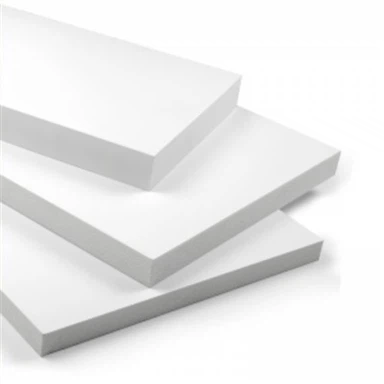
Why Choose WPC Board for Cabinets: Waterproof, Fire-Rated & Workable Board
Jun 17, 2026
Why Choose WPC Board for Cabinets: Waterproof, Workable, and Built to Outlast Wood
3 min read · June 17, 2026 · By YUPSENI Team
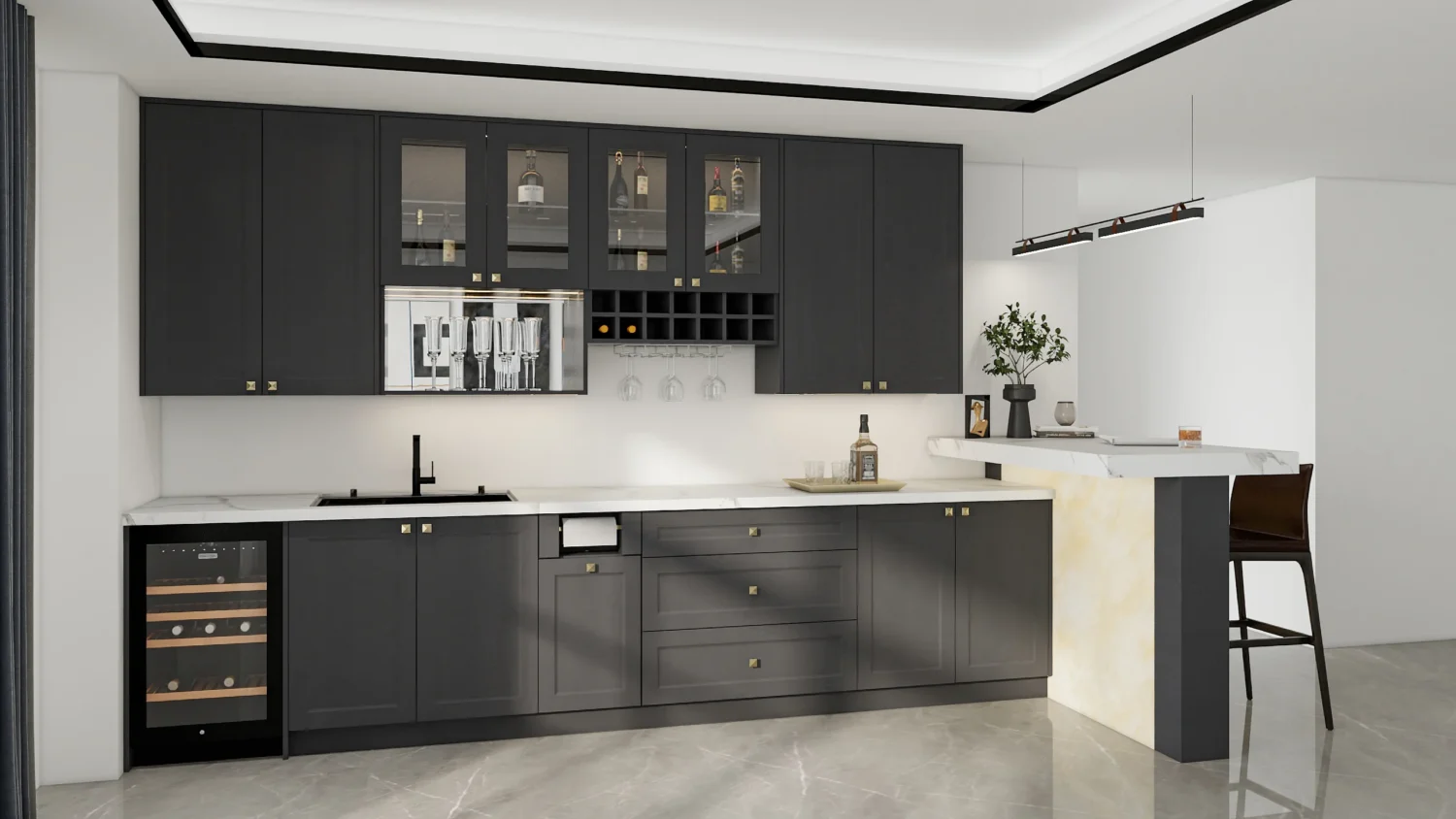
A full WPC kitchen cabinet installation.
On This Page
- I. The Problem WPC Solves That Wood Never Could
- II. Seven Advantages in One Board
- III. Kitchen, Wardrobe, Bathroom: Where WPC Belongs
Wood has been the default cabinet material for generations, but it has a short memory for water. A leaking pipe under the sink, a splash zone behind the countertop, a humid bathroom with poor ventilation-each of these is a slow-motion catastrophe for particle board and MDF. They swell. They delaminate. They become a substrate for mold. WPC board-wood plastic composite-was developed to stop that cycle. It brings the workability of wood and the water resistance of plastic into a single board that mills, drills, and assembles like timber but will not rot, swell, or feed insects.
If you are sourcing cabinet board for kitchens, wardrobes, or bathroom vanities, the question is not whether WPC works. The question is whether it works better than the board you are currently buying. This article walks through the advantages that matter in real installations. For full material data, the WPC board product range covers thicknesses, densities, and surface finishes across standard stock and custom specifications.
I. The Problem WPC Solves That Wood Never Could
Wood-based cabinet boards-particle board, MDF, plywood-share a fundamental vulnerability: they are made of wood fibers or particles bonded with resin, and wood absorbs water. In a kitchen or bathroom, water exposure is not an edge case. It is the normal operating environment. Sink splashes, steam from cooking, condensation on cold-water pipes, the slow drip from a dishwasher door gasket that nobody notices for months. Each event adds moisture to the cabinet carcass, and over time the board swells at the edges, the surface laminate peels, and the structural integrity of the cabinet degrades.
WPC board is a fundamentally different material. It combines wood fiber or wood powder with PVC resin, foaming agents, and additives in an extrusion process that produces a board with a dense, closed-cell structure. Water does not penetrate the board because the PVC matrix encapsulates the wood particles and the foam cells are sealed. A WPC board submerged in water for 24 hours shows negligible thickness swell-typically under 0.5 percent-compared to the 20 to 30 percent expansion that particle board will exhibit in the same conditions. This single property is the reason WPC has gained traction as a cabinet material. Everything else is a bonus.
II. Seven Advantages in One Board
The appeal of WPC as a cabinet board is not one headline feature. It is the accumulation of practical advantages that eliminate problems before they occur.
Waterproof and moisture-proof. The PVC matrix is impervious to water. The board does not absorb moisture from the air, does not swell at cut edges exposed to sink splashes, and does not delaminate when relative humidity spikes. This makes WPC viable in environments where traditional wood-based boards fail-under-sink cabinets, bathroom vanities, laundry room storage, outdoor kitchen enclosures in covered areas.
Insect and termite resistant. Termites and wood-boring insects feed on cellulose. WPC board contains wood particles, but they are fully encapsulated in PVC, which insects do not recognize as food and cannot digest. There is no need for chemical insecticide treatment and no risk of infestation spreading through the cabinet carcass into the building structure. The protection is physical and permanent.
Workable with standard tools. WPC board cuts, saws, drills, routes, and edges like MDF. Cabinet shops do not need to retool. The board takes screws and dowels well, holds edge banding with standard hot-melt adhesives, and can be painted, laminated, or wrapped with decorative films. The learning curve from wood-based boards to WPC is measured in minutes, not days.
Fire performance. PVC is inherently flame-retardant. WPC board typically achieves a B1 fire rating, meaning it is self-extinguishing-it will not sustain combustion once the flame source is removed, and it does not produce burning droplets that spread fire. In the event of a kitchen fire, WPC cabinets contribute less fuel load than wood-based alternatives and produce less dense smoke, which is a meaningful safety consideration in residential construction.
Low formaldehyde and reclaimable. The extrusion process for WPC board does not require urea-formaldehyde binders, which are the primary source of formaldehyde emissions in particle board and MDF. Formaldehyde content in quality WPC board is typically below 0.2 mg per liter-lower than the E0 standard threshold. The board is also reclaimable at end of life, which matters increasingly for green building certifications and markets with construction waste regulations. For projects targeting sustainability credits, the expanded PVC environmental and tooling guide covers the emissions, recyclability, and finishing dimensions that apply to both PVC foam boards and WPC products.
Installation advantage: WPC board is significantly lighter than plywood or MDF of equivalent thickness. A single cabinet maker can handle full-size sheets without assistance, which shortens fabrication time and reduces labor cost per unit. The simpler the installation process, the fewer points where mistakes introduce callbacks.
III. Kitchen, Wardrobe, Bathroom: Where WPC Belongs
WPC board has found its strongest foothold in three cabinet applications where moisture resistance is not a luxury but a requirement.
Kitchen cabinets. The under-sink cabinet is the proving ground for any cabinet board. A slow leak, a spilled bottle of detergent, the condensation that forms on cold-water pipes in summer-these are weekly events in a working kitchen. WPC cabinet carcasses handle them without swelling at the joints or losing screw-holding power. The material's B1 fire rating adds a layer of passive safety in the room where most household fires start.
Wardrobe and storage. In humid climates, wardrobe interiors can become moisture traps, especially in rooms without air conditioning or in buildings that are occupied seasonally. Clothes stored in a WPC wardrobe are less likely to develop musty odors because the cabinet itself is not holding moisture. The formaldehyde-free composition also means the wardrobe does not off-gas into enclosed storage spaces where textiles can absorb volatile compounds.
Bathroom vanities. This is the most demanding cabinet environment in the house: high humidity, frequent direct water contact, warm temperatures, and limited ventilation. WPC bathroom vanities eliminate the slow degradation that wood-based boards undergo in this setting. The board does not swell at the basin cutout, does not delaminate behind the mirror, and does not support mold growth on hidden surfaces.
Common Questions About WPC Cabinet Board
Frequently Asked Questions About WPC Board for Cabinets
Quick answers for buyers evaluating WPC as a cabinet board material.
Q1: Can WPC board be edge-banded like MDF?
Yes. WPC board accepts standard PVC and ABS edge banding with hot-melt adhesive on conventional edge banding machines. The bond quality is comparable to MDF when the board surface is clean and the machine temperature and feed speed are set correctly. The sealed edge further enhances the waterproof performance of the finished panel.
Q2: Is WPC board heavier or lighter than plywood?
WPC board is generally lighter than plywood of equivalent thickness. A typical 18mm WPC board weighs roughly 30 percent less than 18mm hardwood plywood, which makes handling and installation faster and reduces the structural load on wall-hung cabinets. The exact weight depends on the board density and the ratio of wood fiber to PVC in the formulation.
Q3: Does WPC board hold screws as well as wood?
WPC board has good screw-holding strength, particularly with coarse-thread screws designed for plastics and composites. The holding strength is comparable to MDF and adequate for cabinet hardware, hinges, and drawer runners. For heavy-duty applications, pre-drilling and using specialized WPC screws improves holding performance. The screw-holding strength does not degrade with moisture exposure the way it does with particle board and MDF.
Q4: What is the price difference between WPC and marine plywood?
WPC board typically costs less than marine-grade plywood and is roughly comparable to high-quality moisture-resistant MDF. The total installed cost often favors WPC when factoring in the elimination of edge sealing treatments, the longer service life in wet areas, and the reduced callbacks from water damage. For bulk cabinet board sourcing, the WPC board product range includes pricing tiers across standard and custom specifications.
WPC Cabinet Board That Works Like Wood and Resists Water
WPC foam board in standard thicknesses for kitchen, wardrobe, and bathroom cabinets. Consistent density, smooth surface, and moisture resistance built into the material. Samples and datasheets available on request.
The Board That Lets You Forget About Water
The argument for WPC cabinet board is not that it looks better than wood. It looks the same once the doors are on. The argument is that it stays the same-through leaks, through humidity, through years of service in the rooms where water is part of daily life. It mills on the same machines, edge-bands with the same adhesive, and goes together with the same screws. The difference is that it does not quietly absorb the damage that wood-based boards accumulate until the day the cabinet door stops closing square. For kitchens, bathrooms, and any cabinet that lives near water, that difference matters.
YUPSENI Team
With over 23 years in PVC and WPC board manufacturing, we supply cabinet-grade WPC foam board to furniture makers, contractors, and distributors worldwide. Standard and custom thicknesses available with consistent density and flatness. More about YUPSENI
© 2026 YUPSENI. All rights reserved. The information in this article is for general informational purposes only and does not constitute professional advice. Product specifications may vary by region and production batch. Always request current datasheets before making procurement decisions.