Building Material Shipping & Packaging: Keep the Container Intact From Factory to Warehouse
Aug 03, 2026
Building Material Shipping & Packaging: How to Keep a Container of PVC Intact From Factory to Warehouse
Read time: 8 minutes | By: YUPSENI Team
On This Page
- I. The Container Is the Last Assembly Line
- II. Three Ways a Container Damages Its Own Cargo
- III. Product-by-Product Packaging Requirements
- IV. Loading Sequence and the Weight Distribution Rule
- V. The Pre-Loading Inspection That Prevents the Claim
- VI. Claims, Photos, and the Paper Trail That Decides Who Pays
The most expensive square metre in the entire supply chain is the last one-the floor of the container. Everything that happened before it-resin selection, extrusion, printing, lamination, quality control, certification-is worthless if the cargo arrives damaged. And the damage usually did not happen during the voyage. It happened during loading, or it was already inside the packaging before the container door closed.
This guide covers the shipping and packaging decisions that determine whether a container of PVC building materials-flooring, panels, boards, fencing, trim-arrives intact or arrives as a claim. It builds on the inspection gates introduced in our OEM process guide, and it assumes a standard 40-foot container shipped door-to-door with one or more of the product categories covered here.
I. The Container Is the Last Assembly Line
Think of the container as a machine with one job: deliver the cargo unchanged. It will fail at that job in predictable ways unless every stage-packaging, palletising, loading, bracing, sealing-is treated as part of the production process rather than as an afterthought performed by whoever is available when the truck arrives.
The distinction matters because the factory that manufactures to a high standard and packs carelessly has produced a product that will be judged by its worst packaging. The buyer does not open a claim against the packaging. They open a claim against the supplier. The damaged carton at the front of the container is the supplier's damage, whether the factory caused it during loading or simply failed to protect against what the voyage did to it. The supplier who treats the container as part of the production line controls that outcome. The supplier who treats it as someone else's problem transfers the risk to their own reputation.
The packaging specification should therefore be a written agreement, signed before production begins, covering every layer from the individual product to the pallet to the container. It is not a detail to be improvised at the factory gate.
II. Three Ways a Container Damages Its Own Cargo
Ocean containers damage cargo through three mechanisms, and they operate independently of the carrier's care. Understanding all three explains why packaging for ocean freight is fundamentally different from packaging for a domestic truck journey.
Container Sweat (Condensation)
The container travels through climate zones-hot at the equator, cold in northern latitudes. Warm, humid air inside the container condenses on the cold steel walls and ceiling. Water drips onto the cargo. Corrugated cartons wick it upward from the floor. This is the most common damage mechanism and the least visible at loading time. Moisture barriers and desiccant packs are the countermeasures, not plastic wrap alone.
Vibration and Shifting
A vessel at sea vibrates continuously, and cargo shifts with the roll of the ship. A pallet loaded with a centimetre of slack becomes a pallet that rocks, which becomes a stack that leans, which becomes a stack that falls. Bracing and void-filling are not optional extras-they are the difference between a load that moves and a load that holds.
Loading-Phase Damage
Forklift tines that punch through the bottom carton of a pallet. A load dropped the last ten centimetres onto the container floor. A long trim bundle stacked across the gap between two pallets so it flexes and splits. Most physical damage is created at the loading dock by speed, not by the sea. This is why the loading sequence (Section IV) matters more than the packaging itself.
III. Product-by-Product Packaging Requirements
Each product category in a building material container fails in its own characteristic way, so each one needs its own packaging response. The table below maps the failure modes to the countermeasures.
| Product | Characteristic Failure | Packaging Countermeasure |
|---|---|---|
| SPC Flooring | Carton crush from stacking; edge damage to locking profiles; moisture wicking into cartons | Palletised with edge protectors; cartons shrink-wrapped with corner boards; moisture barrier sheet under the pallet; stretch film with desiccant; maximum stack height per pallet specified |
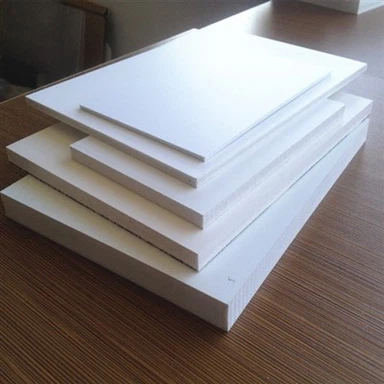
| PVC Foam Board / Sheets | Surface scratches between sheets; corner crushing; warping from uneven stacking | Interleaving sheets or corner protection between boards; rigid top cap on each bundle; bundle strapped with corner angles; sheets stacked flat-never on edge |
| Fence Panels | Surface abrasion where panels rub; rail breakage at unsupported points; racking of panel frames | Interleaving between panels; panels strapped in tight bundles; foam or cardboard protection at all contact points; bundles braced against container walls |
| Trim & Moulding (Long Profiles) | Bending under weight; splitting at ends; bowing from poor support | Bundled with ends capped; supported along full length-never cantilevered; rigid corner protection at both ends; bundles stacked on continuous bearers, not across gaps |
| Ceiling / Wall Panels | Scratched print surfaces; corner dents; profile distortion from compression | Protective film on printed faces; corner protectors; vertical or flat stacking per product design; anti-scratch interleaving |
| Sign Posts / Railing Components | Surface scratching between posts; denting of hollow sections; hardware loss | Posts bundled and tied; hardware packed separately in labelled boxes; protective wrap on exposed surfaces; cap ends to prevent internal moisture entry |
The moisture barrier deserves emphasis because it is the countermeasure most often skipped. A single layer of plastic sheeting between the pallet and the container floor prevents floor-level condensation from wicking into the cartons-the exact damage path of container sweat. The cost is a few dollars per pallet. The alternative is discovering, at destination, that the bottom layer of every carton in the container is water-damaged, a finding that voids a meaningful share of the shipment value for a fraction of the container's value in packaging cost.
IV. Loading Sequence and the Weight Distribution Rule
The loading sequence is governed by one rule that every dock worker learns and every rushed loading operation breaks: heavy cargo goes on the floor and forward, light cargo goes on top and toward the door. A container loaded with SPC flooring pallets first, then fence panels, then lightweight foam board bundles on top, distributes weight across the floor and protects the light cargo from crushing. Reversing the order-heavy pallets loaded last, on top of the light product-produces a container that arrives with a top layer of crushed panels and a bottom layer of flooring that shifted because nothing was braced above it.
Bracing is the second half of the loading rule. A 40-foot container is 12 metres long, and cargo that does not fill it completely leaves voids. Every void is a place where the load can shift. The bracing materials-air bags, timber, foam blocks-fill the voids and lock the load against the container walls. The door-end bracing is the most critical: the last pallet must be secured so it cannot roll backward when the container is lifted and dropped at the terminal.
Loading rules that prevent the most common claims
Heavy first, light last: Flooring and dense boards on the container floor at the front; panels and lightweight products toward the door.
Fill every void: Air bags or bracing in all gaps. A container that rattles on the quay is a container that will arrive damaged.
Brace the door end: The final pallet is secured against the door with blocking that survives the drop at the destination terminal.
Never stack beyond spec: Two high on a pallet is a decision made by the packaging specification, not by how much space is left in the container.
Photograph each stage: Loading photos with the container number visible are the first evidence in any claim-take them before the door closes.
V. The Pre-Loading Inspection That Prevents the Claim
Before the first pallet enters the container, the pre-shipment inspection must include a container inspection. The container itself arrives at the factory from the shipping line, and it is not always fit for cargo. A container with a hole in the floor, a damaged door seal, or standing water inside will damage its cargo regardless of how well the cargo is packaged. The inspection protocol is short and worth every minute:
1. Interior inspection: Check for holes, corrosion, moisture, and odours. A container that smells of chemicals or damp is a container that will transfer the problem to the cargo.
2. Floor check: Inspect for protruding nails, splinters, or damage that will puncture the bottom cartons. The floor is the surface that meets the cargo.
3. Seal check: Verify the door seals are intact. A failed seal admits humidity, insects, and contamination throughout the voyage.
4. Cleanliness: Sweep the interior. Debris from the previous cargo is a contamination risk for the next one.
5. Ventilation decision: Determine whether the container is ventilated or sealed, and confirm the cargo's moisture tolerance matches. Sealed containers are standard for building materials but demand stronger internal moisture control.
The pre-loading inspection belongs in the same inspection gate structure as the production checks-it is Gate 3.5 in the sequence described in the OEM process guide. A third-party inspector who photographs the empty container, the loading sequence, and the sealed door creates a documentary record that separates a legitimate claim from a disputed one.
VI. Claims, Photos, and the Paper Trail That Decides Who Pays
When a container of building materials arrives damaged, the outcome is decided in the first 24 hours-not by the shipping line, not by the insurance company, but by the evidence captured before the cargo leaves the destination terminal. The three evidence requirements are simple and almost always neglected:
Photograph Everything
The seal number on the intact container. The container sides, roof, and doors at the terminal. Every damaged carton, in context and close-up. A camera at the destination terminal has replaced a hundred pages of dispute correspondence.
Note the Seal Number
The seal number is the single piece of evidence that ties the cargo to the voyage. An intact seal means the container was not opened between factory and destination-which directs the claim to the carrier. A broken or missing seal changes the claim entirely.
Note on the Delivery Receipt
"Subject to inspection" or "damage noted" written on the delivery receipt at the terminal preserves the right to claim. Signing a clean receipt and discovering damage later transfers the burden of proof to the consignee. The five words are worth more than the container.
The documentation package should also travel with the cargo: the packing list, the bill of lading, the inspection report, the loading photos, and the container seal number. The buyer who holds this file before the vessel departs can file a claim the same day the damage is discovered. The buyer who assembles it after the fact is negotiating from weakness. For the full sourcing picture-certifications, inspection gates, and the OEM process that precedes shipping-our sourcing guide covers the complete importer workflow, and the certification guide covers the paperwork that must accompany the cargo. For packaging specifications matched to your product mix and destination route, contact our sales team.
Frequently Asked Questions
Frequently Asked Questions About Building Material Shipping and Packaging
Common questions from importers and distributors about packaging and ocean freight for building materials.
Q1: Is plastic wrap enough to protect cargo from container sweat?
A: No. Plastic wrap protects against direct water contact but traps moisture inside the wrap against the cargo. The correct system is: a moisture barrier between the pallet and the container floor, desiccant packs inside or between cartons where moisture-sensitive, and breathable stretch film rather than fully sealed wrapping. Container sweat condenses on the steel walls and ceiling-the packaging must manage humidity, not just block drips.
Q2: How many pallets fit in a 40-foot container?
A: Standard 40-foot containers hold 20 standard pallets (1200×1000 mm) loaded two wide. The practical number depends on pallet dimensions, product weight, and stack height limits. SPC flooring typically loads at 18–20 pallets depending on carton size and stack height. Long trim profiles often load as loose bundles rather than pallets to use the full length. The loading plan is calculated per order-the quantity that fits safely, not the quantity that fits at all.
Q3: Should I use a third-party inspector for the loading?
A: For first orders and for containers above a value threshold that matters to your business, yes. A third-party inspector (SGS, Intertek, or a local accredited firm) verifies quantity, packaging conformity, loading sequence, and container condition, and produces a photographic record accepted by carriers and insurers. The inspection cost is a small fraction of the container value, and the documentation it produces is the difference between a smooth claim and a disputed one.
Q4: Can you provide packaging specifications matched to my order?
A: Yes. Every YUPSENI order ships with a written packaging specification covering palletisation, moisture protection, bracing, and loading sequence for the product mix in that container. Custom packaging-branded cartons, custom pallet heights, moisture-sensitive reinforcement for high-humidity routes-is specified at quotation stage. Contact our sales team with your product list and destination port for the packaging and loading plan.
Every Container Ships With a Written Packaging Plan
Palletisation, moisture barriers, bracing, and loading sequence specified per order. Custom packaging for branded shipments. Loading photos and documentation with every container.
Get a Packaging PlanYUPSENI Team
23 years in PVC building material manufacturing and supply chain. We help importers get containers to the warehouse intact-and get claims resolved when they are not. More about YUPSENI
© 2026 YUPSENI. All rights reserved. Shipping and packaging recommendations are based on standard practice for building material exports and may vary by route, season, and cargo mix. Always verify container suitability at the factory and document the cargo condition before the container door closes.