

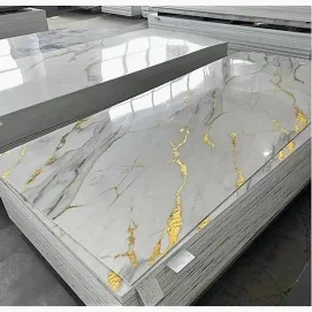
Rule 1: The Panels Are Not Ready Out of the Box - Let Them "Move In" First
An electronic device shipped in winter needs acclimation before powering on to prevent condensation damage. PVC wall panels demand the same principle - but what they need to acclimate to is not temperature alone. It's the combined temperature-humidity field of the room they will permanently occupy.
PVC is a thermoplastic material. Its dimensions respond measurably to even small shifts in temperature and moisture. Panels that have just traveled from a cold warehouse or shipping container exist in a genuinely different environmental state than a lived-in room at ambient temperature. If you unbox and install immediately, the panels will complete their expansion or contraction on the wall - the very process that should have finished before installation. The consequences: tightly butted seams that mysteriously pull apart days later, or panels that had reasonable gaps at installation suddenly jam together and buckle upward.
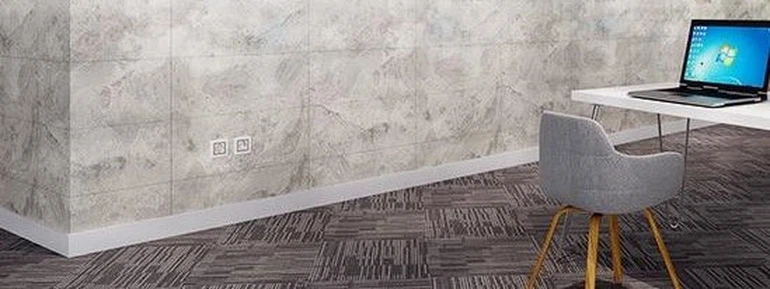
Correct: panels laid flat, packaging removed, in the installation room for 24–48 hours. Incorrect: leaning against a wall in a hallway while the adhesive is already being loaded.
This rule gets skipped more than any other because, on-site, it looks like doing nothing. But it is precisely this action-disguised-as-inaction that determines the long-term dimensional stability of the entire wall. A silent 24-hour wait now prevents every seam from protesting later.
Rule 2: The Wall Can Be Uneven - It Cannot Be Dirty or Unstable
A major selling point of PVC wall panels is their ability to bridge substrate unevenness - no razor-flat leveling required, unlike ceramic tile. But this does not mean every wall surface is installation-ready. The marketing promise - "install directly over old tile, old wallpaper, old paint" - carries an unspoken qualifier: those old materials must still be firmly attached to the wall.
Any substrate that is powdering, sanding-off, delaminating, or blistering is a disaster waiting beneath adhesive. Structural adhesive, however strong, can only bond to the outermost surface layer. If that layer is loose paint chips or peeling wallpaper, the adhesive will cling faithfully to the fragments - and both will detach from the wall together, panel and all. Grease and wax deposits form an invisible release film between adhesive and substrate, preventing any mechanical bond from forming at all.
2.1 Substrate Inspection Checklist - Do Before Every Job
| Substrate Type | Test Method | Pass Condition | Fail Action |
|---|---|---|---|
| Old painted surface | Adhesive tape pull test - press firmly, rip off fast | No paint lifts with tape | Chip away all loose paint; sand edges; prime |
| Old ceramic tile | Tap each tile with a hard object; listen | Solid, uniform sound - no hollow echo | Remove hollow tiles or inject reinforcement adhesive |
| Kitchen wall (grease) | Wipe with a white cloth; check for residue | Cloth stays clean after cleaning | Alkaline degreaser → clean water rinse → fully dry |
| Crumbling / sandy wall | Rub palm across surface; inspect hand | Hand stays clean - no dust | Apply primer/sealer coat; allow to cure fully |
| Mold-affected area | Visual inspection + moisture meter | No visible mold; moisture content normal | Kill mold, locate moisture source, dry completely, seal |
This is also where the substrate tolerance of PVC panels generates genuine cost savings - the wall doesn't need a skim coat. But that saving only materializes if the existing surface passes the adhesion tests above. Skip the tests, and the "saving" becomes a removal-and-replacement invoice. Read how PVC panels make cleaning effortless across their entire lifespan →
Rule 3: Wrong Adhesive = Total System Failure
Here is a tragedy that plays out every day: a homeowner or contractor spends real money on quality wall panels, then saves a few dozen dollars by grabbing whatever adhesive is already in the van - typically standard silicone sealant or expanding polyurethane foam. The former is acidic and corrosive. The latter generates uncontrolled expansion pressure. Both failures announce themselves three to six months after installation, by which time the panels have warped, discolored, or detached.
3.1 The Adhesive Specification Table
| Adhesive Type | For PVC Wall Panels? | Why / Why Not | Best Use Case |
|---|---|---|---|
| Neutral-cure silicone structural adhesive (≥1.0 MPa) | YES - Recommended | No corrosive acid release; high bond strength; flexible cured body tolerates thermal movement | General-purpose PVC panel installation; bathrooms |
| MS polymer (modified silane) adhesive | YES - Premium choice | Solvent-free, odorless, paintable, exceptional adhesion without primer | Occupied-home renovation; high-end projects |
| Brand-matched proprietary PVC panel adhesive | YES - When available | Formulated and tested specifically for the manufacturer's panel composition | When supplied or specified by panel manufacturer |
| Acidic silicone (standard glass sealant) | NO - Damages panels | Releases acetic acid during cure; corrodes PVC, causing embrittlement and yellowing | Never for PVC panels |
| Expanding polyurethane foam | NO - Causes deformation | Expansion force is uncontrolled; lifts panels unevenly, creating permanent wave distortion | Never for direct panel bonding |
3.2 Application Pattern - As Important as the Adhesive Itself
For hollow-core lightweight panels: Apply dot-pattern beads, 25–30 mm diameter, spaced at maximum 30 cm intervals in a uniform grid. Each dot must be 5 cm or less from every edge. All four corners and the panel center require a full dot. No dot should be more than 30 cm from its neighbor in any direction.
For solid heavy panels: Apply continuous S-pattern or vertical-stripe beads. Edge beads must run within 5 cm of the panel perimeter. This is non-negotiable - adhesive-starved edges are the number one cause of lifting corners and buzzing panels.
For bathrooms specifically: confirm the adhesive carries a mold-resistant formulation (look for fungicide additives on the technical data sheet). Standard structural adhesives without this protection will become mold colonization sites in the permanently humid environment behind a shower wall.
Rule 4: Expansion Gaps Are Physics, Not a Suggestion
The linear thermal expansion coefficient of PVC is approximately (6–8) × 10⁻⁵ /°C. In plain terms: a 3-meter-long PVC wall panel, subjected to a 20°C seasonal temperature swing (winter to summer), will change length by 3–5 millimeters. That number seems negligible - until you realize that if every panel edge and the wall boundary are locked rigid with zero tolerance, that accumulated stress will release through the path of least resistance: the center panels buckling into ridges, or the edge panels forcing trim strips off the wall.
4.1 Expansion Gap Specifications
| Location | Minimum Gap | Concealment Method |
|---|---|---|
| Panel to floor / ceiling | 3–5 mm | Baseboard (skirting) or crown molding |
| Panel to internal corner | 3–5 mm | Internal corner trim |
| Panel to external corner | 3–5 mm | External corner trim |
| Panel to panel (click-lock) | Insert naturally - do not hammer closed | Factory tongue-and-groove profile |
| Full-wall runs exceeding 8–10 m | Full expansion joint with T-trim | T-profile expansion trim |
For self-adhesive-backed thin panels: follow the product-specific expansion instructions, as these may differ from the general 3–5 mm standard. Some thin-film products are designed for near-zero gaps when ambient temperature is within the manufacturer's specified range. Read the product sheet - this is not a generic rule.
Rule 5: Trim and Edging - The Line Between "DIY Job" and "Professional Finish"
In DIY installations, the trim system is the single most commonly skipped component - and the single element that separates a wall that looks like $50 from one that looks like $500. No panel edge is attractive in its raw state. The gap between a saw-cut edge and a factory-finished surface is a chasm that only trim accessories can bridge.
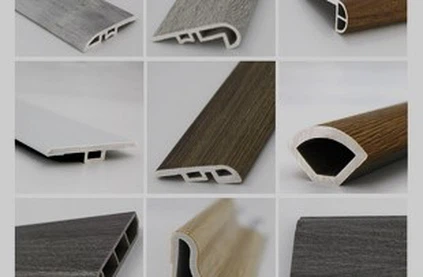
A complete trim kit: internal and external corner profiles, baseboard, crown molding, and socket border frames. Each piece solves a specific visual-transition challenge that no bare panel edge can address on its own.
5.1 Non-Negotiable Trim Components
- Internal and external corner profiles: Every wall-to-wall corner, inside and outside, requires a dedicated corner trim. It serves simultaneously as a gap concealer, an edge protector against impact damage, and a visual anchor that defines the wall's boundary. Without it, corner gaps open and close with the seasons, exposing the raw panel cross-section.
- Baseboard (skirting) and crown molding: These conceal the mandatory expansion gaps at floor and ceiling while creating the architectural framing that makes the wall look finished rather than covered.
- Socket and switch border frames: A cutout around an electrical box is a rough wound in the panel surface. Without a border frame, the exposed edge becomes the first point of failure - catching cleaning cloths, collecting dust, and chipping over time. Dedicated frames transform this vulnerability into a clean, intentional transition.
Installation sequence: Mount all main wall panels first → clip or press-fit trim pieces over edges and corners → apply a fine bead of color-matched sealant along the trim-to-wall junction - the thinnest possible line that still bridges the gap. A tight, minimal sealant bead is the signature of a careful installer. A thick, smeared bead announces the opposite. For the full case on why PVC panels dominate wet-area design, see Vinyl Wall Panels vs Tiles: 7 Reasons Builders Are Switching →
Rule 6: Different Rooms Demand Different Installation Strategies
Treating an entire house as a uniform environment and applying the same installation protocol everywhere is a trap many first-timers walk into. The following spaces carry distinct requirements that deserve their own mental checklist.
6.1 Bathroom - The Highest-Stakes Room
The fact that PVC panels are waterproof does not exempt the wall structure behind them from requiring its own waterproofing treatment. A leaking pipe inside the wall or moisture migrating through from the other side will still damage the substrate - and the panel, while unaffected itself, will eventually detach from a crumbling backing. All trim junctions, screw penetrations (if batten-mounted), and edge terminations must be sealed with mold-resistant sanitary-grade sealant. For shower enclosures - the zone receiving direct, sustained water spray - battens with rear ventilation are strongly preferred over direct adhesive bonding. The air gap allows the cavity behind the panel to dry, preventing long-term condensation accumulation even if minor vapor ingress occurs.
6.2 Kitchen - Heat and Grease
The backsplash zone above a cooktop carries both thermal and contamination risks. Beyond standard adhesive bonding, the bottom edge where panel meets countertop must receive a heat-resistant, mold-resistant sealant bead - this is the frontline defense against cooking liquids, oils, and steam penetrating behind the panel. For gas cooktops: maintain the manufacturer-specified clearance distance. If the gap between burner and wall is tighter than code allows, install a stainless steel shield panel in that zone rather than relying on PVC's inherent flame-retardant properties against a continuous open flame.
6.3 Basement and Extremely Damp Rooms
Even though PVC does not absorb water, the wall behind it - particularly below-grade concrete or masonry - may be conducting capillary moisture from the ground. The correct approach: apply a waterproofing primer/sealer to the wall first, then install a batten grid to create a ventilated air cavity, and mount panels onto the battens. Never bond panels directly to a wall that feels cool and damp to the touch, regardless of what the panel itself can tolerate. Condensation accumulating in a sealed cavity will eventually degrade the substrate to the point of mechanical failure.
6.4 Rooms with Underfloor Heating or Wall-Mounted Heat Sources
If heating pipes run within the wall, confirm the panel's rated continuous-service temperature with the manufacturer before installation. Standard PVC formulations tolerate up to 50–60°C in continuous exposure. Walls with embedded heating that exceed this range require heat-resistant modified PVC formulations - a product variant not all manufacturers produce. Verify, don't assume.
Pre-Installation Quick Checklist - All Six Rules at a Glance
| # | Rule | Check Question | Status |
|---|---|---|---|
| 1 | Acclimation | Have panels rested flat in this room for ≥24 hours (≥48h if temp diff >15°C)? | ☐ |
| 2 | Substrate Prep | Is the wall solid (tape test passed), clean (palm test passed), and dry? | ☐ |
| 3 | Adhesive | Neutral-cure structural adhesive (≥1.0 MPa)? Mold-resistant for bathroom? Dot-pattern with perimeter coverage? | ☐ |
| 4 | Expansion Gaps | 3–5 mm at all wall boundaries? Panels insert with light hand pressure only? | ☐ |
| 5 | Trim | Corner profiles, baseboard, crown molding, socket frames - all on site and ready? | ☐ |
| 6 | Room Strategy | Bathroom: battens + rear ventilation? Kitchen: heat-resistant sealant at cooktop? Basement: waterproofing primer applied? | ☐ |


