

Folding PVC Board vs Rigid PVC Foam Board: Flexibility, Thickness & Uses Compared
Jun 17, 2026
Folding PVC Board vs Ordinary PVC Foam Board: Flexibility Is the Whole Difference
2 min read · June 17, 2026 · By YUPSENI Team

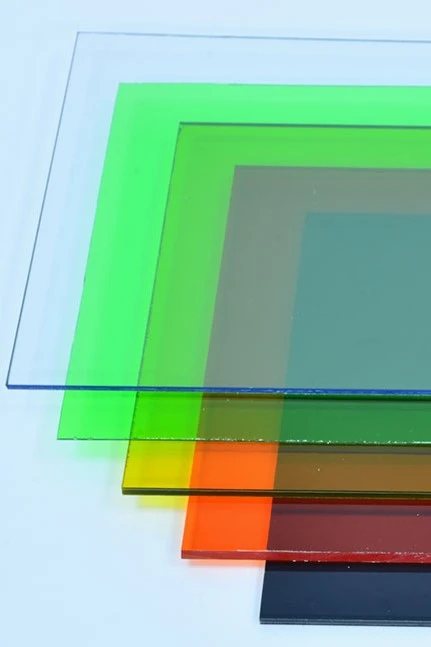
Folding PVC board on the left, ordinary rigid PVC foam board on the right. One bends. One does not. The difference starts in the formulation and ends in the application.
On This Page
- I. Flexibility, Thickness, and the One Test That Tells Them Apart
- II. How the Manufacturing Creates the Difference
- III. Where Each Type Belongs
PVC foam board is not one product. Under the same broad category name sit two materials that behave differently enough that ordering the wrong one means a project that does not work. The dividing line is flexibility. Folding PVC board bends without breaking. Ordinary PVC foam board does not. Everything else-thickness, weight, price, application-flows from that single physical difference. This article explains what creates the flexibility gap and when to choose which board.
I. Flexibility, Thickness, and the One Test That Tells Them Apart
Pick up a sheet of ordinary PVC foam board and try to fold it in half. It will crack. The rigid closed-cell structure and the integral skins on both faces resist bending, and when the bending radius gets tight enough, the material fractures rather than yields. This is by design. Ordinary PVC foam board is engineered for flatness and rigidity-it stays where you put it, holds its shape under load, and does not sag over time.
Folding PVC board behaves differently. It can be creased along a line and folded to a sharp angle without cracking, or rolled into a curve for curved displays. The flexibility comes from the formulation, not from being the same board made thinner. The board is also typically thinner than standard PVC foam board-folding grades commonly run from roughly 2mm to 5mm, compared to the 3mm to 19mm range available in rigid boards. The thinner cross-section contributes to the bendability, but it is the additive package that makes folding possible without fracture.
If you are unsure which board you have, try bending a corner. A folding board will yield. A rigid board will snap or show stress whitening at the bend line long before it reaches a useful angle. The test takes one second and is definitive. For a full breakdown of standard rigid options, the PVC foam board product range covers densities, thicknesses, and surface finishes across the rigid product line.
II. How the Manufacturing Creates the Difference
Both boards start from PVC resin, but the formulation diverges early. Folding PVC board includes a higher proportion of impact modifiers and plasticizing additives that reduce the brittleness of the PVC matrix and allow the polymer chains to move relative to each other under bending stress. The foam structure is also adjusted: the cell size and density are tuned to allow compression on the inside of a fold and tension on the outside without the cell walls rupturing.
Ordinary PVC foam board uses a different additive balance, optimized for stiffness, screw-holding strength, and dimensional stability rather than flexibility. The extrusion process produces a denser skin layer on both faces that acts as a structural sandwich-the skins carry tension and compression, the foam core carries shear. This structure is strong and flat, but it resists bending by design.
Key point: The flexibility difference is permanent. A folding board will not become rigid over time, and a rigid board will not become flexible if you heat it. Choose the type based on whether the finished product needs to bend in use or stay flat under its own weight.
III. Where Each Type Belongs
Folding PVC board lives in applications where the board needs to collapse, wrap, or travel. Trade show displays are the classic example: a printed folding board can be scored and folded into a compact package that fits in a carry case, then unfolded into a standing display on the show floor. Point-of-purchase stands, packaging inserts, portable presentation boards, and curved exhibition panels all use folding grades. The lighter weight and thinner profile make transport and handling simpler.
Ordinary rigid PVC foam board owns the rest of the signage and construction market. Wall-mounted signs, building hoardings, ceiling panels, cabinet components, and structural displays all need the board to stay flat under its own weight and resist warping over time. Rigid boards also print and route more cleanly because the surface does not move under the tool. If the board does not need to bend, the rigid grade is almost always the right choice-it costs less, comes in more thickness options, and holds fasteners better.
Common Questions About Folding vs Rigid PVC Board
Frequently Asked Questions About Folding and Rigid PVC Foam Board
Quick answers on choosing between flexible and rigid PVC board for your project.
Q1: Can I use folding PVC board as a wall sign?
Only if the sign is small and fully supported by the wall. Folding board will not stay flat over large spans because it lacks the rigidity of standard PVC foam board. A 4×8 folding board mounted to a wall will sag or bow over time. For wall-mounted signage, use rigid PVC foam board.
Q2: How many times can folding PVC board be folded before it breaks?
Quality folding PVC board can withstand hundreds of fold cycles along a scored line before showing fatigue. The limiting factor is usually the printed surface, not the board itself-repeated folding at the same crease will eventually crack the ink or laminate layer. For displays that will be folded and unfolded frequently, specify a board with a compatible laminate film that stretches with the fold.
Q3: Is folding PVC board more expensive than rigid board?
Yes, typically by a modest margin. The special additives and the smaller production volumes for folding grades push the per-sheet cost above standard rigid PVC foam board of equivalent thickness. The price difference is usually justified by the functionality-a folding board replaces a rigid board plus separate transport packaging-but for flat applications there is no reason to pay the premium.
The Right PVC Board for Your Project
Folding and rigid PVC foam board in standard and custom sizes. Stock thicknesses available for both grades. Tell us the application and we will recommend the right board.
One Bends, One Stays Flat-Choose Accordingly
The difference between folding PVC board and ordinary PVC foam board is not complicated. One is formulated to bend. The other is formulated to stay rigid. The manufacturing, the thickness range, the price, and the application all follow from that single design decision. If your project needs to fold for transport, or curve around a display stand, buy folding grade. If it needs to hold flat on a wall or carry structural load, buy rigid. The bend test tells you which is which in one second. Everything else is just confirming the order code.
YUPSENI Team
With over 23 years manufacturing PVC foam board in both folding and rigid grades, we supply sign makers, display builders, and distributors with the right board for the right application. More about YUPSENI
© 2026 YUPSENI. All rights reserved. The information in this article is for general informational purposes only and does not constitute professional advice. Product specifications may vary by formulation and production batch. Always request current datasheets and physical samples before making procurement decisions.


