Rigid vs Flexible PVC: Key Differences & Which One Your Project Needs
Jun 16, 2026
Rigid vs Flexible PVC: What's the Difference and Why It Matters for Your Project

On This Page
- Rigid PVC: The Hard Stuff You Can Build With
- Flexible PVC: Soft, Bendable, and Everywhere You Don't Expect It
- How to Tell Them Apart in 5 Seconds
PVC-polyvinyl chloride-is one of the most widely used plastics in the world. You encounter it every day, probably more than you realize. The water pipes in your walls, the window frames on your house, the cable that charges your phone, the flooring under your feet-all of these can be PVC. But not all PVC feels the same. Some is rock-hard and rigid, like a fence post or a ceiling panel. Some is soft and floppy, like a garden hose or a blood bag in a hospital.
So what makes the same base material behave in such opposite ways? The answer is surprisingly simple: it comes down to a single class of additives. This article explains the difference in plain terms, so the next time you're looking at PVC foam board or any other PVC product, you'll know exactly which type you're dealing with and why.
I. Rigid PVC: The Hard Stuff You Can Build With
Rigid PVC-sometimes called uPVC or unplasticized PVC-is PVC in its natural, unmodified state. Think of it as the "pure" version. No softening agents are added during manufacturing, so the material stays hard, stiff, and strong. It holds its shape under load, it doesn't bend easily, and it has excellent dimensional stability-meaning it won't warp or shrink with temperature changes anywhere near as much as wood does.
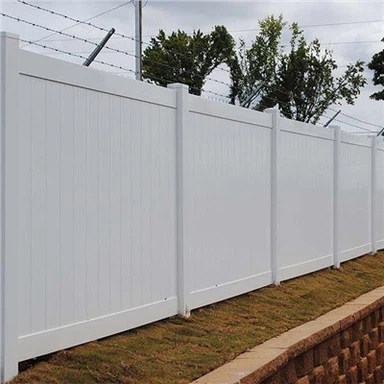
This is the type of PVC you see in construction and building products. Window frames, door profiles, plumbing pipes, gutter systems, fencing, wall cladding, ceiling panels, and signage boards are all made from rigid PVC. The material's hardness makes it structurally reliable, and its natural resistance to water, rot, and insect damage means it lasts outdoors for decades with almost no maintenance. At YUPSENI, the rigid PVC products manufactured include PVC fencing, PVC ceiling boards, and foam sheets for advertising and cabinet making-all of which rely on the material's rigidity to perform their function.
Quick rule of thumb: If a PVC product needs to stand on its own, hold a shape, or carry weight, it is almost certainly rigid PVC. No plasticizers means maximum strength.
II. Flexible PVC: Soft, Bendable, and Everywhere You Don't Expect It
Flexible PVC starts with the same base polymer as rigid PVC. The difference is that during manufacturing, a liquid additive called a plasticizer is mixed into the PVC compound. Plasticizers work by inserting themselves between the long PVC polymer chains, pushing them apart and allowing them to slide past each other. The result is a material that is soft, pliable, and can be bent, stretched, or twisted without breaking.
The amount of plasticizer added determines how flexible the final product becomes. A little plasticizer produces a semi-rigid material. A lot produces something as soft as a rubber band. Common plasticizers include phthalates and, increasingly, non-phthalate alternatives developed for medical and food-contact applications where stricter safety standards apply.
You encounter flexible PVC constantly in daily life. Garden hoses, electrical cable insulation, shower curtain liners, rain boots, inflatable pool toys, blood bags and IV tubing in hospitals, car dashboard skins, and the soft grip on a screwdriver handle-all of these are flexible PVC. The material's ability to be formulated across such a wide range of softness is one reason PVC as a category has become so dominant: the same base chemistry serves both a sewer pipe and a surgical glove.
III. How to Tell Them Apart in 5 Seconds
If you have a PVC product in front of you and you are not sure which type it is, the simplest test is to try bending it. Rigid PVC will resist the force and, if pushed too far, will crack or snap with a clean break. Flexible PVC will bend willingly and spring back when released, or stay bent depending on the plasticizer level. No tools required.
The surface feel also gives a clue. Rigid PVC tends to be smooth and hard, almost glassy on some products, and it sounds solid when you tap it with a fingernail. Flexible PVC feels slightly rubbery or waxy to the touch, and it makes a duller, deader sound on impact. The weight difference can also be telling: rigid PVC products often feel substantial and dense for their size, while flexible PVC products are lighter and thinner in cross-section because they do not rely on wall thickness for structural performance.
Finally, think about the application. If the product is part of a building or a sign, it is rigid PVC. If the product is designed to flex, stretch, seal, or cushion, it is flexible PVC. The application almost always gives away the material type before you even touch it. For readers working with rigid sheet materials, the guide to selecting PVC foam board by four key indicators explains what to look for when evaluating density, surface quality, and thickness consistency in rigid PVC sheets.
Quick Questions About Rigid and Flexible PVC
Frequently Asked Questions About Rigid vs Flexible PVC
Simple answers to the most common questions about hard and soft PVC materials.
Q1: Is rigid PVC stronger than flexible PVC?
Yes, in terms of structural strength and load-bearing capacity. Rigid PVC has higher tensile strength and impact resistance, which is why it is used for pipes, window frames, and building panels. Flexible PVC sacrifices strength for bendability-it can stretch and flex without cracking, which is a different kind of durability. The right question is not which is stronger, but which type of strength the application needs.
Q2: Can rigid PVC become flexible?
Not after it is manufactured. The decision between rigid and flexible is made during compounding, when plasticizers are either added or omitted from the mix. Once the PVC has been extruded or molded into its final form, you cannot add plasticizers to soften it. Heating rigid PVC will eventually soften it enough to bend, but this is thermoforming, not a permanent change in chemical composition, and the material returns to rigidity when cooled.
Q3: Which type of PVC does YUPSENI manufacture?
YUPSENI specializes in rigid PVC products for the building and construction industry. The product range covers PVC foam boards for signage, cabinetry, and advertising; PVC fencing and railing for residential and commercial perimeters; PVC ceiling panels for interior finishing; and SPC rigid core flooring. All of these are rigid PVC formulations, engineered for structural performance and long outdoor or indoor service life.
Need Rigid PVC Products for Your Next Project?
From foam boards to fencing to flooring, YUPSENI's rigid PVC range covers building, signage, and interior applications. Product data sheets and samples available on request.
One Material, Two Personalities
PVC is remarkable precisely because it can be both rigid and flexible-a structural building block and a soft, conformable material-depending on a single manufacturing decision. Understanding that decision, and knowing which version you are looking at, makes navigating the PVC product landscape much simpler. If it needs to hold its shape and carry a load, it is rigid. If it needs to bend, stretch, or seal, it is flexible. The chemistry is the same. The additive is the difference.
Written by YUPSENI Team
With over 23 years of PVC extrusion and compounding experience, the YUPSENI technical team helps importers, distributors, and contractors select the right rigid PVC products for their projects-backed by batch-level specifications and production documentation.
© 2026 YUPSENI. The information in this article is provided for general educational guidance on PVC material types and does not constitute a material specification or performance warranty. Product formulations, specifications, and availability are subject to confirmation at the time of inquiry. YUPSENI is a trademark of YUPSENI Building Materials.