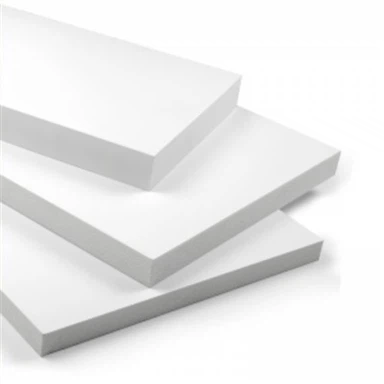
In what ways can Expanded PVC be utilized in interior design?
Aug 12, 2024
What are the primary uses of Expanded PVC in construction?
Primary Uses of Expanded PVC in Construction
Expanded PVC is widely used in the construction industry due to its versatility and beneficial properties. Key applications include:
Wall Panels: Expanded PVC is often used for interior and exterior wall cladding. Its lightweight nature and resistance to moisture make it an excellent choice for areas like bathrooms and kitchens.
Ceiling Tiles: Its ease of installation and aesthetic appeal make it a popular material for decorative ceiling tiles, enhancing the look of commercial and residential spaces.
Partitions: Expanded PVC is used in creating temporary or permanent partitions in offices and commercial spaces, providing flexibility in layout design.
Signage and Display: Due to its smooth surface and ability to be easily printed on, Expanded PVC is extensively used for signage and display boards in construction sites and businesses.
Prototyping and Modeling: Its ease of manipulation allows architects and designers to create prototypes and models for presentations and client approvals.
Insulation: Expanded PVC can serve as an insulation material, providing thermal resistance in various building applications.
How does the manufacturing process of Expanded PVC differ from regular PVC?
Manufacturing Process of Expanded PVC
The manufacturing process of Expanded PVC differs from regular PVC in several key aspects:
Expansion: During the production of Expanded PVC, a blowing agent is introduced into the PVC resin. This agent causes the material to expand, creating a foam-like structure with a cellular core, resulting in a lightweight yet strong product.
Temperature Control: The manufacturing process involves careful temperature control to ensure proper expansion and to maintain the integrity of the material.
Additives: Various additives may be included in the formulation to enhance properties such as UV resistance, flame retardance, and color stability. Regular PVC typically lacks these additional enhancements.
Processing Techniques: Expanded PVC can be produced through methods like extrusion or calendaring, allowing for different thicknesses and surface finishes compared to standard PVC, which is often produced in sheets or rolls.
What advantages does Expanded PVC offer for signage applications?
Advantages of Expanded PVC for Signage Applications
Expanded PVC offers numerous advantages for signage, making it a preferred choice for businesses and advertisers:
Lightweight: Its lightweight nature makes it easy to handle and install, reducing labor costs and simplifying the mounting process.
Smooth Surface: The smooth finish of Expanded PVC allows for high-quality printing, ensuring vibrant graphics and clear text, essential for effective signage.
Durability: Expanded PVC is resistant to moisture, chemicals, and UV radiation, ensuring that outdoor signs maintain their appearance and functionality over time.
Cost-Effective: Compared to other materials like aluminum or wood, Expanded PVC is often more affordable, providing a budget-friendly option for businesses looking to create effective signage.
Versatile Design: It can be easily cut, shaped, and painted, allowing for customized designs that meet specific branding needs.
Weather Resistance: Its resistance to environmental factors means that signs can withstand harsh weather conditions without deteriorating.
Easy Maintenance: Cleaning and maintaining signs made from Expanded PVC is straightforward; a simple wipe-down is usually sufficient to keep them looking fresh.